
Singapore executes man for drug trafficking despite clemency appeals
Tangaraju Suppiah was convicted in 2018 of abetting the attempted trafficking of more than 1kg of cannabis

Singapore has carried out the death sentence of 46-year-old Tangaraju Suppiah, who was convicted in 2018 of abetting the attempted trafficking of more than 1kg of cannabis.
Despite appeals for clemency from his family and activists, the execution took place at Changi prison. Tangaraju’s family and campaigners had argued that he had not been given adequate legal representation and had been denied access to a Tamil interpreter during questioning by police.
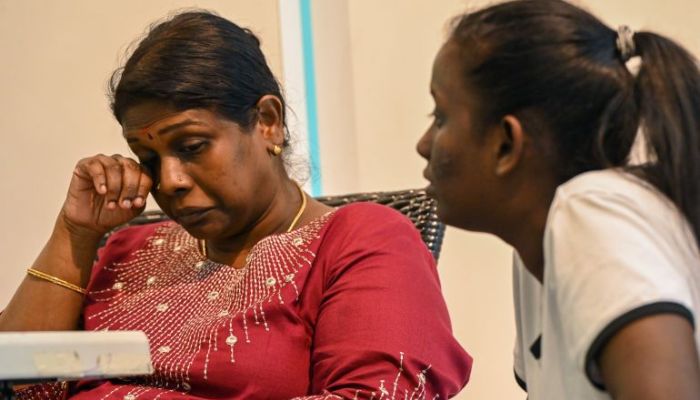
Human Rights Watch’s Deputy Asia Director Phil Robertson described the evidence against Tangaraju as “far from clear cut” as he had never touched the drugs in question and was questioned without a lawyer or interpreter. Amnesty International condemned the execution as “unlawful” and in violation of international law and standards.
Singapore has previously justified its tough stance on drug-related offences as a deterrent, however, an increasing number of Singaporeans have expressed concerns about the mandatory death penalty in drug cases.
The execution of Nagaenthran Dharmalingam last year prompted rare protests in the tightly-controlled city-state. Critics argue that executing individuals who are not significant in drug trafficking operations under the guise of protecting Singapore is unacceptable. The United Nations recommends that countries that retain the death penalty should only use it for the most serious crimes, which does not include drug offences.
Neighbouring Malaysia has recently reformed its laws to remove the mandatory death sentence for drug-related offences and provide judges with discretion in sentencing.
Currently, the country has a moratorium on executions. Singapore, however, remains firm in its stance and has reiterated the need for its hardline policies. Last year, it carried out 11 death sentences and Tangaraju’s execution was the first in six months.
Despite appeals from British business tycoon Richard Branson on Tangaraju’s behalf, the government stood by its decision, stating that the case had been proved beyond reasonable doubt, and that the kilogram of cannabis would have been “sufficient to feed the addiction of about 150 abusers for a week.”
The Ministry of Home Affairs reiterated its commitment to charting its own path according to what it believes is in the best interests of Singaporeans. However, recent executions have raised significant concerns, with campaigners like the Anti Death Penalty Asia Network (ADPAN) criticising Singapore’s tough stance on drug offences.






-
 Columbia university sacks staff over Epstein partner's ‘backdoor’ admission
 -
 Ohio daycare worker 'stole $150k in payroll scam', nearly bankrupting nursery
 -
 Michelle Yeoh gets honest about 'struggle' of Asian representation in Hollywood
 -
 US, China held anti-narcotics, intelligence meeting: State media reports
 -
 Goldman Sachs’ top lawyer resigns over Epstein connections
 -
 Manhunt continues for suspect who killed 2 at South Carolina State University
 -
 Trump considers scaling back trade levies on steel, aluminium in response to rising costs
 -
 Trump revokes legal basis for US climate regulation, curb vehicle emission standards