WHO says over $81m needed to tackle health crisis in flood-hit Pakistan
WHO warns of increase in public health risks due to damaged infrastructure, stagnant water and inadequate sanitation facilities
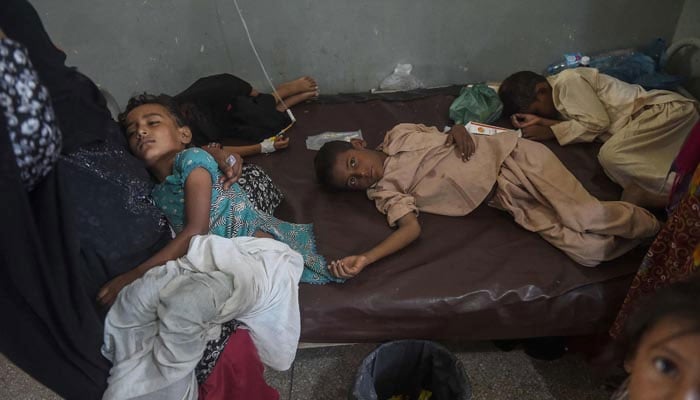
The World Health Organisation (WHO) has said that more than $81 million are required to address the health emergency in Pakistan, as it warned that the health risks are increasing in the flood-hit areas of Pakistan.
According to UN News, around eight million people are in the need of essential health care, as per WHO.
"Public health risks are increasing, driven by damaged infrastructure, stagnant water and inadequate sanitation facilities," WHO Regional Emergency Director Dr Richard Brennan was quoted as saying.
The official said that the enormous bodies of flood water still standing still in the affected areas have provided ground for mosquitoes to breed. As a result, 32 districts of Pakistan are currently under the grip of a malaria outbreak.
Dr Brennan said that it will be difficult for the relief organisations to handle this issue and funds worth over $81 billion are needed in order to ensure the coordinated delivery of essential healthcare services and effective management of severe acute malnutrition, and stronger outbreak detection.
He added that a food crisis is looming, the economy is deteriorating, and winter is fast approaching. The eight million flood-affected people who need health assistance require essential medical supplies and access to essential healthcare, he said.


-
 Who is Song Li? China puts her forward for WHO leadership role
 -
 CDC monitors travelers from Siberia after plague worker’s death, director says
 -
 Russia pushes back on plague death reports, defends WHO notification
 -
 WHO deems Russia plague risk 'low' following lab technician’s fatal illness
 -
 New York declares Measles state of emergency amid nationwide disease resurgence
 -
 First-of-its-kind treatment shrinks unborn baby’s tumour before birth
 -
 France steps up Ebola support in Congo as fears of resurgence grow
 -
 Vance’s fraud crackdown may raise health insurance costs for Americans
-
 One common mistake elevates blood pressure readings by 7 points, study warns
 -
Moderna loses US government license defense in patent case
-
Novo says new Ozempic shows lower cardiovascular risk compared with Lilly’s Mounjaro
-
University of Nottingham researchers say new gel could regrow tooth enamel in weeks