
Amnesty, HRW ask govt to repeal draconian law
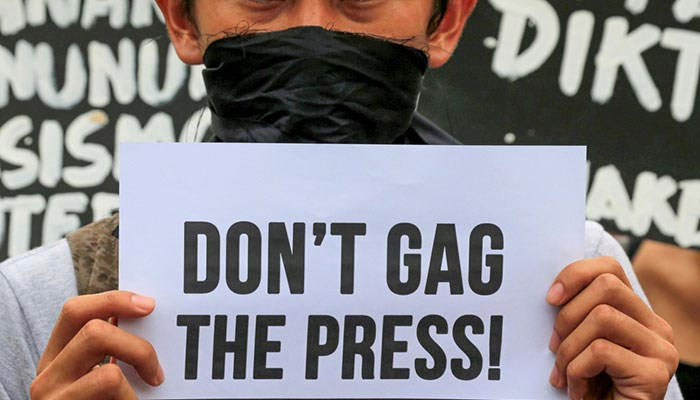
NEW YORK: The Pakistan government’s amendment to its cybercrimes act is the latest in a concerted campaign to restrict freedom of expression and stifle dissent, Amnesty International (AI) and Human Rights Watch (HRW) said on Monday.
On February 18, 2022, the government passed an ordinance amending the Pakistan Electronic Crimes Act, 2016 (PECA) to make online “defamation” of authorities, including the military and judiciary, a criminal offense with harsh penalties.
“PECA has been used to silence freedom of expression on the pretext of combating ‘fake news,’ cybercrime, and misinformation,” said Nadia Rahman, acting deputy regional director for South Asia at Amnesty International. “This amendment not only violates the Pakistan Constitution, but also puts anyone who questions the government or other state institutions at further risk. It particularly endangers journalists, human rights defenders, and political opponents who run the risk of prosecution for merely doing their jobs.”
While PECA already contained broad provisions criminalising defamation of “natural persons,” the Pakistan Amendment Ordinance (2022) expands those provisions to include criticism of government bodies and the military by inserting a new definition of “person” that includes “any company, association, or body of persons, … institution, organisation, authority or any other body established by the government under any law or otherwise.”
The amendment makes defamation a nonbailable offence, and increases the maximum prison term, if convicted, from three to five years. It also expands the definition of those who can initiate criminal proceedings for defamation, allowing any person or institution to register the complaint.
Pakistan has ratified the International Covenant on Civil and Political Rights (ICCPR), which protects the right to freedom of expression. Article 19 of the ICCPR allows for restrictions on freedom of expression to protect the reputations of others, but such restrictions must be necessary and narrowly drawn. The Amnesty International and Human Rights Watch oppose all criminal defamation laws as a disproportionate and unnecessary response to the need to protect reputations that chills freedom of expression. Expanding PECA’s already overbroad criminal defamation provisions to online statements about government institutions violates Pakistan's international obligations.
By excluding civil society groups and the private sector from consultation on the amendments, the government prevented genuine public scrutiny of the amendments prior to enactment.
The amendment to PECA also makes it incumbent upon courts to conclude trials within six months and furnish monthly progress reports of pending trials, and orders federal and provincial officials to remove any obstacles that may hinder the progress of the proceedings. It is not evident how an already overburdened court system will safeguard people from unfair trials and poor evidence gathering, the groups said.
“The Prevention of Electronic Crimes Act neither protects the public from legitimate cybercrime concerns nor respects fundamental human rights,” said Patricia Gossman, Asia associate director at Human Rights Watch. “The new amendments will further embed violations of basic rights with a thin veneer of legality.”
On Feb 23, the Islamabad High Court restrained the Federal Investigative Agency, the main investigative body for PECA, from making any arrests under the ordinance. While this offers temporary relief, it is not enough to mitigate the grave impact that the amendment will have on Pakistan’s already imperilled freedom of expression by potentially putting anyone at risk of criminal charges for expressing their views online, Human Rights Watch and Amnesty said.
The Pakistan Electronic Crimes Act, 2016 is a draconian law that contains vague and overly broad offenses. It has been criticised by Pakistan’s human rights defenders and civil society organisations for criminalising legitimate forms of expression based on supposed national security concerns and to protect majoritarian interpretations of religion. Muzzling online and offline expression is part of an ongoing crackdown on dissent.
In 2021, the Pakistan Media Development Authority Ordinance was proposed but not enacted which effectively enables press censorship by bringing all media under one regulator, granting the government unchecked powers to punish journalists through steep fines, instituting special “media tribunals”, and appointing government officials to key positions. The draconian Removal and Blocking of Unlawful Online Content (Procedure, Oversight and Safeguards) Rules legislation which would censor online content was enacted in October 2021.
“The amendment, in effect, permits authorities to digitally police what people are saying online and levy heavy punishments if they do not like what they are saying,” said Patricia Gossman.
“Laws should be centred around protecting human rights, not insulating the government from legitimate criticism. The authorities should either swiftly repeal PECA and this amendment entirely, or substantially amend them to align them with international human rights standards,” Nadia Rahman said.


