
Chabahar port becomes operational, Gwadar couldn’t attract traffic: expert
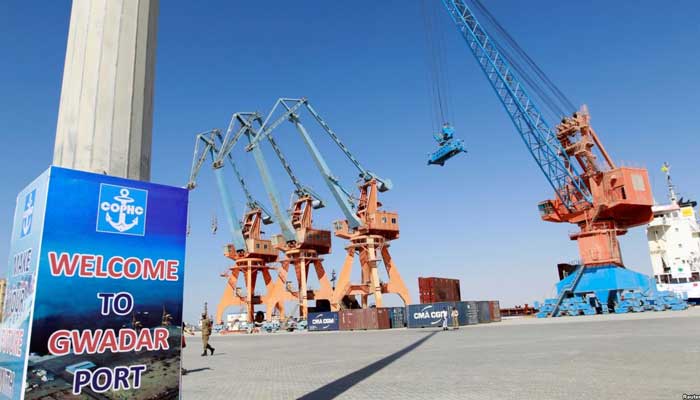
Renowned analyst Ahmed Rasheed said connectivity could provide a solution for regional peace. He said the Iranian port of Chabahar had become operational, while Gwadar could not attract much traffic so far.
ISLAMABAD: Defense and foreign affairs experts Thursday said the Pakistan-India crisis was not yet over so the US, China as well as other western countries will have to continue pushing them to de-escalation through the backdoor channels to avoid a full-scale war.
They expressed these views during a seminar titled “Crisis or Peace: Pakistan, India and Afghanistan” organized by the Institute of Policy Reforms (IPR) here at the Islamabad Club. It was also consensus among them that Pakistan should clean and bring its house in order as non state actors (NSAs) were creating more difficulties for it at the diplomatic level.
It was also pointed out that the recent escalation might result into hiking of defense budget by the two states, as New Delhi had already talking about it. The role of the media was also criticised, with the war mongering propaganda launched by the Indian media during the recent crisis.
“We cannot accept the Indian offense as “new normal” as space of limited conflict so Pakistan responded. As the fall-out of recent crisis, the defense budget might increase by both states, as India has already started taking about it. The US and other western states will have to play more active role for bringing normalization in this region,” Lt Gen (R) Ishfaq Nadeem said.
Gen Nadeem said reconciliation efforts for bringing peace in Afghanistan would not end by striking an agreement only among the stakeholders concerned but the real challenge would be ensuring implementation of the agreement to bring normalcy in Afghanistan.
He said the US will have to come up with major concessions to bring peace in the region as the Taliban possessed 56 percent territory of Afghanistan. He said Washington will have to bring all inter agencies on one page, as 14,000 to 16,000 US troops and 10,000 contractors were stationed in Afghanistan at the moment. He said the Indian media was promoting war-mongering which was not good for the regional peace.
Moeed Yousaf, author and renowned expert, said the Pak-India crisis was of no surprise in the aftermath of Pulwama attack and he did not think that the crisis was over. He said the message from US and other important capitals was not only de-escalation, but Pakistan was also being pressed to move ahead with taking a clear-cut action for devising short to long-term roadmap of next 5, 10 to 25 years against the proscribed outfits.
He presented a scenario and stated that what would happen if ISIS or Al-Qaeda used youths for launching an attack inside India so the situation was very risky. He said there was no room for militarization and NSAs were bound to increase difficulties for Pakistan at the international levels.
He proposed that Pakistan and India must share intelligence in order to avoid any other attack in each other’s territory. He said the US, China, Russia and other western countries should play a proactive role to manage and overcome this lingering crisis.
Lt Gen (R) Asif Yasin Malik said there was no peace in Afghanistan in last 100 years except during the tenure of Zahir Shah. He said the Taliban were very savvy who had brought the US to the negotiating table.
Renowned analyst Ahmed Rasheed said connectivity could provide a solution for regional peace. He said the Iranian port of Chabahar had become operational, while Gwadar could not attract much traffic so far.
He said Afghans were shifting their trade through Chabahar as bilateral trade had come down from $5 billion to $2.5 billion and it touched the lowest ebb of $1.5 billion last year. “We have lost a captive market,” he added.
Renowned journalist Rahimullah Yousafzai said peace talks for Afghanistan would continue despite some deadlocks, as both sides started understanding each other point of view. He said the foremost demand of Taliban was withdrawal of US from Afghanistan. Now efforts are underway to convince Taliban for stopping them to launch the spring offense next month in April in a confidence-building measures to make the peace process successful.
Former minister for commerce and Chairman IPR Humayun Akhtar Khan said Pakistan will have to come up with out-of-box solutions to ensure peace and juice up economy. He said whenever economy grew at a faster pace, it plunged into balance of payment crisis and it was happening again and again indicating that there were deep-rooted structural problems facing Pakistan’s economy.


