
‘Baloch Roshan Chehray’
Activist and researcher Ramazan Baloch in his recent book ‘Baloch Roshan Chehray’ (bright Baloch figures) beautifully explains the contribution of various political, social and cultural personalities and tries to re-link Karachi’s community with Balochistan.
Karachi is considered to home to the largest Baloch urban and rural population in the world. The Baloch community living in the city, especially in its ancient town of Lyari, has been involved in left-leaning nationalist politics and the promotion of literary activities and the Balochi language since 1960s. They had elected iconic Baloch figure Mir Ghous Bakhsh Bizenjo, known as Baba-e-Balochistan, from Lyari, made their neighborhoods strongholds of the then National Awami Party and the Pakistan National Party. In 1967, the city’s Baloch students belonging to working class families played a key role in the formation of the Baloch Students Organisation, one of the country’s influential student outfits.
On the literary front, the city’s Baloch community is proud of their contribution to Balochi poetry, fiction and culture, and many Baloch literary works trace their roots back to Karachi. Situated adjacent to the Malir River ridge, the Sayad Hashmi Reference Library, founded by slain Baloch literary figure Saba Dashtyari in March 2005, is the first and only reference library on Baloch history and culture in the world. Some forty years ago, the first-ever Baloch language feature film ‘Hammal o Mahganj’ in Pakistan was produced by Karachi’s well-known TV actor Anwar Iqbal. Sadly, it did not manage to make it to the silver screen because of political reasons.
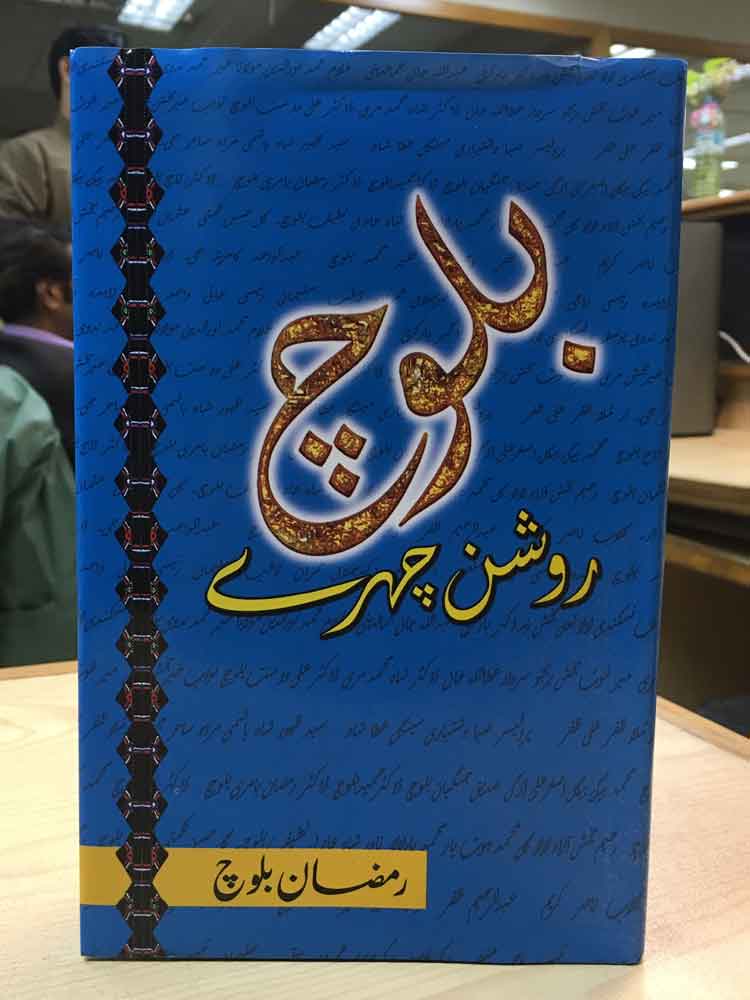
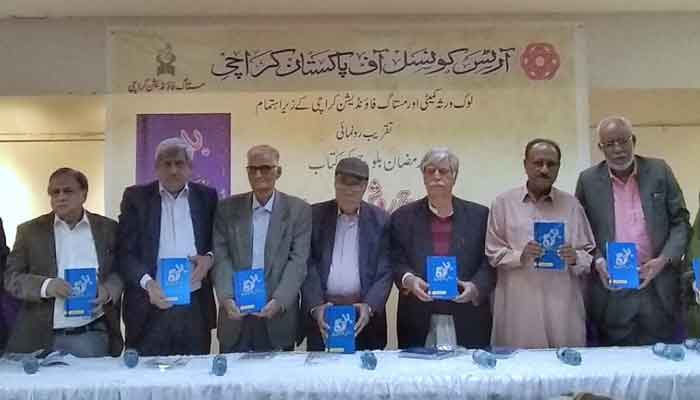
Activist and researcher Ramazan Baloch in his recent book ‘Baloch Roshan Chehray’ (bright Baloch figures) beautifully explains the contribution of various political, social and cultural personalities and tries to re-link Karachi’s community with Balochistan. The book, published by Mustag Foundation Karachi, was launched in a jampacked gathering at the Arts Council of Pakistan last week, where a number of people not only from Karachi but also from Balochistan attended the event. Before it, Baloch has authored two of his semi-autobiographies – ‘Lyari ki Adhuri Kahani’ and ‘Lyari Ki Unkahi Kahani’.
In the latest book, the author has profiled 42 Baloch figures, ranging from known political leaders to literary figures and poets, based primarily on his memories and observations. Among the political figures are Nawab Khair Bakhsh Marri, Bizenjo, Sardar Ataullah Mengal, Lal Bakhsh Rind, Waja Yousaf Niskandi, Siddique Baloch, Lala Faqir Muhammad, Waja Akbar Barakzai, Abdul Raheem Zafar, Usman Baloch, Lala Gul Muhammad Hoat and GR Ghulab.
He said Rind, Niskandi and Barakzai – Lyari-based political activists – influenced Baloch youths and imparted political education. “Until 1960, Lyari’s entire politics was surrounded around the Haroon family, which only kept its relations with the area’s elite,” he says.
However, mentioning a public rally in Lyari’s Kakri Ground in 1962 against the alleged injustices with Balochistan, he says that a large number of Baloch youths were there to listen to and see Baloch leaders Marri, Bizenjo, Mengal and Mir Gul Khan Naseer. “It was our first collective meeting with Marri, who inspired us very much. Later, because of Rind, a Lyari-based prominent left activist, we met the leaders several times at his house,” he writes.
Writing about the political connections between Balochistan and Lyari, the author notes that any political movements which started in the former had far-reaching impacts on the political scenario of the latter.
Among the literary figures, he has profiled Ghulam Muhammad Nooruddin, Maulana Khair Muhammad Nidvi, Abdullah Jan Jamaldini, Ata Shad, Murad Sahir, Zahoor Shah Hashmi, Akbar Barakzai, GR Mullah, Zafar Ali Zafar, Dr Shah Muhammad Marri, Dr Ali Dost, Saba Dashtiari, Rahim Bakhsh Azad, Dr Hamed Baloch, Dr Ramzan Bamri, Muhammad Baig Baigal and Gul Hasan Kalmati.
Nooruddin, a resident of Lyari, in 1932 launched fortnightly Balochi newspaper ‘Al-Baloch’ along with Majlis-e-Ahrar-e-Islam’s leader Abdul Samad Sarbazai, which covered issues of Baloch communities of Karachi, Balochistan and Iran. In 1939, Bizenjo sent Nooruddin as a representative of the Baloch League’s representative from Karachi to attend a political conference of the ‘Kalat State National Party’ in Mastung.
Encouraging young activists from Lyari who are carrying out their social and cultural activities in the area, he has profiled Nasir Kareem Baloch, Abdul Wahid Comrade, Waheed Noor, Ishaq Khamosh, Imran Saqib and Hani Baloch.






-
 Funeral Home Owner Sentenced To 40 Years For Selling Corpses, Faking Ashes
 -
 Why Is Thor Portrayed Differently In Marvel Movies?
 -
 Dutch Seismologist Hints At 'surprise’ Quake In Coming Days
 -
 Australia’s Liberal-National Coalition Reunites After Brief Split Over Hate Laws
 -
 DC Director Gives Hopeful Message As Questions Raised Over 'Blue Beetle's Future
 -
 King Charles New Plans For Andrew In Norfolk Exposed
 -
 What You Need To Know About Ischemic Stroke
 -
 Shocking Reason Behind Type 2 Diabetes Revealed By Scientists
 -
 SpaceX Cleared For NASA Crew-12 Launch After Falcon 9 Review
 -
 Meghan Markle Gives Old Hollywood Vibes In New Photos At Glitzy Event
 -
 Simple 'finger Test' Unveils Lung Cancer Diagnosis
 -
 Groundbreaking Treatment For Sepsis Emerges In New Study
 -
 Roblox Blocked In Egypt Sparks Debate Over Child Safety And Digital Access
 -
 Savannah Guthrie Addresses Ransom Demands Made By Her Mother Nancy's Kidnappers
 -
 OpenAI Reportedly Working On AI-powered Earbuds As First Hardware Product
 -
 Andrew, Sarah Ferguson Refuse King Charles Request: 'Raising Eyebrows Inside Palace'