
China building eight submarines for Pakistan
China has been extending support to its all-weather ally Pakistan with an aim to counter any external maritime threat. The latest in its series of efforts, China is building eight submarines for Pakistan to ensure a tough competition to the Indian Navy in the Indian Ocean.
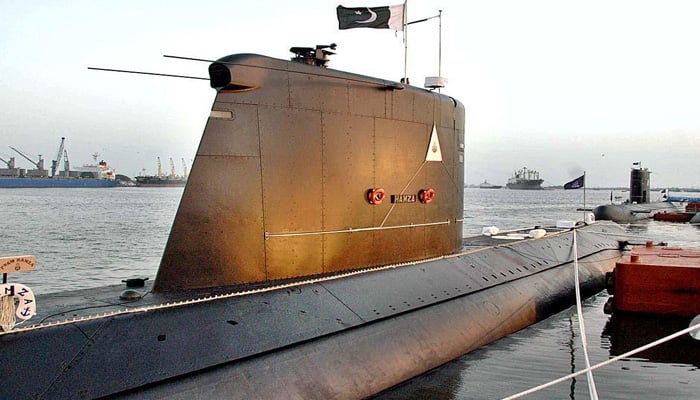
ISLAMABAD: China has been extending support to its all-weather ally Pakistan with an aim to counter any external maritime threat. The latest in its series of efforts, China is building eight submarines for Pakistan to ensure a tough competition to the Indian Navy in the Indian Ocean.


Media reports quoting sources suggested on Monday that under Project Hangor, China’s shipbuilding industry is building the submarines which will soon be handed over to Pakistan. India, as of now, has 16 submarines while Pakistan has 10. The acquisition of new submarines is a part of Pakistan’s effort to scale up its capabilities in underwater warfare.
Detailed coverage: Pakistan-China Economic Corridor
At a time when instances of Indian troops infiltrating into the Chinese territory is also not new, the submarines will add to Pakistan's strength and are likely to be a headache for the Indian Navy.

The move comes at a time when China has already successfully launched two remote sensing satellites for Pakistan. Indians believe that these will also help keep an eye on India. The satellites -- PRSS-1 and PakTES-1A --were launched from the Jiuquan Satellite Launch Centre in northwest China using a Long March-2C rocket.
The PRSS-1 is China’s first optical remote sensing satellite sold to Pakistan. It is the 17th satellite developed by the China Academy of Space Technology (CAST) for an overseas buyer. It is being said that the PRSS-1 will be used for land and resources surveying, monitoring natural disasters, agriculture research, and urban construction and providing remote sensing information for the CPEC under the Belt and Road Initiative (BRI) of the Chinese government.

The CPEC is a network of infrastructure projects that are currently under construction throughout Pakistan that will connect China's Xinjiang province with the Gwadar Port in Pakistan's Balochistan province, giving China an opening to the Arabian Sea.
The satellite can turn at wide angles to enable the cameras to cover a wider range. The PRSS-1 has an information security design, and the data can be encrypted.


