Pakistan acquires powerful missile tracking system from China: report
In what considered to be an unprecedented deal, China has sold Pakistan a powerful tracking system that could speed up the Pakistani military’s development of multi-warhead missiles, South China Morning Post reported Thursday.
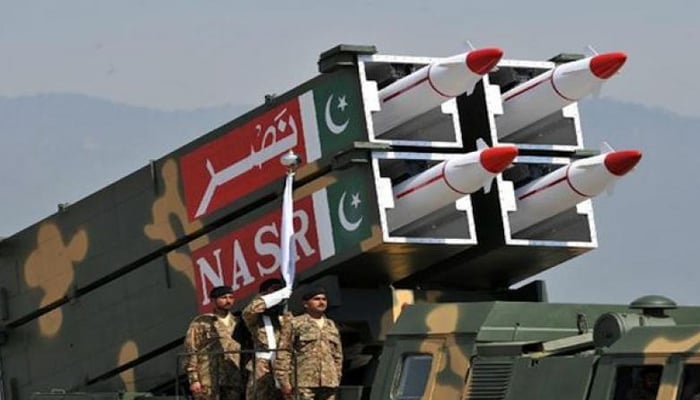
HONG KONG: In what considered to be an unprecedented deal, China has sold Pakistan a powerful tracking system that could speed up the Pakistani military’s development of multi-warhead missiles, South China Morning Post reported Thursday.
The report stated that the tracking system could allow Islamabad to speed up development of missile that can target multiple cities or military sites
The confirmation of this technology transfer was made in an announcement by the Chinese authorities on Wednesday.
A statement on the Chinese Academy of Sciences (CAS) website said China was the first country to export such sensitive equipment to Pakistan.
Zheng Mengwei, a researcher with the CAS Institute of Optics and Electronics in Chengdu, Sichuan province, confirmed to the Hong Kong based newspaper that Pakistan had bought a highly sophisticated, large-scale optical tracking and measurement system from China.
The Pakistani military recently deployed the Chinese-made system “at a firing range” for use in testing and developing its new missiles, he added.
It has been a long-held notion that Beijing is supporting Islamabad’s missile development programme. But solid evidence can seldom be found in the public domain, making the CAS statement a rarity.
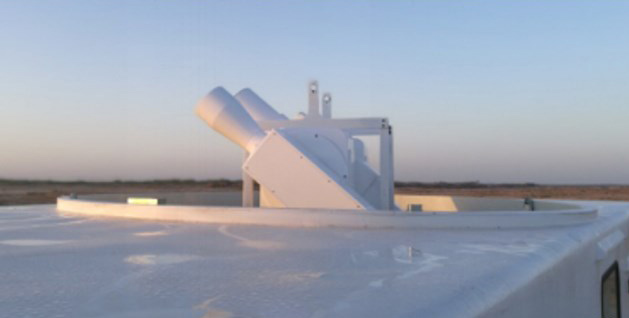
The Chinese team enjoyed VIP treatment during the nearly three months it spent in Pakistan assembling and calibrating the tracking system and training technical staff on how to use it, according to the statement.
“The system’s performance surpassed the user’s expectations,” it said, adding that it was considerably more complex than Pakistan’s home-made systems. It did not reveal how much Pakistan paid for the system.
An optical system is a critical component in missile testing. It usually comes with a pair of high-performance telescopes equipped with a laser ranger, high-speed camera, infrared detector and a centralised computer system that automatically captures and follows moving targets.
The device records high-resolution images of a missile’s departure from its launcher, stage separation, tail flame and, after the missile re-enters atmosphere, the trajectory of the warheads it releases.


-
 Trump says execution of Nidal Hasan will not be livestreamed
 -
 New study sounds alarm as Doomsday Glacier melts more aggressively than thought
 -
 Piers Morgan extols Zelenskiy after Elon Musk targets Ukrainian president
 -
 Lindsay Clancy update: Why lone holdout juror believes she was guilty
 -
 Kremlin sends strong message to Ukraine as Zelenskyy resumes strikes on Russian refineries
 -
 US prosecutors hit ousted Venezuelan leader Nicolas Maduro with torture charges
 -
 Jeffrey Donaldson handed 15-year sentence over child sex abuse offences
 -
 'Time for Zelensky to go': Elon Musk calls for Ukrainian president to step down amid Starlink dispute
-
 Hubble data hints at planet born after its star died
 -
Trump campaigns for GOP as Democratic PAC pours millions into senate races ahead of midterm elections
-
China-North Korea bridge finally opens after 12-year delay: ‘New chapter of bilateral trade’
-
Zelenskyy signals new Russian refinery strikes after feeling ‘betrayed’ by Trump