
Pharma industry urges health ministry to facilitate local API production, rationalise taxes
Delegation urged the minister to assist in reducing import duties on pre-fabricated structures
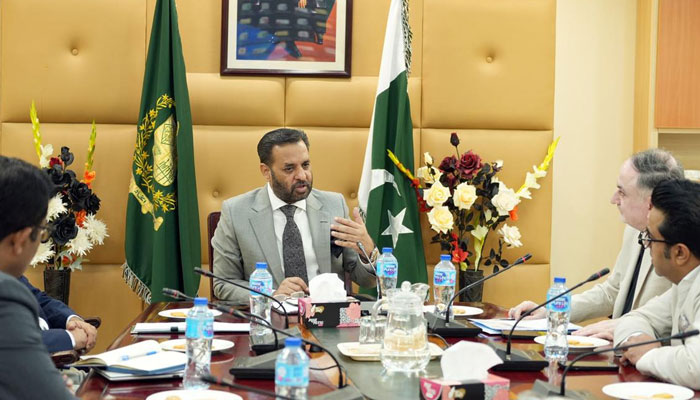
ISLAMABAD: The country’s pharmaceutical industry has called on the federal health ministry to urgently facilitate the local production of active pharmaceutical ingredients (APIs), rationalise import taxes on APIs and other raw materials, and support regulatory reforms aimed at enhancing the country’s pharmaceutical exports.
In a high-level meeting held in Islamabad with Federal Health Minister Mustafa Kamal, a delegation of the Pakistan Pharmaceutical Manufacturers Association (PPMA), led by its Chairman Tauqeer-ul-Haq, highlighted several critical issues facing the domestic pharma sector.
The delegation urged the minister to assist in reducing import duties on pre-fabricated structures, which are essential for meeting international regulatory and accreditation standards necessary to compete in global markets.
The PPMA chairman emphasised that with the right policy support, the country’s pharmaceutical sector could significantly increase exports and reduce its heavy reliance on imported raw materials. He said international compliance was increasingly tied to infrastructure and process certifications, and lower duties on such capital inputs would give local manufacturers a competitive edge.
He noted that a crucial amendment in the Drug Law Project had been finalised following a series of meetings with the health ministry, the Special Investment Facilitation Council (SIFC), Drug Regulatory Authority of Pakistan (Drap), and the Ministry of Law. This amendment, he said, now awaits approval by the Drap Policy Board.
The PPMA officials stressed that the early approval of this amendment was vital for the smooth operation of the industry and to attract foreign investment into the country’s pharmaceutical sector.
In response, Health Minister Mustafa Kamal assured the PPMA delegation that the proposed amendment would be approved once the new federal health secretary assumes office and convenes the Policy Board meeting.
Addressing the broader issues, the health minister and senior MQM-P leader reiterated the government’s commitment to achieving self-sufficiency in API production. “The government is fully committed to making Pakistan self-reliant in pharmaceutical production. We are prioritising every step necessary to strengthen local manufacturing and reduce dependence on imported APIs,” Kamal said.
Additional Secretary of Health and Chief Executive Officer Drap Dr Obaidullah was also present at the meeting wherein detailed discussions were held on local drug production, API manufacturing, export potential, and proposed reforms to existing drug rules.
The health minister directed the Drap to submit a comprehensive report on the proposed naphtha cracker project—a critical upstream facility required for local production of pharmaceutical-grade raw materials. He said such infrastructure would ensure sustained availability of essential materials and help stabilise medicine prices.
Highlighting regional trade cooperation, Kamal appreciated progress made in health-related agreements with Afghanistan and underlined the need to expand collaboration in the API domain. “Our pharmaceutical diplomacy with Afghanistan will grow stronger, and both countries will benefit through shared access and development in this sector,” he noted.
On the issue of counterfeit medicines, the health minister reiterated the government’s zero-tolerance policy. He announced the introduction of a modern barcoding system, under which each medicine pack will be printed with a unique barcode, enabling patients and healthcare professionals to verify the authenticity and retail price of the product with ease.
“Fake medicines not only damage Pakistan’s reputation globally but pose a direct threat to human lives. There can be no compromise on this. The pharmaceutical industry must ensure that all required safeguards are in place to protect public health,” he said.






-
 Princess Kate Talks About 'hard Conversations' With Kids Amid Andrew Drama
 -
 Prince William Mocked For Being ‘most Reluctant’ King-in-waiting
 -
 Prince William Makes Rare Admission After Andrew Arrest
 -
 ‘Got A Lot Of People Gunning For Me’: Trump Makes First Comments On Mar-a-Lago Intruder
 -
 What Countries Have A Say In Andrew Removal From Line Of Succession?
 -
 How Did Luci4 Die? Police Probes 'BodyPartz' Sudden 'suspicious' Death
 -
 King Charles Criticized By Princess Anne Over Andrew Drama
 -
 Hailee Steinfeld Details Preparations Ahead Of Welcoming First Kid With Josh Allen
 -
 Shocking Details Revealed About Gunman 'Austin Tucker' Shot Dead At Trump’s Resort 'Mar-a-Lago'
 -
 Queen Camilla Meets Gisèle Pelicot, Sends Powerful Message To Victims As Andrew's Scandal Deepens
 -
 Cancer-stricken King Charles At Breaking Point?
 -
 Andrew Leaves King Charles No More Moves To Play: ‘Can’t Just Say We Got Nothing’
 -
 Sterling K. Brown Explains How Sharing His Kids' Photos On Social Media Can Keep Them Safe
 -
 Keir Starmer Gives Major Advise To King Charles Amid Andrew Scandal
 -
 Nick Reiner Pleads Not Guilty In Famous Parents' Double Murder Which Shocked The World
 -
 Benicio Del Toro On Losing Mom In Chldhood: 'I’m Still Dealing With It'