
Rising taxes pushing health care beyond patients’ reach in Pakistan: experts
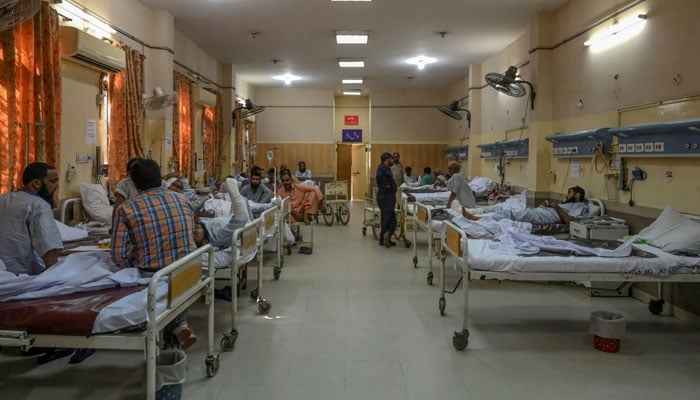
The imposition of an 18% sales tax on essential medical devices and diagnostic equipment is inflating the cost of healthcare in Pakistan and placing life-saving treatment out of reach for millions of patients, health experts and industry representatives warned on Saturday.
They say that before any medicine or surgical procedure is prescribed, accurate diagnosis through medical devices is the starting point—and taxing this critical first step is worsening an already fragile healthcare landscape.
Even charitable institutions like the Indus Hospital network, which provide free-of-cost care to thousands of patients every day, are struggling to cope with the financial burden passed onto them by suppliers due to the General Sales Tax (GST) regime.
“This tax shrinks the ability of welfare and charity-based hospitals to deliver treatment to the poor,” said Prof. Dr. Abdul Bari Khan, founder and president of Indus Health Network. “We run on donations, and every extra rupee spent on taxes is a rupee not spent on saving lives.”
In a country where the public health expenditure has dropped to just 1% of GDP and most people pay out-of-pocket for healthcare, the GST on medical devices has become a bottleneck in delivering timely and affordable diagnosis and treatment.
The burden is being shifted directly onto patients, with rising charges for diagnostic tests such as MRIs, CT scans, and cardiac monitoring, and increasing costs of surgical procedures due to higher procurement prices of critical equipment.
The Healthcare Devices Association of Pakistan (HDAP), which represents suppliers of over 90% of essential medical technologies in the country, has taken up the issue directly with Finance Minister Muhammad Aurangzeb and Federal Board of Revenue (FBR) officials.
In a detailed follow-up letter to the finance minister, HDAP Chairman Syed Omer Ahmed highlighted the absurd disparity in tax treatment: while essential medicines are taxed at just 1% under the Eighth Schedule of the Sales Tax Act, 1990, medical devices—without which these medicines cannot be administered or monitored effectively—are taxed at the full 18% rate.
“This tax regime is not only unfair, it’s illogical,” said Syed Omer Ahmed. “You cannot diagnose or monitor a disease without devices, and yet we’re treating these tools as luxury items. It directly contradicts the government’s commitment to Universal Health Coverage.”
HDAP has called for immediate rectification of this “anomaly” and proposed that DRAP-registered essential medical devices be included under the same preferential tax rate granted to essential medicines.
During a pre-budget consultation meeting with the finance ministry on April 30, HDAP representatives presented the dire consequences of the existing policy, including reduced procurement capacity for public hospitals, limited stock availability in charitable hospitals, and increased operating costs across the healthcare ecosystem.
They also raised technical concerns over customs valuation methods that incorrectly assess imported devices by weight instead of per unit, further skewing their affordability.
The association noted that government-run procurement agencies are now struggling to procure adequate quantities of diagnostic kits, surgical equipment, and lifesaving machines—ultimately delaying or denying care to critically ill patients.
“If these devices are not made accessible, patients will suffer, and the health sector will continue to collapse under its own inefficiencies,” Ahmed warned.
Health experts echo these concerns, saying that conditions like cancer, heart failure, kidney disease, and infectious outbreaks require rapid diagnostics and precise equipment—none of which can be sourced locally at scale without significant cost.
The private sector is passing on the tax burden to patients, while non-profit institutions are being forced to cut back on services, delay treatments, or rely on inconsistent donor support.
Public health specialists are urging the federal government to seize the upcoming budget window to reform this policy. They argue that instead of taxing healthcare infrastructure, the government should subsidize it and invite collaboration with international experts and Pakistani-origin physicians working abroad to strengthen the domestic system.
“Taxing medical devices is not just a policy misstep—it’s a health emergency,” said a senior official at the Ministry of Health, who asked not to be named. “Unless the government acts now to ease the burden on both patients and providers, we are heading toward a public health crisis that could have been prevented.”
As the federal budget 2025–26 approaches, the ball is in the finance ministry’s court. Whether they choose to uphold their commitment to equitable healthcare or continue treating essential diagnostics as taxable commodities could determine the future of health access for millions in Pakistan.


