
Back to blood?
KP govt decided to conduct clearance operation in four areas of Lower Kurram, with local residents set to be evacuated
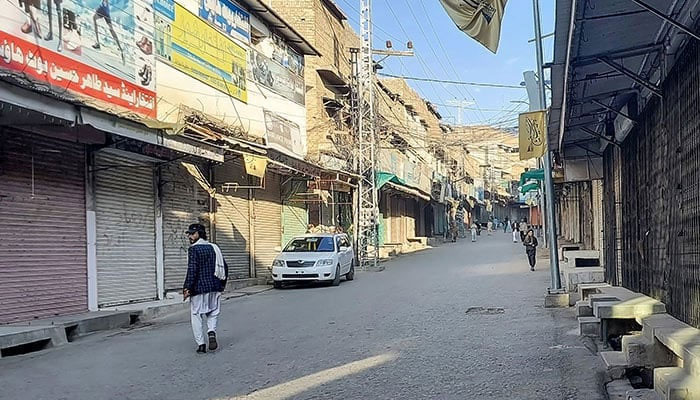
It has been well over a month since a Grand Peace Jirga constituted by the Khyber Pakhtunkhwa government brokered a peace agreement aimed at ending the violence in Kurram. The conflict, driven in part by sectarian tensions, had claimed an estimated 130 lives up to that point. At least temporarily, the agreement appeared to be working and violence in the region declined, the roads were reopened and aid was allowed to enter. However, this week brought a fresh spate of bloodshed in the area as an aid convoy heading for Parachinar was attacked. At least seven people lost their lives in the attack while two of the attackers were also killed. Before the January peace agreement, the Thall-Parachinar road, the only land route connecting Upper Kurram with other parts of the country, was closed due to the persistent violence in the region. Monday’s ill-fated convoy was one of many to pass through the region since the agreement led to the land link being reopened, carrying around $120 million worth of crucial goods. However, the presence of a high-security escort did not deter those seeking to drag the region back under the rule of the gun, at least not this time.
Nor is this the first time that the Kurram peace agreement has been violated. The Khyber Pakhtunkhwa government has now decided to conduct a clearance operation in four troubled areas of Lower Kurram, with the local residents set to be evacuated. The elimination of illegal bunkers in the area will also be expedited and more measures will be taken to eliminate illegal arms from the region. That such steps are still needed so long after the peace agreement and that high-security aid convoys are still in danger of attack, underscores just how challenging and painstaking it will be to restore normalcy to Kurram. But, in a way, this is to be expected.
The sectarian tensions, militancy, proliferation of illegal arms and other dynamics that caused the outbreak of violence in Kurram have been building up over decades. The violence that exploded in the region last year was only the latest in the several rounds of protracted clashes that Kurram has experienced over the years. Nor was the January peace agreement the first attempt to do something about this problem. Such agreements have been around for almost as long as the violence itself and none, unfortunately, have stood the test of time. One thing that has been consistent though, is the rocky relationship between those who hold power in the centre and those in Khyber Pakhtunkhwa, particularly when it comes to formal tribal districts like Kurram. That the current KP chief minister appears to be in a political face-off with the centre and other entanglements in Islamabad does not help. KP and Islamabad will need to be on the same page for the latest peace agreement to turn out differently. And those in charge of the province cannot just sign accords and then go off to wage ‘bigger’ battles in Islamabad. Kurram and the dedicated application of anti-violence measures need to be at the top of the provincial government’s to-do list. The federal musical chairs can come later.







-
 Rita Ora Reveals Decision Her Husband Is Thankful For Today
 -
 Trump Administration Faces Lawsuit Over Cancelled Clean Energy Grants
 -
 Vehicle Crashes Into Crowd At Berlin Pride, Killing One
 -
 Meghan Markle Not ‘comfortable’ King Charles Wants To Heal Relationship Privately
 -
 Prince William Once Compared Prince George To Prince Harry: 'A Little Bit Of A Rascal'
 -
 Kelly Clarkson Talks About Making Single Life ‘magical’ In Fresh Confession
 -
 'Strictly Come Dancing' Unveils Five New Pros After Major Cast Shake-up: Watch
 -
 Prince Harry Hates Attending Public Gatherings Due To Meghan Markle After UK Visit?
 -
 Rosie O'Donnell Reveals Her Most Surprising Guest
 -
 Juventus Beat Standard Liege 1-0 For First Pre-season Win Under Luciano Spalletti
 -
 Suki Waterhouse Sees Herself Leaving US One Day
 -
 Matt Damon Unveils Driving Force Behind 'Good Will Hunting'
 -
 Lewis Hamilton Drops To Fifth After Hungarian Grand Prix Grid Penalty
 -
 Pamela Anderson Goes Unfiltered About Missing Upcoming 'Baywatch' Reboot
 -
 Dr. Courtney Shah, Seven-time 'Jeopardy!' Champion, Dies At 52
 -
 Arsenal Consider Move For Vinícius Júnior Amid Real Madrid Contract Uncertainty