Putin says AI job losses are inevitable: Here’s Russia’s strategy
Russia’s competitive strategy related to AI differs greatly from the US and Chinese approaches to AI
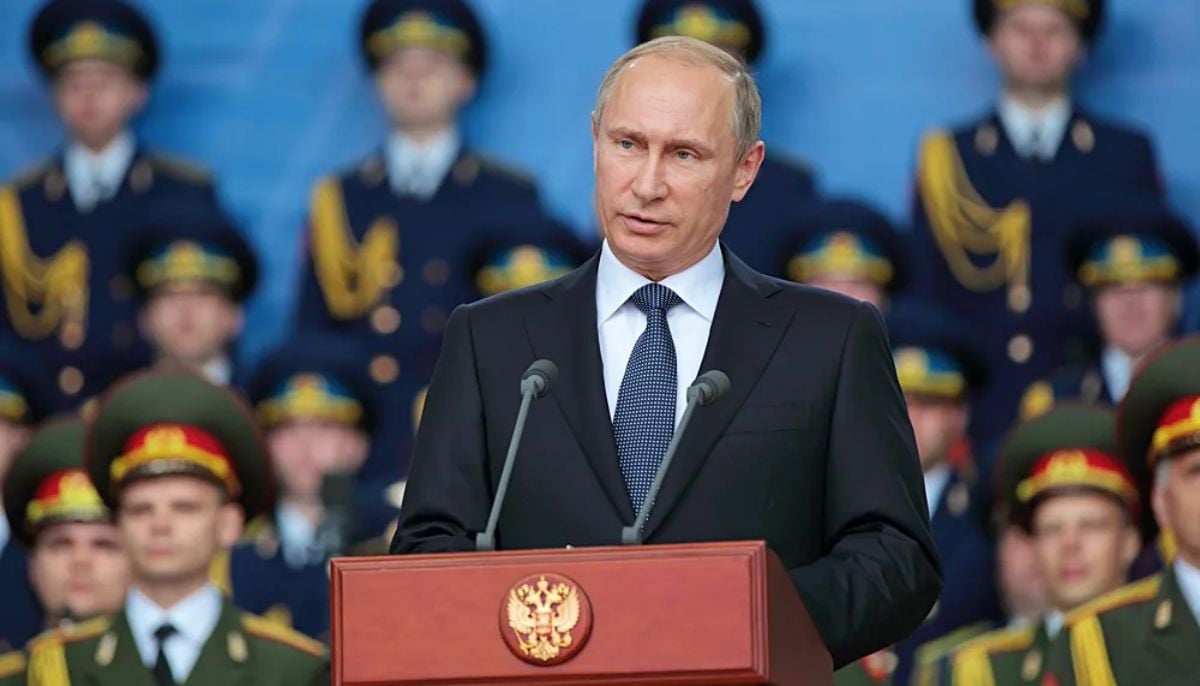
President of Russia Vladimir Putin has joined a growing chorus of world leaders warning that artificial intelligence (AI) will fundamentally restructure the global workforce but added a distinctly Russian strategic angle.
Addressing the Eurasian Economic Forum in Astana, Kazakhstan, Putin mentioned that millions of people will lose their jobs due to artificial intelligence technology, whole professions will cease to exist, and that this is "irreversible and inevitable."
Putin's statement particularly revolved around industries that have seen AI's impact, which includes the process automation, documentation, data analysis, and software development. The Russian president mentioned that AI had already led to job losses for junior employees and would next impact mid-level workers.
"These processes are irreversible and inevitable," he said, urging EAEU member states to stop treating these warnings as distant abstractions.
These statements are significant in view of the fact that the speaker comes from the leader whose government has always been known for minimising labour disruption issues.
The fact that world heads of state are discussing the topic of AI displacement in international economic forums rather than tech events indicates the significance of the problem in question.
In addition to worrying about the future, Putin succeeded in identifying one strategic area where Russia would have a competitive advantage in AI, namely, the sources of energy.
Notably, the development of such technologies requires a great deal of computational power, which presupposes large amounts of energy.
Putin highlighted that Russia had advanced nuclear energy technologies and, hence, introduced the idea that energy could be the key strategy for Russia’s success in AI together with its EAEU allies.
Thus, Russia’s competitive strategy related to AI differs greatly from the US and Chinese approaches to AI, considering their respective competitive advantages in semiconductors and data infrastructure.
Putin's speech arrives amid genuine global disagreement on how governments should respond. China has taken a regulatory approach; judicial protections prevent AI from outright replacing human positions in certain roles without banning AI use.



-
 Tencent's Hy4 AI model beats rivals in coding tests
 -
 Galaxy S26 gets One UI 9 beta 7 with new AI tools
 -
 OpenAI, Google, 100+ firms warn of AI hacking surge
 -
 AI legal battle: US judge blocks Pentagon’s blacklisting of AI firm Anthropic
 -
 Google revises spam policy in EU to avert antitrust fine
 -
 Google launches Gemini Omni 1.1 flash with major video creation upgrades
 -
 Meta eyes major annual spending on Anthropic AI tools: Here’s what to know
 -
 OpenAI, Nvidia CEOs set to speak at tech-focused G20 meeting: What to expect