
Split families across LoC losing hope
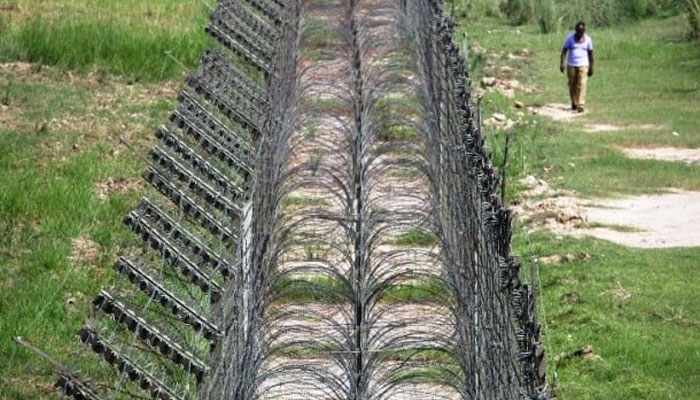
HUNDERMAN: The ancient trade route over the Himalayan passes of Hunderman once brought communities together, but the rugged peaks are now used as fortifications on the Line of Control (LoC) by India and Pakistan.
Indian apricot farmer Ghulam Ahmad, 66, separated from his parents as a teenager in the chaos of Kargil war, dreams of seeing his mother´s grave.
If the crossing was open, it would be a day´s trek of 50 kilometres to Pakistani territory, but to visit the site now requires a roundtrip of some 2,500 kilometres, visa permission that is hard to obtain, and expenses he cannot afford.
“What can we do?” said Ahmad. “Many here have died without meeting, only in hope of meeting.”
India and Pakistan have only one tightly restricted border point where people can cross, in Punjab far to the south, but few do so.
“If someone reopens this border many would go there,” he said. “And many from there would come here to meet relatives”.
Ahmad´s village in the Kargil area lies beside a raging glacial meltwater tributary of the Indus river, at the fortified LoC. Imposing snow-capped peaks shadow the village dotted with army posts. Kargil was also the site of the last major clash between the two countries in 1999.
Ali, 49, who uses only one name, is a tour guide in the summer months when curious tourists come to visit, and otherwise leads donkeys carrying supplies to Indian military mountain outposts.
He has never met his uncle´s family across the border.
“My mother´s brother and their entire family are on the other side,” Ali said, saying his mother “keeps crying about her separation from them”.
After a quarter of a century of relative peace, the narrow valley is far less isolated.
With development of infrastructure, such as roads and telecommunication lines, the families can now connect online, swapping messages after decades of silence — or even, for the first time.
But Mohammad Baqir, 51, said while he had now reconnected with relatives in Pakistan, his desire to meet in person and pray at a mosque together was just a dream. Baqir said. “There´s always fear that something may happen.”
Ahmad, the apricot farmer, said he showed his late father´s photograph to his teenage grandson, but he was not interested.
The young generations were “entirely disconnected”, he said.
Villager Ali Mohammad, 55, said his memories of the other sides were now “blurred”, the fading remnants of a once vibrant community split in two. “A generation has been lost, and the young haven´t connected on either side”.







-
 UK Asylum System Faces Changes As Refugees Will Get Temporary Protection Only
 -
 Meghan Markle Has Realised ‘star Power’ Is Not Enough After Jordan Trip
 -
 USC Leading Scorer Chad Baker-Mazara Leaves Program Amid Losing Streak
 -
 Google Is Winding Down Popular App 'Pixel Studio': Here's Why
 -
 Zendaya, Tom Holland Secretly Married?
 -
 Dove Cameron Reveals Why She's Limiting Relationship Talk After Damiano David Engagement
 -
 Bulls Vs Bucks: Giannis Out, Simons And Williams Sidelined
 -
 Princess Beatrice Is ‘haunted’ By Dreadful Shamed Andrew Arrest
 -
 Panthers Vs Islanders: Dmitry Kulikov Returns From Injured Reserve As Schwindt Hits IR
 -
 SAG-AFTRA Drops SAG Awards Name To Rebrand
 -
 Next Full Moon: How To Watch The Total Lunar Eclipse On March 3
 -
 Bhad Bhabie Shares Tender Moment With Daughter Amid Cancer Setback Hint
 -
 Silver, Gold Prices Surge Amid Geopolitical Uncertainty After US-Israel Attack On Iran
 -
 Britain To Trial Social Media Ban For Hundreds Of Thousands Of Children Under-16
 -
 Prince Harry Should Face Same Fate As Shamed Andrew, Says Expert
 -
 Oil Price Jumps, Stocks Fall After US And Israel Strike Iran