
Prof Waris Mir died with his boots on
Argued through his well-researched and scholarly dissertations discriminatory and anti-people laws being enforced by the Zia regime were not even per Islam
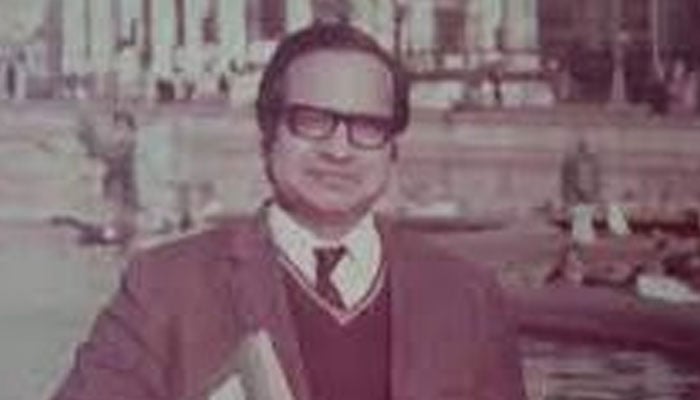
Remembering Prof. Waris Mir on his death anniversary brings to mind his prolific scholarly writings that advocated democracy, liberalism, and progressive thoughts during General Zia’s conservative and repressive rule. A professor at the Mass Communication Department of Punjab University, Lahore, Waris Mir belonged to an era in Pakistan’s history when few dared to challenge Gen Zia’s oppressive regime.
Although highly valued for his contributions to journalism, Waris Mir had many facets to his personality that are worth idealisation. “While a writer is penning down his concerns, he is not only writing for that particular day or era; he is rather putting together pieces of history for posterity. But in this age [of Zia dictatorship], when the journalist or writer is not ‘allowed’ to put into black and white what the truth is, what element of precision or accuracy is he going to secure through writing?” wrote Waris Mir in one of his articles in 1985.
The greatest contribution of Prof. Waris Mir during this decade of retrogression was that he challenged the state-sanctioned “truths” propagated by General Zia’s military regime. At that time, the Islamic Goebbels of Zia’s regime had firmly established that the founding fathers of Pakistan wanted religion to be the doctrinal spirit of the state and that the PNA’s movement of 1977 was a mandate of the people to make religion the source of law and life in the state. Waris Mir confronted this official narrative. He argued through his well-researched and scholarly dissertations that the discriminatory and anti-people laws being enforced by the Zia regime were not even per Islam itself. Islam, as he interpreted it, was far more progressive than the Goebbels had deemed it to be.
One of his finest contributions was a series of articles on women’s rights titled “Kya Aurat Aadhi Hai?” (Is a Woman Half a Human?). These articles, later published as a book, castigated the clergy-sponsored and Zia-backed discriminatory laws against women, particularly the new law of evidence that recognised a woman as half. Waris Mir also demonstrated in the same series that the family laws promulgated by the General Ayub regime were closer to the spirit of Islam than the chauvinistic legislation proposed by the Jamaat-e-Islami at that time.
Prof. Waris Mir also defended westernised educated women, their right to step out of traditional roles, and the rights of working women in the workplace. His best writings during those days tackled sensitive issues like press freedom, liberalism and secularism, dictatorship and democracy, referendums, non-party-based elections, constitutional amendments, and more.
From 1985 until his sudden death on July 9, 1987, Prof. Waris Mir dedicated himself to establishing a tradition of rational discourse. During this period, he explored the complex themes of intellectual development in various cultures and the requisites of the state, such as fundamental human rights and civil liberties granted in the West, holding men responsible for these rights. A recurring theme in his writings was the enumeration of the objective conditions these ideas faced and the proposed modes of their application in Pakistan. His writings during this time were entirely secular in spirit and presented a worldview opposite to that of the ruling regime, causing discomfort to the rulers.
It was only natural that, like all intellectual heretics, Prof. Waris Mir paid a price. He faced being declared persona non grata in government corridors, losing the prestige of his post at Punjab University Lahore, where he taught journalism. Further personal anguish came when he was harassed in the institution he had served with distinction for decades, and his son was falsely implicated in a murder case by the Islami Jamiat Talaba at the behest of Jamaat-e-Islami leadership. He always said that his foes wouldn’t be able to break him, but he died at the young age of 48. He probably knew the price he was paying willingly, once invoking the analogy of Prometheus in a column, saying, “If one has a heart, vultures shall pick.” The man, no doubt, had a heart.
Note: Bashir Riaz is the chairman of the Bhutto Legacy Foundation.


