
How long can the good times keep rolling in markets?
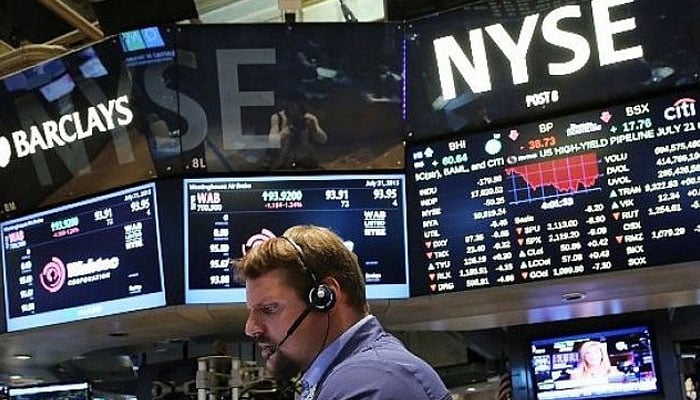
Now that US interest rates seem to have stabilised, there are supposedly way too many deals being cooked up for bankers to take a summer break. As the Financial Times has reported, the joke around Wall Street these days is that August in the tony enclave of the Hamptons on Long Island has been cancelled. “There’s money everywhere,” the co-founder of one alternative asset manager was quoted as saying at this month’s Milken Institute conference.
The Hamptons quip is probably an exaggeration. But it’s certainly fair to say some green shoots are sprouting in the capital markets, at least in the bellwether investment banking products.
For instance, first-quarter M&A deal values in the US and in Europe harked back to the dealmaking enthusiasm of the pandemic years, according to Linklaters. In the US, the value of public M&A deals topped $224.3bn, the highest value of deals since the second quarter of 2022, when the deal values were $260bn. In Europe, deal values reached $47bn in the first quarter — also the highest since the second quarter of 2022 — driven by an increase in dealmaking in the UK.
According to S&P Global, global bond issuance in the first quarter of 2024 increased by 15 per cent, to $2.4tn, from $2tn in the first quarter of 2023. And last week, there was a rush of new issuance in both the investment-grade and high-yield bond markets.
One not so bright spot — initial public offerings. IPO issuance in the first quarter 2024 continued to decline, according to S&P Global, to the lowest level since the second quarter of 2022. But April was the busiest month for IPOs since November 2021, according to Renaissance Capital, which also tracks IPO issuance.
So good times it seems. But all of this raises a question. We are seeing a turn downwards in the interest rate cycle but without the usual painful economic correction that can accompany such pivots. Are we overdue a reckoning? The stock market might be one place to look for signs that things are getting out of hand after the more than doubling of the benchmark S&P 500 from pandemic lows in 2020.
David Einhorn, the reclusive hedge fund manager at Greenlight Capital who correctly predicted the implosion of Lehman Brothers in 2008, is pretty clear that things are not all right. “The stock market is fundamentally broken!” Greenlight declared in its first-quarter letter to his investors. Einhorn’s beef with the equity markets, as the letter outlined, seems to be that investors either don’t “care about valuation” or cannot “figure out valuation”.
He believes that old-fashioned value investing, where investors find stocks that are fundamentally undervalued and hold them until other investors figure out what they have been missing, is all but dead. He thinks index funds are ruling the markets and making the mistake of overinvesting in overvalued stocks and underinvesting in undervalued stocks.
“As several trillion dollars have been redeployed in this fashion in recent years, it has fundamentally broken the market,” according to the Greenlight letter. The firm claims not to be complaining. Rather, it says, it is “excited” to invest at this moment because “once these undervalued stocks underperform long enough, some of them become ridiculously cheap”.
Einhorn might not have had a great 2024 so far. His hedge fund returned 4.9 per cent in the first quarter of 2024 compared with a rise of 10.6 per cent for the S&P 500. But that came after an impressive 2022 and 2023, during which Greenlight made returns of almost 33 percent and 22 percent, respectively.
It’s hard to know which camp is right — the Wall Street banking optimists, who get paid to be upbeat, or Einhorn, who has made a fortune on occasion by being pessimistic. But there are substantive issues overhanging markets — the many ongoing global conflicts, the continued uncertainty around the Federal Reserve’s direction of interest rates, and the outcome of the November US presidential election, which could very well return Donald Trump to the White House.
It seems to me we should at least be alive to the risks of a reckoning. Tiff Macklem, the governor of the Bank of Canada, has argued likewise, warning on May 9 that “some indicators of financial stress have risen” and that the valuation of “some financial assets appear to have become stretched”.
“This increases the risk of a sharp correction that could generate system-wide stress,” he said. “What’s most important is that to properly manage risks, financial system participants need to remain proactive. And financial authorities need to remain vigilant.”







-
 FBI Veteran Gets Candid About Savannah Guthrie 'hiring' Private Investigator
 -
 J&J Therapy Shows Strong Survival Benefit In Prostate Cancer Patients
 -
 Prince Harry Gets Put On Blast By Former Employee Who Worked Closely With His Parents
 -
 MSI Announces World’s First Agentic AI Gaming Monitor At Computex 2026
 -
 Katie Price's Ex Peter Andre Reveals How He And Emily Handled Favouritism Concerns
 -
 New Information Exposes Over True Cost Of Keeping Andrew Mountbatten-Windsor
 -
 US, UK And Australia Expand Defense Ties With Major Underwater Drone Project
 -
 Meghan Markle's Father Thomas Decides To Marry Again At 81
 -
 New Xbox Chief Says ‘hard Choices’ Ahead In Major Reset
 -
 Maya Jama’s Career Goes Global With New Opportunity After Ruben Dias Split
 -
 King Charles’ Anger Simmers Towads Prince Harry: ‘Know How To Push Back Against Meghan Son!’
 -
 Champions League Riots: Hundreds Arrested After Dozens Of Police Officers Injured In France
 -
 Glasgow Set For Major UFO Gathering As Experts Weigh In On 'Are Aliens Among Us?'
 -
 Armed Police Come Under Fire For 'inappropriate' Comments Towards William, Kate’s Residence
 -
 Sarah Ferguson Stays Silent As Princess Eugenie Celebrates
 -
 Andrew Mountbatten-Windsor Turns ‘harder To Forgive’ For Princesses Beatrice, Eugenie