Mothers need awareness about Type 1 diabetes in infants more than anyone else.
Mothers need awareness about Type 1 diabetes in infants more than anyone else. Keeping that in mind this week You! talks to Dr. Taeed Butt who suggests nationwide awareness drives for parents of young Type 1 diabetes patients...
Najma, 11, is a sixth-grader in a private school. She lives a normal life at school and indulges in different activities with her schoolmates. But when there is a break and her friends open up their lunch boxes and nibble on their snacks and deserts she has no other option but to turn away. While others quench their thirst with sodas, she takes sips from her bottle of mineral water. She brings a sandwich from home prepared specially by her mother and some boiled vegetables.
During the very first few days at schools, she was taken as an introvert by her class-fellows. But then it was revealed by her class teacher that she could not indulge in sweets due to her medical condition.
 Najma is just like many of the children who suffer from Type 1 diabetes since her birth. She has to regularly go through the painful process of injecting insulin in her body. The very pain of getting her skin punctured for this purpose deters her and she often intentionally misses her insulin doses. On occasions, she tries to control her insulin level through diet and exercise just to avoid this pain.
Many young people especially girls with diabetes feel different from their friends because they need to take insulin, think about how they eat, and control their blood sugar levels every day. “The delay in bringing children with diabetes for treatment and carelessness in administering insulin shots cause severe health problems for the patients,” says Dr Taeed Butt, Consultant Paediatrician, Children Hospital, Lahore and Consultant Fatima Memorial Hospital. Having a special interest in growth and endocrinology, he has seen many cases get complicated due to the ignorance of mothers.
According to Dr Taeed Butt, many a time mothers try to treat their children through diet and exercise and avoid insulin shots. “I always tell them that the triangle of diet, exercise and medical treatment is a must to take care of diabetes patients. You miss one of these and you are in trouble,” he stresses.
“Mothers need awareness about Type 1 diabetes in infants more than anyone else. They are the ones who have to take care of their children throughout the day and give them the most appropriate diet they need. Checking insulin levels regularly is another burden they have to bear,” informs Dr Taeed Butt.
He suggests nationwide awareness drives for parents of young Type 1 diabetes patients as many are not even aware of its existence. “Throughout my career, I have seen many mothers rushing through the paediatric wards of government hospitals carrying unconscious children. On examination, it is found that most of the children have Type 1 diabetes since their birth but the symptoms remained unnoticed mainly due to the ignorance of parents, especially mothers. Condition of these children can get even worse if mothers keep on feeding them sugary stuff without having knowledge of their medical condition,” shares Dr Taeed.
When asked whether there are any ways to avoid regular puncturing of patients’ skins to inject insulin, Dr Taeed Butt says there are options like insulin pump. “An insulin pump can relieve many from this pain but at the moment this technology is a bit costly. Countries like India, Iran and Turkey have subsidised it for the welfare of their patients.”
This can become affordable to an extent in Pakistan if the government follows the examples of the countries cited above or enters into deals with companies producing these devices. Medtronics - a company doing research on the disease at an advanced level - has introduced these pumps in the country but to a limited clientele and the results have been encouraging.
An insulin pump is a small battery-operated device that can be worn on a belt or put in a pocket, it is connected to a narrow plastic tube that is inserted just under the skin and taped in place. People who use the pump programme it to deliver insulin continuously throughout the day and to release extra doses of insulin to handle the increase in blood sugar without pricking the body. Many mothers are more than excited to buy an injection port as it would relive their children of the pain that they through three to four times a day. Through this port insulin can be injected even the child asleep, without disturbing the child.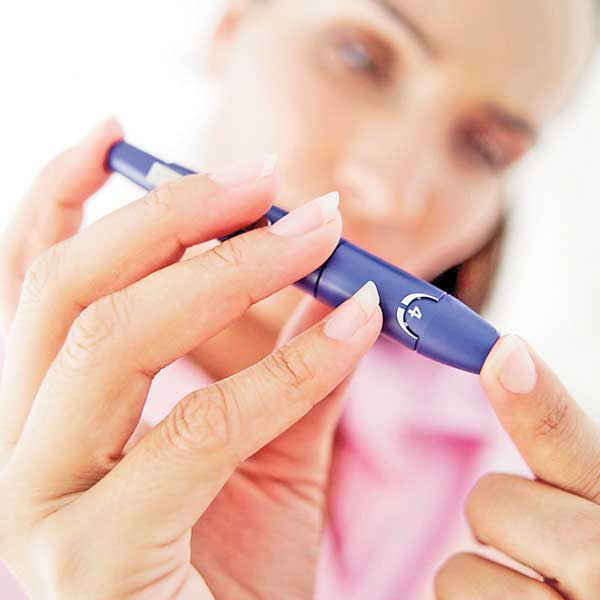
Till the time insulin pump becomes affordable and finds way to the country in large numbers, an injection aid solution namely ‘i-Port Advance’ has been introduced by Medtronics. Regarding this device, Dr. Rehan Omar, Specialist Cardiologist at Kausar Cardiac Centre, Lahore, explains, “The device, i-Port Advance, which stands for injection port is a three-day-wearable device that people with diabetes inject into instead of injecting directly into the skin.”
Another complication that the women in Pakistan need to be informed is the one related to Gestational Diabetes Mellitus (GDM). Musa, a fifth-grader, is a boy who had to fight for his life at the time of his birth. An overgrown child weighing above 10 pounds at the time of his birth created problems for his mother and the gynaecologist who tried to deliver him normally. The reason for all the trouble that they had to go through was Musa’s size which had grown due to GDM in his mother and her failure to get it treated in time.
If a woman has high blood sugar levels diagnosed first time in pregnancy she is said to have Gestational Diabetes Mellitus. It is not a very dangerous condition but should be treated promptly because it can lead to various complications (in both the mother and the child) like large babies resulting in birth trauma or increased rates of Caesarean sections, intrauterine death of the baby, or still birth, decreased blood sugar levels and poor survival rate of the baby after birth and increased chances of diabetes later in life in affected women.
“Treatment of GDM can be done by sugar free diet, light exercise along with insulin therapy as prescribed by the doctor. But it is quite common in our part of the world where pregnant women are given rich sugary diets in order to ensure that both the mother and the expected child are healthy. Women are encouraged to eat whatever and whenever they want to which has adverse effects on the mother and child. And what actually happens is that the pancreas of the child in the womb has to work extra to maintain the insulin level of the mother as well. This can be quite harmful to the child’s health,” elaborates Dr Taeed Butt. “However, the good thing about Gestational Diabetes Mellitus is that it is a temporary disorder that usually disappears after child birth,” he adds.
Coming back to treatment of patients with Type 1 diabetes, Dr Taeed says, “Scientists are working on curing it by injection of stem cells which are able to develop into a range of different kind of cells and regulate a diabetic’s blood sugar without any other form of treatment. But till that time we will have to work with insulin injections and those who can afford can opt for insulin pumps.”
Dr Taeed Butt also shares interesting findings of a recent survey on fears among Pakistanis about the use of needles/injections and also to measure the level of this fear. “As a consultant I have seen many children, women and even men who miss doses of insulin just because of the fear of needles and pain involved. As this jeopardises their health, a lot of research is being carried out to save from the need of daily needle pricking,” he states.
The survey finds that Pakistan’s residents are more fearful of having to endure daily injections than they are of spiders, flying, public speaking, exams or clowns. When asked to rank ten things people are commonly afraid of, the respondents listed having injections in fifth place behind a fear of snakes, sharks, heights and lightning. It also reveals that over one-third of respondents said they would rather skydive from a plane if it meant being able to avoid needles every day, with over a quarter saying they would rather handle a python.