Women entrepreneurs have started making their mark in the workforce in Pakistan. This Women’s Day, You! highlights a few rural women entrepreneurs from Punjab who established their businesses by the help of microfinance institutes...
Presently, the global economy boasts 244 million women running their own businesses. It is anticipated that one billion women will enter the global workforce over the next decade. These figures suggest a more balanced workforce across the globe in the coming years, but they also remind us that there is a long way to go before there is workplace and economic parity between the genders. This is especially true for Pakistan.
Women entrepreneurs have started making their mark in the workforce in Pakistan. Some exceptionally brilliant Pakistani women entrepreneurs are succeeding in their businesses and becoming prominent on the global stage. This has been made possible by a number of microfinance institutes which are finding innovative ways of supporting and empowering women and eliminating poverty. But there are certain organisations which support the microfinance institutions to carve better futures.
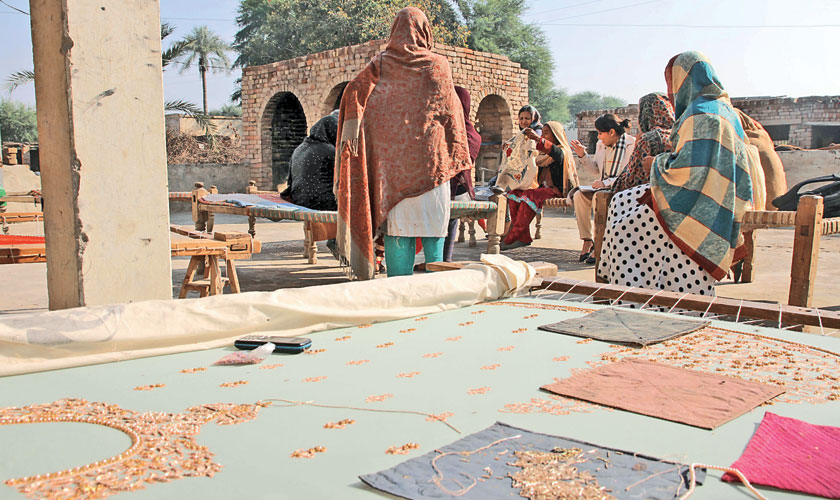
‘Kaarvan Crafts Foundation’ is one of the organisations which provides business trainings, awareness and engagement with relevant microfinance institutions. The aim is to educate people for economic capacities so that they can identify economic difficulties and contribute to their elimination through use of business resources available to them. This is done through mentorship approach which includes collective learning workshops where field experts from Women Chamber of Commerce, Easypaisa and Akhuwat contribute. Women rural entrepreneurs become aware of the resources available in their community and can utilise them accordingly to scale-up their individual home-based businesses.
Since 2004, the foundation has been providing life skills to Pakistani rural women in order to build their confidence to participate in local decision-making and carving connections with relevant urban markets. Till date, it has mobilised, trained and capacitated more than 25,000 women in over 1,000 of villages of 22 different districts across Pakistan.
Falmina Samoon, one of the beneficiaries of Kaarvan, lives in the suburbs of Lahore near Mughalpura. She has been working tirelessly since 1992 to fill the void of her husband’s untimely demise. At first, Falmina started from teaching in order to make a living for her family. Later on, she tried her luck in stitching with just Rs 300 and got many orders from her community. The jobs she performed included cutting, shadow work - which forms a layer of crisscrossing threads, colour selection based on the recent market trends and design tracing on the fabric. Falmina’s income increased gradually and she saved money as well. She sold her cow for Rs 20,000, got hold of Rs 25,000 that her husband had saved and added Rs 36,000 she had got through community committee. With this money, she managed shelter for her family and some capital for work. She also works part time in a hospital from 3 to 10 pm and balances it with administrating stitching centres and schools. She says that through the Women Economic Empowerment (WEE) programme market linkages, she made handsome incomes with which she was able to marry off three daughters and a son. She relentlessly manages her time with school engagement and overseeing seven stitching centres - seeking out market opportunities for her and the women working alongside her.
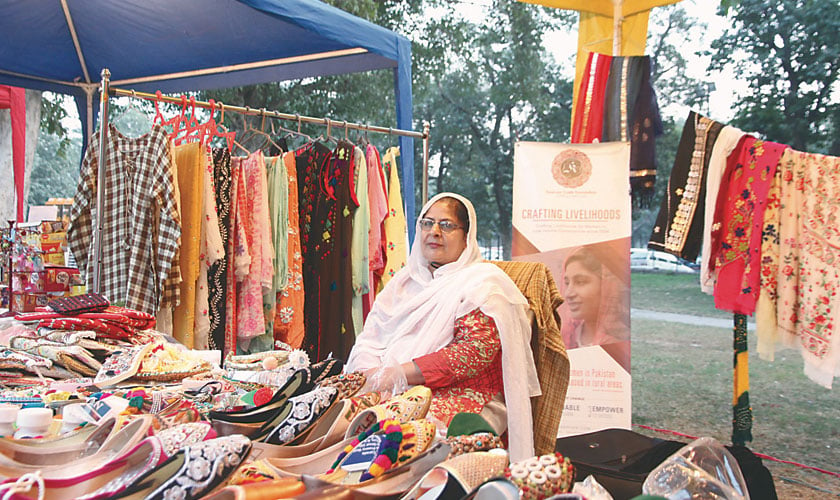
Moreover, Rehana Kausar, a resident of Chowk Shahbaz, Multan, is rebuilding her life. She has clarity of purpose and is striving to craft colourful futures for her twin sons and two daughters. Having a Bachelors degree, Rehana stepped into the business world when her son became seriously ill. With the help of her daughters, Rehana started sewing bedsheets and pillow covers and selling them door-to-door. One day, Rehana received an invitation for an exhibition where she displayed her bed sheets and got great appreciation of her work. She fuses applique work with Banarsi tanka. Rehana says that since she is getting old, she won’t be able to go door-to-door. She is thankful to the initiative called ‘Aangan’ (an online platform for female artisans) which enables her to connect with the market through technology and work directly from the comfort of her home.
Rihanna Bibi is yet another inspiring lady who lives in Ghareebabad, Multan. She breathes life into clothing. Married at an early age, she unleashed her creativity through a home-based venture. Skilled with craft of beadwork and cross-stitch on chiffon she exhibits her work throughout Pakistan. She recently sought out an opportunity and exhibited her work in Sri Lanka. Together with her husband, they take care of household expenditure. Through ‘Aangan’, Rihanna bibi wishes to exhibit her magical skills and products to a much larger audience.
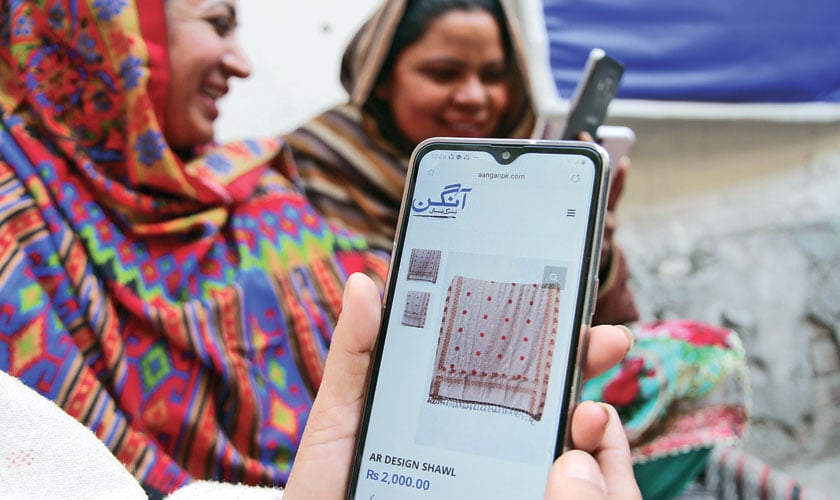
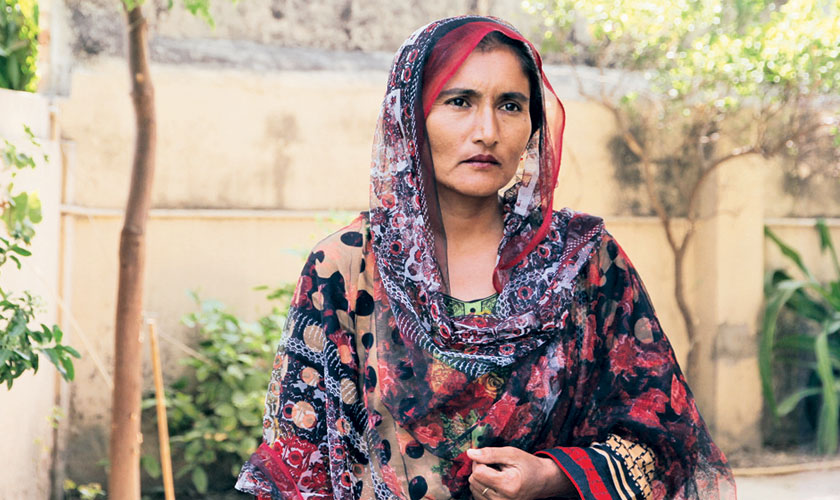
Similarly, Mumtaz Ameer, a resident of Goth Lal near Bahawalpur, is a courageous person. She bridged the two vocations of home-based farming and art of stitching and designing under one roof. She has her own farm in which she grows sugarcane and has a livestock as well. In addition to farming, she creates beautiful adda work with a team of creative female artisans for specific market orders. Depending on the intricacy of the design, Mumtaz and her group of artisans complete the design from one day to a month. This type of embroidery requires great patience and expertise. It is this entrepreneurial energy and work that Mumtaz wishes to share with people through Aangan.
Mashal Khan, Head of Strategy and Communications at Kaarvan, shares the organisation runs four key programmes that follow: Stitching, Design and Market Skills - providing a broad range of skills for economic capacities in a globalised economy. The second one is Digital Market Linkages - more than 80 Pakistani female artisans from far-flung villages of Lahore, Bahawalpur, Vehari, Lodhran, Multan Kasur, Gujranwala, Nankana, Sheikhupura are digitally enabled to engage with the global economy via Aangan (www.aanganpk.com). Kaarvan has created an online shop with, by and for rural artisans - digital courtyard where female artisans can upload their crafts - take orders, sell, and receive payments from national and international customers through android mobile devices in partnership with Samsung. The third programme is Livestock Caring Skills which provides training to women living in remote villages so that they can take proper care of animals. These women are taught about how to ensure quality of feed, manage the diet of livestock and provide adequate facilities for home-based livestock care. Last but not least, the Confidence Building Soft Skills Workshops integrated with Sustainable Development Knowledge Platform like Sustainable Development Goals (SDGs) and UN Days which promote use of art and design as a medium for creative expression, reflection and action.
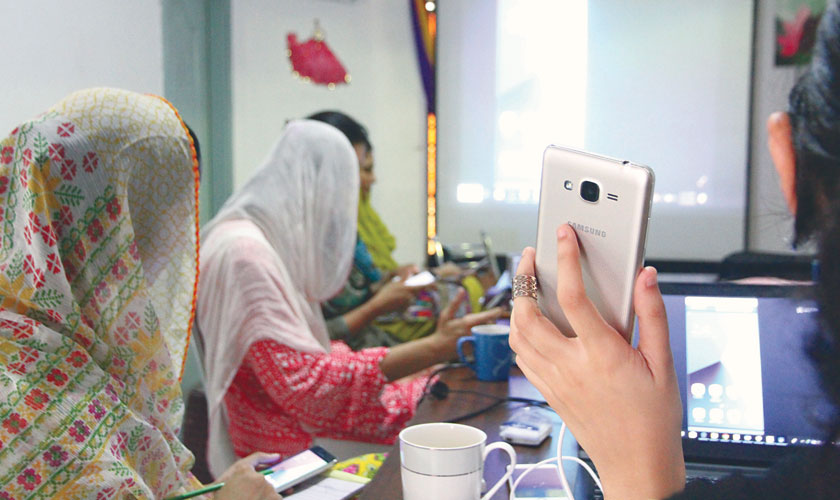
These workshops teach participants about how to turn societal challenges into open-ended questions. They create opportunities for co-operative learning and crafting an alternative positive future side by side.
No doubt there are challenges as well. For example, Danish Khan, CEO Kaarvan points out that the mobilisation of women is the key to motivate and influence them. “We are very sensitive to their cultural and societal traditions. We do not disturb them and work on maintaining their socio-cultural environment and work on a door-to-door community basis. Following this, we operate on a basis of community success stories where we share real life examples of women who have become successful entrepreneurs in their home environment.”
He adds that Kaarvan works with those women who have some idea of work or are connected to markets and they identify those as potential for economic capacities. Via this methodology, community role models are then chosen and they are all above the age of 18. Danish informs that there is no direct financial support because the organisation acts as agents of change, therefore making their role as one of connectivity. “Working capital comes from other organisations such as Akhuwat and our role is to connect the two - the capital with these rural base artisans. This way we offer a network and the propensity to increase the artisans’ income. Our modules include micro entrepreneurship and business development; soft skills; and digital enablement. At the back end, we work on demand driven skill enhancement in livestock and textile. Our trainers are home based workers and master trainers from urban areas. This causes us to focus on community based training and enablement including programmes such as teacher training.”
Moreover, the CEO shares Kaarvan runs on institutional philanthropy and partnerships, local and international. It is all collaborative work with multiple stakeholders with the vision of working towards cultural peace and building economic capacity for rural women, thereby closing inequality gap through education and empowerment. Also, it works side by side with UNESCO, UN Women, The British Asian Trust, DFID - UK Department for International Development, Punjab Skills Development Fund (PSDF), Center for Economic Research in Pakistan (CERP), Crescent Bahuman, Samsung, Daraz and many other affiliates to expand Pakistani Rural Women’s personal capacities to act with others for socially constructive purposes. Kaarvan predominately works within Punjab and Khyber Pakhtunkhwa - now with AanganPk.com and partnership with TCS rural women entrepreneurs that have access to seamless transaction with global market where their products can be marketed and delivered.