This week Zainab Sarwar, a Dubai-based nutritionist, writes about the difference between ‘healthy’ eating and ‘intentional’ eating, and how the latter helps with weight loss…

health
We live in a world overflowing with nutrition advice - organic labels, ‘superfood’ lists, and endless Instagram posts of avocado toast. Many of us assume that if we just eat ‘healthy’, the weight will take care of itself.
But here’s the truth that surprises many of my clients: healthy eating and weight loss are connected, but they’re not the same thing. You can fill your plate with salads, smoothies, and grilled vegetables - and still not lose a single pound. Why? Because wellness and weight loss follow two very different rules. One is about nourishing your body for long-term health; the other is about creating the right energy balance so your body taps into stored fat for fuel.
Let’s break it down in a way that actually makes sense.
Healthy Eating = Wellness
When you focus on healthy eating, your goal is to supply your body with nutrients that keep your systems running smoothly. This is about boosting immunity with vitamins and minerals; supporting gut health with fibre and probiotics; balancing hormones with steady blood sugar levels and reducing inflammation with antioxidant-rich foods.
Eating healthy often means - choosing whole foods over processed ones; prioritising fresh vegetables, fruits, lean proteins, and healthy fats; limiting excessive sugar, refined carbs, and chemical additives; drinking enough water and eating mindfully, without constant distractions.
When you eat this way, your body rewards you with more energy, better digestion, sharper focus, glowing skin, and stronger disease resistance. It’s like regularly servicing your car - ensuring it runs smoothly for the long haul.
But here’s the catch: You can be eating ‘healthy’ and still overeat. Calories from ‘clean’ foods still count. And if you’re consuming more than your body burns, your weight won’t budge - or might even go up.
Intentional Eating = Weight Loss
Now, let’s talk about intentional eating. This isn’t about obsessing over every calorie. It’s about making eating choices with a specific goal in mind - fat loss. Weight loss happens when your body is in a calorie deficit - burning more energy than you consume. Your hormones (especially insulin and cortisol) are balanced enough to allow fat burning.
Your muscle mass is preserved or improved, keeping metabolism strong.
Intentional eating focuses on:
*Portion awareness - not just what you eat, but how much
*Meal timing - spacing meals to avoid constant insulin spikes.
*Macronutrient balance - ensuring you get the right mix of protein, carbs, and fats for satiety and fat metabolism.
*Strategic flexibility - enjoying occasional treats without derailing progress.
Think of intentional eating like a road trip. Healthy eating is making sure your car is in great condition; intentional eating is mapping the route so you actually reach your destination.
Why the confusion?
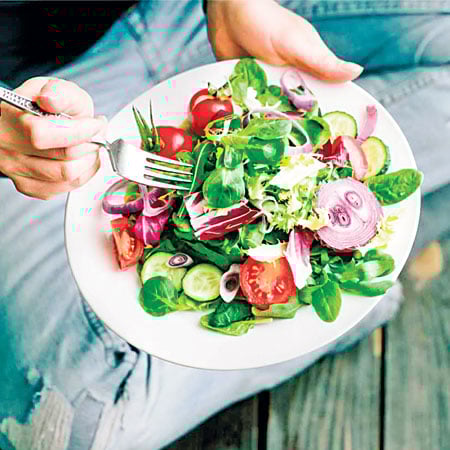
The mix-up happens because the words ‘healthy’ and ‘weight loss’ often get used interchangeably in media and marketing.
We’ve been sold the idea that a kale smoothie = automatic fat loss. But here’s a reality check:
*A ‘clean’ smoothie can pack 500–700 calories, especially if loaded with nut butters, sweetened yogurt, or fruit juices.
*Olive oil is heart-healthy, but 2–3 extra tablespoons a day can add 300 calories -enough to stall fat loss.
*Dates are nutrient-rich, but 5–6 in a sitting is like eating a candy bar in terms of sugar load.
The intersection: Where wellness meets weight loss
The good news is, you don’t have to choose one over the other. The magic happens when healthy eating becomes intentional. Here’s how to merge the two:
*Start with quality, and then adjust quantity.
*Prioritise whole, nutrient-rich foods first, and then fine-tune portions to create a gentle calorie deficit.
*Make protein your anchor. It supports muscle retention, keeps you fuller longer, and boosts metabolism. Include a lean protein source in every meal - chicken, eggs, Greek yogurt, tofu, lentils.
*Don’t fear healthy fats - just measure them.
*A handful of nuts is great; a bowlful is not.
*Drizzle olive oil lightly instead of pouring freely.
*Load half your plate with vegetables.
*Low-calorie, high-fibre veggies add volume without excess calories, keeping meals satisfying.
*Watch liquid calories. Juices, smoothies, coffee creamers, and ‘healthy’ beverages can quietly tip you over your calorie limit.
*Be mindful of timing. Avoid constant grazing. Give your body breaks between meals to let insulin levels drop and fat-burning kick in.
Mind-set shifts your need
The shift from simply ‘eating healthy’ to ‘eating intentionally’ is more than physical - it’s mental. Instead of reaching for whatever seems healthy, you choose foods with your current goal in mind. You don’t eat just because food is available; you decide what and when to eat in advance. And rather than labelling foods as ‘good’ or ‘bad,’ you ask yourself, “Does this serve my goal right now?”
Practical framework: The 80/20 Rule
One of my favourite ways to merge wellness and weight loss is the 80/20 approach:
80 per cent of the time: Eat nutrient-rich whole foods that fuel your body.
20 per cent of the time: Allow yourself flexibility for treats, special meals, or dining out -without guilt.
This keeps eating sustainable and prevents the ‘diet rebellion’ that often comes from being overly restrictive. In today’s sedentary, high-stress world, it’s possible to be overfed and undernourished - consuming plenty of calories but lacking essential nutrients.
On the flip side, it’s also possible to be well-nourished but not in fat-burning mode because your intake exceeds your energy output. If your goal is long-term health and a healthy weight, you can’t afford to confuse these concepts. Wellness keeps you thriving day to day.
Weight loss protects you from future health risks
Eating healthy is like laying the foundation of a strong, beautiful house. But if you want to remodel, make changes, or shed the extra ‘weight’ from that house, you need an intentional plan. So the next time you wonder, “Why am I not losing weight even though I’m eating healthy?” remember this: Healthy eating builds wellness; intentional eating creates weight loss. Master both, and you’ll unlock the sweet spot - where you feel good, look good, and live well for life.
Zainab Sarwar is an ERYT-500 Yoga Teacher, Wellness Educator & Founder of Moksha Lifestyle Dubai. She can be reached at www.yogadubai.ae or @lifestylebyzainabsarwar on Instagram and on email: xainabsarwar@live.com