When you put a headset on, your real world is blocked out and all you see and hear is the virtual world....
TECH TIME
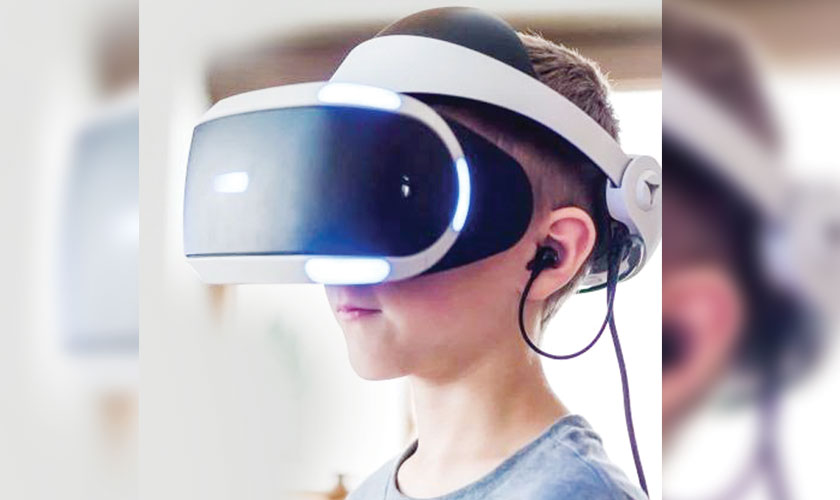
VR has three aspects: immersion, where the user feels like they are in another environment, active psychological presence in the virtual environment, and embodiment, where users feel like their virtual body (avatar) is their actual physical body.
The sense of immersion is achieved using patterns of stimulation, including light photons for the eyes, acoustic input for the ears, and tactile or haptic simulators for touch. When you put a headset on, your real world is blocked out and all you see and hear is the virtual world.
A flaw in the design
The Metaverse — with its components of VR, AR (augmented reality) and XR (extended reality) — has essentially been designed so the mind and body can’t differentiate virtual experiences from real ones. Hence, the response to a virtual experience can be quite similar to an actual lived experience.While other media technologies can create psychological presence or the sense of ‘being there’, the scale at which metaverse technologies do it causes users to temporarily suspend the sense that an experience is mediated by technology and instead feel as if they are having a real experience. A Stanford study even showed that younger children could be unable to distinguish between virtual reality and reality, being able to create ‘false memories’.
‘Whether it’s within a game or attending a football match, immersive spaces create heightened experiences, meaning that while pleasant experiences are intensified, unwanted interactions are also made more intrusive and potentially traumatic,’ said Ridderstad, CEO & Co-founder Warpin, a metaverse company.

Some users even report experiencing VR disassociation, the experience of coming out of VR and not feeling connected anymore to your own body, and/or to perceive the physical world around you as not real.
For people who are fairly new to virtual reality, it might even induce anxiety and panic attacks which are likely to dissipate once they get used to it.
In the early days of Virtual Reality (VR), a 2017 study by The Extended Mind found that 49% of female VR users had been subjected to ‘virtual’ harassment.
So, if something feels so real why hasn’t more thought been given to keep people safe? It could be the question of whose safety is at stake.
In her book Invisible Women, Caroline Criado Perez says that ‘when planners fail to account for gender, public spaces become male spaces by default’ and the metaverse is dangerously close to becoming a male-dominated space. After all, it’s men that are designing these spaces given the lack of women in the wider tech industry.
Experts say that the metaverse will be a reflection of the real world and just like the internet we will have dark metaverses and niche metaverses. This also means that predators and all criminal activity will be replicated in the metaverse.
‘As we transition from a 2D internet to 3D, we need to be conscious that the more “real” a digital world seems, the more “real” the experiences within it will feel,’ said Ridderstad.
Safety bubbles
Avatars in the metaverse app Horizon Worlds, for instance, have a ‘personal boundary’ function or ‘safety bubble’ that blocks others from getting too close. The personal bubble will be turned on by default, but users will still be able to make small actions, like high-fives or fist bumps.
While protection features like safety bubbles are helpful, they should really be the last point of defence – we shouldn’t be in a situation where physical barrier features like this are heavily relied upon. Experts say that what we need is effective regulations that are a collaborative effort involving governments, industries, academia and civil society worldwide. If multiuser open VR environments where strangers can meet each other are here to stay — then it matters what the culture is like in these spaces. Ultimately, an abuse-free environment starts with the culture and people being aware of the law and what the repercussions might be if they break it.
Safety in the metaverse
We now know that VR can be dangerous both physically and mentally. Just like injuries from bashing into furniture or walls, or an allergic reaction to the headset foam, users are prone to the psychological harm of harassment and abuse in virtual reality.
The question is what do we do about it?
‘Going forward we need to make sure that this is not accepted, and that there will be a consequence for bad behaviour,’ said Ridderstad. ‘We need to move away from the anonymity that protects trolls and misogynists online, and to remind users that people in the virtual space are physical people with real feelings,’
We might want to be careful not to dismiss or downplay the dystopian potential of the metaverse in order to preserve its utopian reputation as it becomes more mainstream. We can’t innovate or solve problems like toxicity and harassment if we debate their legitimacy at the outset.
We need to take digital space seriously, with the same level of responsibility as the physical world.
Compiled