Barbara has a strong presence in the world of digital education. Her work focuses on the complex relationship....
HAPPENINGS
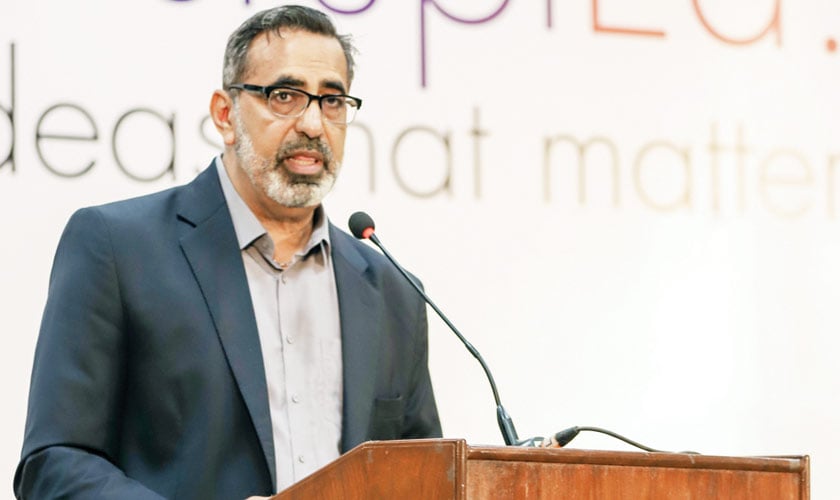
With the opening of online platforms like Coursera, Skillshare and edX, online learning has become a lot more sophisticated and accessible. Even universities are endorsing MOOCs (Massive Open Online Courses) and encouraging students and teachers to supplement their learning by undertaking such courses. The great thing is universities in Pakistan are also making an effort to promote e-learning in our local settings. In a country of 220 million people, digital learning can be an effective way to achieve our educational goals in a short period of time. Lahore University of Management Sciences (LUMS) has recently announced to focus on prioritizing digital education so that they could reach out to thousand of learners in Pakistan. In its initial phase, Barbara Oakley, Professor of Engineering at Oakland University in Rochester, Michigan, will be offering her popular online course “Learning How to Learn” free of cost. At a session of DisruptEd: ideas that matter (a speaker series), Aga Khan University, Barbara Oakley, along with the Arshad Ahmad, Vice Chancellor, LUMS, introduced the course “Learning How to Learn” to the audience.
Barbara has a strong presence in the world of digital education. Her work focuses on the complex relationship between neuroscience and social behaviour. She teaches Coursera – UC San Diego’s “Learning How to Learn,” one of the world’s most popular MOOC. Now, let’s have a look at some of the highlights of this course that will soon be available to learners in Pakistan.
Brain is a very complex machine in our body; its operations can be simplified into two fundamentally different modes. The first is focused mode. The focused mode is when you turn your attention to something; you’re just fully concentrating on the task at hand. The second mode is a little different. It’s a relaxed set of neural states called the diffused mode. It’s when you allow your mind to wander. Both of these modes are extremely valuable for your brain to learn something.
Procrastination is one of the major problems students face around the world. If it’s not handled properly, it can really damage your productivity. One of the simplest ways of dealing with procrastination is Pomodoro Technique. All you need is a timer. And then you just take it and set it for 25 minutes, and make sure everything else is turned off – so, no texting, social media, etc. You work with focused attention for 25 minutes. And when you’re done, you can do something relaxing for a few minutes. What this seems to do is enhance your ability to have focused attention, and you’re also practicing your ability to relax. As learners, we must also understand that relaxation is also an important part of the learning process.
Researchers are finding powerful insights into how we can learn most effectively. One of those ways is simply through exercise. Exercise in just few days can increase our ability to both learn and to remember. Regarding sleep, just being awake creates toxic products in your brain. The only way brain gets rid of them is when we rest and sleep. During sleep, brain cells shrink and make space for the toxins to flush out. Sometimes sleep looks like a complete waste of time but it’s important to keep your brain clean and healthy. That’s why students are always recommended to take enough sleep before a test so that the brain could think clearly.
These are just a few basic strategies from the course. There is so much more to mastering the art of learning. Arshad Ahmad said, “One of the biggest reasons why we struggle as learners is that we don't know much about learning. This course will help us become better learners and better teachers. “Learning How to Learn” will be taught in our local language and by our local teachers.”