Muhammad Mohsin Nawaz is a renowned RJ, motivational speaker, and a very inspirational personality. Struck by polio at the age of two and complete loss of eyesight at the age of 13, Mohsin remained unfazed, undaunted, and completed his Masters in Urdu Literature in 1999.
RJ Mohsin Nawaz - a living legend
Muhammad Mohsin Nawaz is a renowned RJ, motivational speaker, and a very inspirational personality. Struck by polio at the age of two and complete loss of eyesight at the age of 13, Mohsin remained unfazed, undaunted, and completed his Masters in Urdu Literature in 1999. Mohsin became the heart throb of thousands of people when he joined one of the most popular radio channels, “Mast FM 103”.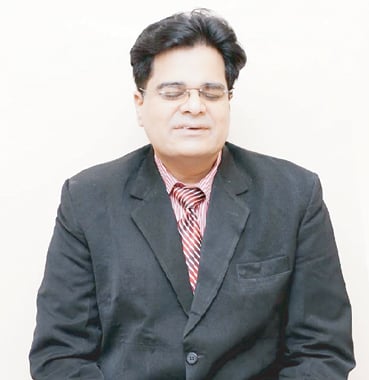
Mohsin is the first radio host in the world with multiple disabilities. He is a mentor for the physically challenged people in Pakistan, and was also invited to a presentation in the National Cricket Academy for Pakistan for the under-19 cricket team in 2007.
In addition, he enjoys international recognition, too. He has been invited by different institutes and universities to deliver motivational talks. Owing to his energetic and inspirational personality, Mohsin has been interviewed by renowned TV channels and newspapers. FD.Sheikh, an old writer of Us, got an opportunity to have a chit-chat with him.
Us: Tell us about your childhood. How was it different from that of other kids of your age?
Mohsin Nawaz (MN): It was certainly a testing time. People welcomed me with a mixture of sympathy, ridicule and panic, but I always kept smiling as I moved past them on my tricycle. At the age of seven, when most kids do not even know literature and politics, I dedicated myself to reading and listening to literary and political conversations. It added a new dimension to my life. I started writing stories at the age of seven and used to send them to children’s magazines. Initially, I thought my stories were not good enough as they had not been published yet. But, I didn’t lose heart and kept writing and sending my work to editors. With continuous efforts, I got a reasonable grip over writing, and my work finally got selected for publishing. I felt excited, thinking that finally life had taken a positive turn. But I didn’t know that the next episode would be a lot more excruciating. When my written work got published in a magazine, I couldn’t see it in print; I had lost my eyesight completely by then. It was devastating.
Us: How did you cope with this situation? What actually helped you discover your hidden potential?
MN: Playing flute was my only solace and listening to radio the only hope. Nothing could justify the purpose of living to me. People came to sympathize, advising my mother to pray for my death. At first, without eyesight and legs, I also felt life was meaningless. With the passage of time, I strongly realized the strength of the senses I was left with i.e. sense of hearing, feeling and thinking. I realized that Allah hasn’t sent me to die, but to live to the fullest with the abilities I have been blessed with. I couldn’t see or walk but I was able to utilize the other senses with more focus and attention. I believe this mindset of mine was a turning point of my life. This optimistic urge of living gave me confidence and prepared me for the new journey in front of me.
Us: How and when did you start working as RJ?
MN: Radio was sort of a university for me. I was a keen listener and caller in various shows of FM radio. People used to like my views as a radio caller/listener and when FM103 launched in 2004, I gave an interview for an RJ job, and got selected.
Us: What was the thing that kept you on the driving seat and who was your ideal at that time?
MN: I think it was my control on thoughts. You just have to control your thoughts by not letting them fall prey to pessimism. A purpose oriented, focused and confident mindset opens up new horizons of success. There wasn’t any specific ideal in my life; I admire and follow different traits in different personalities at different times.
Us: What is the difference between the youth of your time and that of today?
MN: In today’s fast and technological era, there is a lot of anxiety among young people. Be it about talking and listening to elders or earning success; youngsters always seem to be in a hurry in every aspect of their lives. They want overnight success. This is something impractical as there’s no shortcut to success. Modern technology and the electronic media have bedazzled them and they feel that they are more well-informed than their elders. Undoubtedly, today’s generation is quite intelligent but at the same time they should not undervalue the role and experience of elders and should be able to differentiate between information and knowledge.
Us: What is the contribution of your wife in your amazing accomplishments?
MN: My wife was a listener of mine. She was a regular caller of my show. Listening to my shows, thoughts and my take towards life, perhaps, conquered her heart *chuckles* and today we are leading a successful married life. We have been blessed with two kids and it goes without saying that her role in my life is simply stupendous. I feel lucky having such an amazing soul in my life. Together we have set an example for many youngsters.
Us: What have you done for differently abled persons in your capacity and what can government do in this regard?
MN: From the very beginning, I had a good command over screen reader, which is a software for differently abled persons. People used to contact me in good numbers for help and later on, I started conducting trainings for them on regular basis. I conducted around 400 interviews of differently abled persons in my radio show that was quite motivational for our community. It urged them on to work hard and not to fall prey to inferiority complex. Today, with the continuous support of my mentor, Dr. Sadaqat Ali, I am at the key post of Director Sales & PR in a private organization. This has also set an example that differently abled persons are no less than those in command of all their abilities. Government needs to take serious steps for their betterment in terms of psychological training for differently abled persons.
Us: You have faced a great many challenges during various phases of your life. How can one deal with them successfully?
MN: People usually try to avoid problems in their life and if they can’t, they want to get rid of them as soon as possible. I believe that every problem in your life is an opportunity to improve yourself.