Live burials were a horrifying reality in the 19th century...
COVER STORY
Here’s a creepy story from history you never asked for but now won’t be able to stop reading. This isn’t just some midnight campfire fable. For centuries, this was a real danger that haunted people’s final moments and changed how we bury our dead forever.
Imagine you wake up in … let’s say, 1783. The lights are out. The Internet’s gone. Hospitals? Not like today. No ECG, no way to check your pulse. And doctors? None with clean white coats or medical degrees from big-name schools. Back then, medicine was not exactly the best. They possessed only fragmentary knowledge of physiological processes. They didn’t always know the difference between someone who was deeply unconscious, in a coma, or straight-up dead.
That’s why, in the 1700s and 1800s, doctors faced an impossible challenge. Without today’s medical technology, they had to rely on primitive methods to determine if someone had truly died. They’d hold a mirror under the nose to check for fogging. Lay a feather across the mouth to watch for tremors. Sometimes, they’d pour vinegar or hot water on the skin – or even pinch fingers with pliers – to see if there was any reaction.
These methods often didn’t work well. People in deep comas, or those suffering from certain illnesses, could appear completely dead when they weren’t. The problem was made worse by how quickly bodies needed to be buried back then. Without refrigeration or embalming like we have today, bodies began decomposing rapidly, especially in warm weather. That meant the entire funeral process moved quickly after someone passed. With doctors rushing to declare people dead and families rushing to bury them, terrible mistakes happened more often than anyone wanted to admit.
So, what happened? Well ... let’s say your Uncle Lucas suddenly collapsed at the dinner table. He wasn’t moving – not even a twitch. His skin looked white as buttermilk. You rushed to check for a pulse … but oh wait, you’re not even trained to check for a pulse, and even if you were, the pulse might’ve been really faint. And then someone goes with the worst-case scenario: “He’s dead.” And that’s it.
There’s no dual opinion. No machines. No proper autopsy. No 911 alarms. Within hours, they wash the body, say a prayer, and boom, Uncle Lucas is buried in the cemetery.
But what if he wasn’t dead? What if he just fainted? Or maybe he had some strange illness that made his body shut down for a while, but he was actually still alive?
Kinda terrifying, right? And yep, it actually happened. Guesswork was basically part of the diagnosis.

The clues start coming… from underground
The truth about how often people were buried alive began to surface when old cemeteries needed to be moved or when graves were opened years later to make space. And when they did, people found disturbing anomalies.
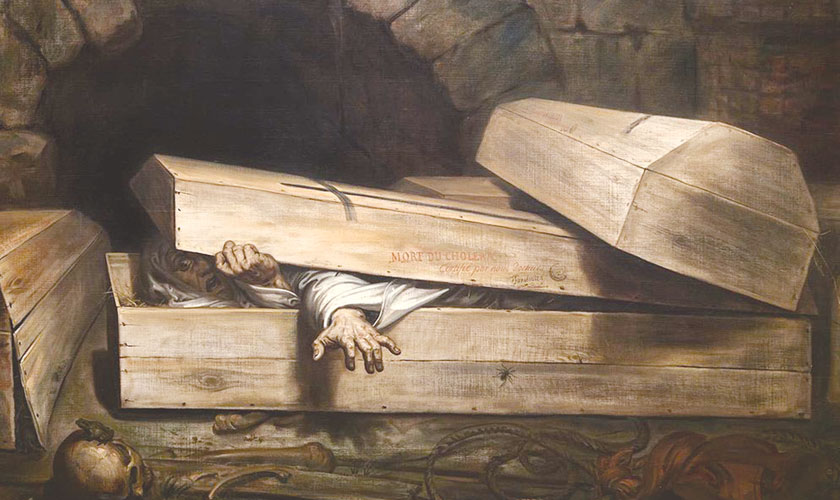
Gravediggers would open a coffin and freeze. Inside, they’d see that the body wasn’t lying peacefully still. No. It looked like the person had tried to crawl or fight their way out before dying. The box lid had scratch marks all over it, as if someone kept trying, again and again, to scratch their way out. The people inside weren’t lying nicely. Their bodies were all twisted, their fingers broken, and their jaws dislocated as they’d died screaming.
In Germany, a woman was found who had bitten through the cloth wrapping her face. In France, a man’s coffin showed he had actually managed to shift the heavy lid slightly before suffocating. Of all the sights in that cursed field, none stayed longer than the image of skeletons hugging their own heads.
Can you even imagine waking up in total darkness, inside a box, underground, all alone? You shout, “This isn’t my beautiful bedroom!” but no one hears. You scratch, you punch, you kick … until your body gives up. Brrrr. Scary, right? Gives me goosebumps. Maybe that’s why we should always double-check before burials.
People got scared… really scared
As more and more of these creepy discoveries were made, people started getting paranoid. The thought tormented them: “What if I’m the next victim?” This led to a very real fear of being buried alive, known as taphophobia.
Is there any terror more absolute than an alive mind trapped in a dead man’s box? So, they came up with … solutions. And these were both smart and a little strange.
Safety coffins: because normal coffins weren’t enough
In the 1800s, people in Europe and America started making something called a “safety coffin.” These weren’t your usual wooden boxes. Oh no. These ones had a little twist. Here’s what they added:
1. A wrist-bound cord leading to a bell
Yes, really. A string was fastened around the corpse’s wrist, fed through the coffin, and attached to a bell above the burial site. If the person moved even a tiny bit, the bell would ring: ding-dong.
That’s where the expression “saved by the bell” is believed to have originated from. Creepy, right?
2. Breathing tubes
Some burial caskets in the 1800s had small air shafts to sustain anyone who might be mistakenly interred. This way, they could still breathe until someone came to rescue them.
3. Flags or rods that popped up
Another idea: attach a rod to the hand or foot. If the person moved, the rod would rise above the grave and show a flag – like, “Hey! Not dead here! Dig me up!”
A few also had glass panes embedded in the lid for viewing, just in case someone wanted to double-check from those peepholes.
Some people didn’t want to risk it at all
And then things went from ‘oh no’ to ‘OH HECK NO’...
Some people were so scared of being buried alive that they left specific instructions for after they died. One man said, “Please stab me in the heart after I die.” Another said, “Chop off my head. I don’t want to take any chances.”
It sounds extreme, but when you think about it, they were just terrified of waking up in that wooden box.
Even famous people were scared
It wasn’t just everyday folks who worried about this. The terror of being buried alive affected all levels of society.
George Washington – yes, the first president of the United States – had a fear of literally waking up in his coffin! On his deathbed, he told his staff: “Do not let my body be put into the vault in less than three days after I am dead.” The old revolutionary wasn’t taking any chances, not even with Death itself.
Hans Christian Andersen – the fairy tale genius known for writing ‘The Little Mermaid’ and ‘The Ugly Duckling’ – was also haunted by this dread. He used to sleep with a note beside his bed that said, “I am not dead.” Why? Because the thought of being mistaken for a corpse while napping really got to him. That way, if someone found him unconscious, they wouldn’t bury him too soon.
Alfred Nobel – famous for inventing dynamite and establishing the Nobel Prize – was so afraid of accidental live burial that he constructed a fail-safe coffin. His innovation included a dual-access locking system, which could be controlled from within. He also insisted on being monitored for days after his apparent death in 1896.
Edgar Allan Poe – who famously wrote ‘The Premature Burial’ – was obsessed with this fear. Poe’s horror of premature burial didn’t come from nowhere. As a newspaper reporter, he had covered stories about people who were almost buried alive. He also read medical reports about patients waking up during autopsies. But what made this fear deeply personal were his own health problems. Poe often suffered from something that made him collapse and appear dead for hours. His heart would pound so faintly that no one could detect it. His breathing became too superficial to catch. More than once, people thought he had died during these attacks. Each time this happened, his terror of being buried alive grew stronger. ‘The Premature Burial’ shows exactly what scared him so much. In the story, the main character describes in horrible detail what it would feel like to wake up underground. He also requested his cousin, Neilson Poe, to watch over his body for several days after his death in 1849.
Even royalty wasn’t immune. Queen Victoria’s physician, Sir Henry Halford, reported that the monarch insisted on numerous death verification procedures for family members, influenced by the widespread fear of premature burial during her reign.
Some people took even more extreme measures than these famous figures. Wealthy individuals would pay for “corpse watchers” to monitor their bodies for days after death. Victorian burial records also reveal that families installed speaking tubes, spring-loaded coffin lids, food compartments, and burial escape features, just in case.
These weren’t paranoid delusions, but reasonable precautions in an era when newspapers regularly carried stories of people nearly buried alive or discovered too late in their coffins. The terror was so widespread that it influenced literature, medicine, and funeral practices for generations.
So, did safety coffins work?
Did these inventions actually work? Hard to say. But the fact that people were building them at all shows how terrifying this fear really was. Some say the bells sometimes rang, but when they opened the coffin, the person really was dead. It might’ve been a gust or the soil shifting. Other times? Who knows. Still, the bell gave people something to grab on to, even if it was just the illusion of safety.
But wait... it still happens today?!
You’d think with modern science, this wouldn’t be a problem anymore, right? Well, in most places, it isn’t. But rare cases still pop up, as seen in Ecuador in 2023.
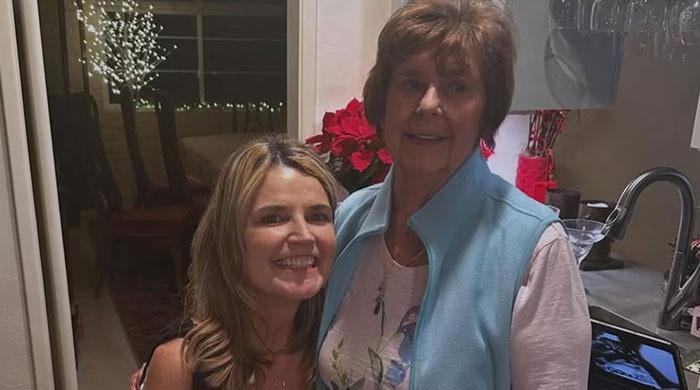
Imagine being at a funeral, saying your final goodbyes to a loved one, when suddenly, you hear a strange noise coming from the coffin. That’s exactly what happened at a wake in Ecuador, where a 76-year-old woman, Bella Montoya, had been declared dead just hours before. Heartbroken but accepting, her relatives prepared for the funeral. They clothed her in her preferred blue dress and hosted a wake for final goodbyes.
The wake was quiet and sad, as these things usually are. People stood around the open casket, remembering Bella’s life. Then something unimaginable happened. Her nephew suddenly noticed a suppressed sound – the kind of weak, gasping breath someone makes when they’re very sick. At first, people thought they were daydreaming about it. But when they scrutinized intently, they spotted that Bella’s chest was slowly rising and falling. She was alive! The noise level shot up the second they figured it out. Everything got hyper-real for a second, then hyper-loud. Someone immediately called for an ambulance. When the doctors saw Bella, they were completely flabbergasted. These were the same doctors who had declared her dead just hours earlier.
What does it mean to truly die? This incident challenges our most basic assumptions. For the family involved, their grandmother’s funeral became more than a memorial – it became a moment that defied explanation and changed their understanding forever.
So, what’s the lesson here?
Honestly? It’s hard to say. Maybe it’s this: back in the day, life and death weren’t so clearly separated. Without modern machines and proper tests, people had to rely on what they could see or feel. And sometimes they got it wrong. Horribly wrong!
But human fear? It’s powerful. It pushes people to invent, to act, to find creative solutions, even if it’s just tying a string to a bell or poking a pipe through a coffin.
How strange that the most essential things often become invisible through their very reliability, noticed only in their absence or disruption. We stand on the shoulders of hospitals, the brilliance of doctors, and the miracles spun from wires and code. But back then? They only had candles, cold hands, and longing.
So, when you hear someone say “saved by the bell,” just remember, it might’ve meant something way more terrifying than getting out of trouble in class. Next time you walk past an old cemetery, think about how much history lies beneath your feet – not just who is buried there, but how they got there, and the darkness they never outran. While we’re safer today, their suffering led to the changes that protect us now.
If this story gave you goosebumps, don’t worry, you’re not alone. It exists in the blind spot of your attention, comfortably ignored, until suddenly, brutally, it demands your full awareness. And then you can’t unthink it.
Sleep tight tonight.
And maybe don’t sleep with a sign that says “I’m not dead” … but hey, at least now you understand why someone once did.