The people of Yemen used to come for Hajj and used not to bring enough provisions with them and used to say...
BITS ‘N’ PIECES

Narrated by Ibn Abbas (R.A)
The people of Yemen used to come for Hajj and used not to bring enough provisions with them and used to say that they depend on Allah. On their arrival in Madina they used to beg to the people, and so Allah revealed, “And take a provision (with you) for the journey, but the best provision is the fear of Allah.” (2.197).
Sahih Bukhari, Volume 2, Book 26, Number 598
The black-footed cat (Felis nigripes) is often referred to as the deadliest cat in the world.
When it comes to the most dangerous member of the cat family, many might assume that the largest - the lion or the tiger - holds this title. While these big cats are undoubtedly powerful and deadly to humans, the most dangerous feline in terms of success rate in hunting and sheer fearlessness is surprisingly much smaller: the black-footed cat (Felis nigripes). Native to the arid regions of southern Africa, this tiny wildcat is often referred to as the deadliest cat in the world, not because it poses a threat to humans, but because of its unmatched hunting efficiency.
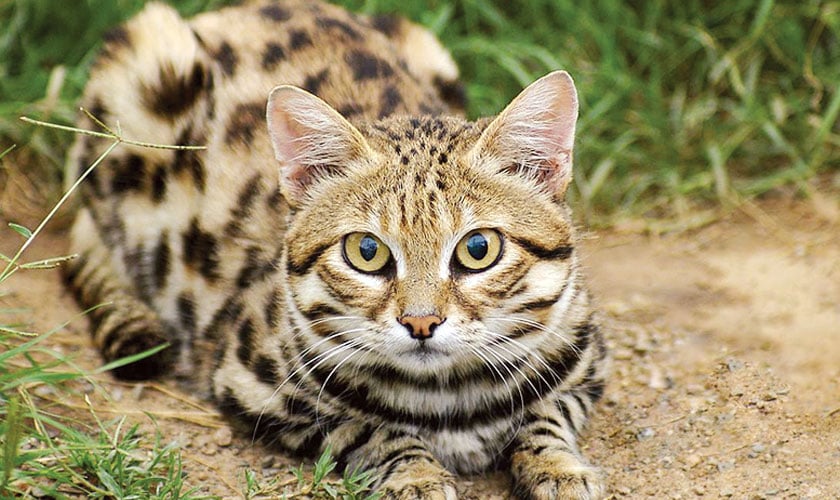
Weighing only 1 to 2.5 kilograms (roughly 2 to 5 pounds) and standing just about 8 inches tall at the shoulder, the black-footed cat doesn’t look particularly intimidating. However, what it lacks in size, it makes up for in skill and determination. Studies show that the black-footed cat has a hunting success rate of around 60 percent, far higher than that of lions (about 25 percent) or leopards (around 38 percent). On average, it kills up to 10 to 14 small animals each night - a feat necessary to meet its high energy needs due to its small body size and fast metabolism.
This nocturnal predator preys on birds, insects, rodents, and small reptiles. It uses a combination of stealth, patience and agility to stalk and ambush its prey. The cat’s solitary and elusive nature adds to its mysterious reputation. Despite its small stature, it is incredibly fierce - known to attack prey larger than itself and to travel several kilometers in a single night during hunting expeditions.
The black-footed cat is classified as ‘Vulnerable’ on the IUCN Red List of Threatened Species. This status means it faces a high risk of extinction in the wild. It is threatened primarily by habitat loss due to agriculture, overgrazing and development. Its population is naturally low, as the cats are solitary and territorial, and they occur at low densities even in suitable environments. Accidental poisoning from rodenticides and predator control measures are also a significant threat.
Their secretive behaviour makes them hard to study, complicating conservation efforts. Though they can reproduce relatively quickly, their slow overall population growth makes recovery difficult. Conservation efforts, including habitat protection and research, are underway to ensure the survival of this elusive and remarkable species.