Women domestic workers are often treated as bonded labours, especially in Punjab. The good news is that domestic workers shall be registered with the Punjab Employees Social Security Institution (PESSI) on a priority basis. You! takes a look…
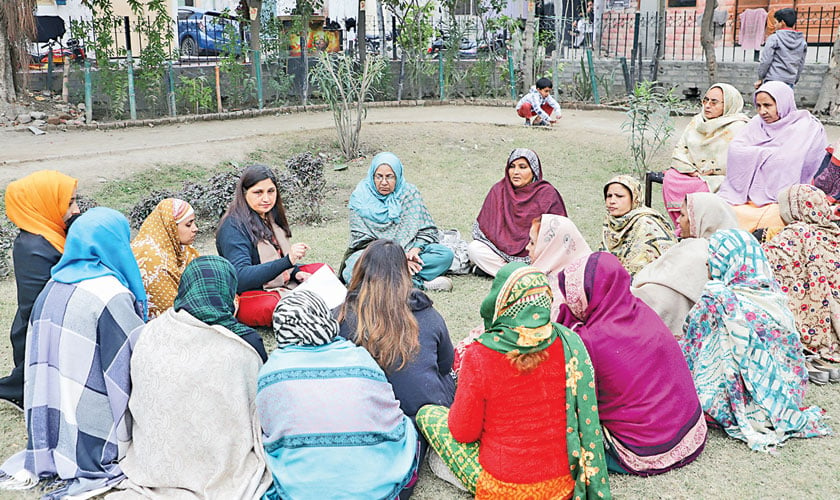
Amina Shahzadi lives in Badami Bagh area and works as a domestic worker. She performs household chores like ironing clothes and cleaning; and moves from one house to the other but earns paltry amount despite all this hard work. She has no option but to stretch herself because her husband who was a chef/manager at a restaurant lost his job due to Covid-19 and its aftermath.
Amina also has to look after her three children due to which she is suffering from high stress levels and does not get enough time to rest. To add to her miseries, the attitude of her employers is quite unpredictable and they can become harsh with her at any moment. After putting long hours into work, she is able to earn around Rs 15,000 a month and a significant part of it goes into payment of rent of her house. As for her wages, she isn’t offered a sufficient amount since her wages were bargained upon by the potential employers rather than decided as per the law. During peak of Covid-19, when people hardly allowed domestic workers to enter their houses, the latter had to accept lower than usual offers.
Similarly, Kiran is a young domestic worker who was unable to continue her education because of the responsibilities lying on her shoulders. She is working constantly for the last nine years as her father is suffering from severe back pain. Her employers pay her comparatively well but do not allow her to take leave which is taking a toll on her health. Sometimes, she has to skip important family events just to save herself from the wrath of her employers who seem to have criminalised the act of taking leave.
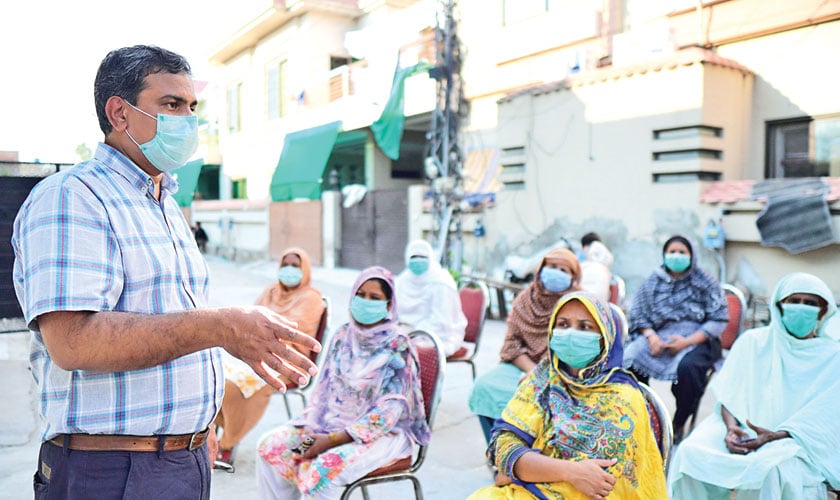
Then there is Shazia, who complains about the cost of sanitizers and other protective equipment, which she cannot afford. This is her major concern as her employers want her to use these frequently both at her home and workplace – her employers’ home – if she wants to come for work. Otherwise, she faces the risk of losing her job. Shazia is quite afraid of her employers who every other day level different allegations against her and apply cuts on her salary as punishment.
“These are just a few among the many cases of domestic workers that highlight their plight,” says Bushra Khaliq, Executive Director, Women In Struggle for Empowerment (WISE). “There are other cases where employers have badly injured domestic workers or beaten them to death over petty issues. Earlier this year, an eight-year-old girl Zohra Shah was beaten to death by her employers in Rawalpindi for letting two parrots free from their cage,” she adds.
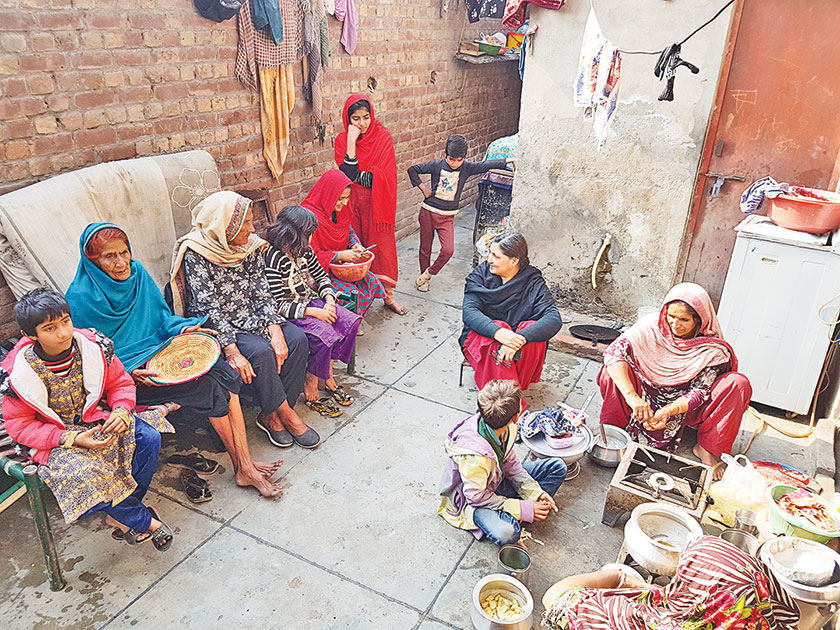
Bushra shares that her organisation reached out to domestic workers recently and distributed hygiene products, ration and financial help during Covid-19 as many of them had lost jobs. Their employers are wary of them as they fear the domestic workers could bring the infection with them to their houses. So they asked them to stay at their places and discontinue workers.
“The estimated number of domestic workers in Pakistan is around 8.5 million, out of which most are women and children. A large number of the children involved in domestic work are doing bonded labour as they are left at employers’ places against advance payment made to their parents or relatives by the employers. It is quite common that such children are not allowed to go on leave or even meet their parents for long periods of time. It is a fact that outsiders do not know what is going inside the four walls of the houses where they are employed and what type of hardships these young children are being subjected to,” informs Arooma Shahzad, General Secretary, Domestic Workers’ Union Pakistan.
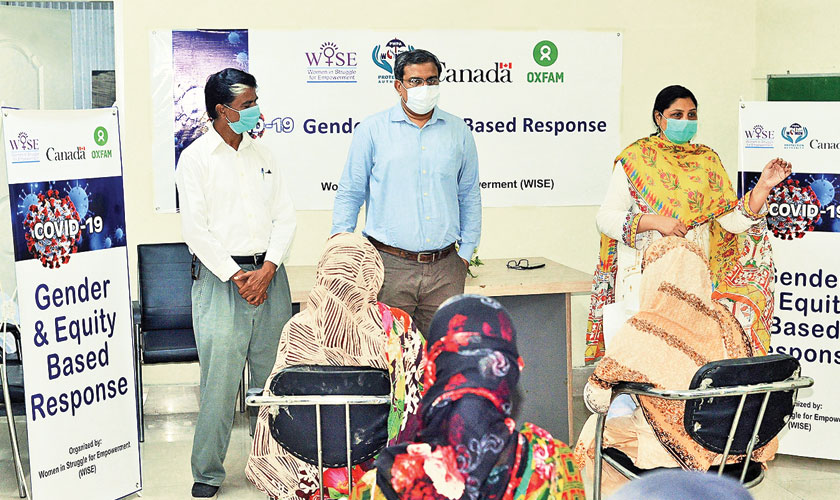
“A good development is that on the instructions of the Lahore High Court (LHC), the Punjab Government passed Punjab Domestic Workers’ Act, 2019, that aims to bring workers under the jurisdiction of labour laws, protect their right and welfare, provide them with social security, safety and health facilities and regulate their employment conditions. After the Punjab Government, the National Assembly of Pakistan also passed a law ‘The Islamabad Capital Territory Domestic Workers Act, 2019’. What is needed the most is that the said law shall be implemented in its true spirit and clear-cut mechanisms be introduced to ensure this,” asserts Bushra while adding that the domestic workers shall be registered with the Punjab Employees Social Security Institution (PESSI) on a priority basis.
A research study titled ‘Domestic Workers: Legal Protection Mechanisms in Pakistan’ carried by WISE with the support of the Norwegian Human Rights Fund sheds light on the issues of domestic workers in Pakistan. It says domestic workers ease the burden of individual households by undertaking household chores in return for remuneration. The tasks include the care of children and the elderly, cooking, driving, cleaning, grocery shopping, running general errands, taking care of pets, especially in urban areas, and so on. However, despite providing these important services, domestic workers are not recognised as workers in the society and generally not granted the rights they are entitled to.
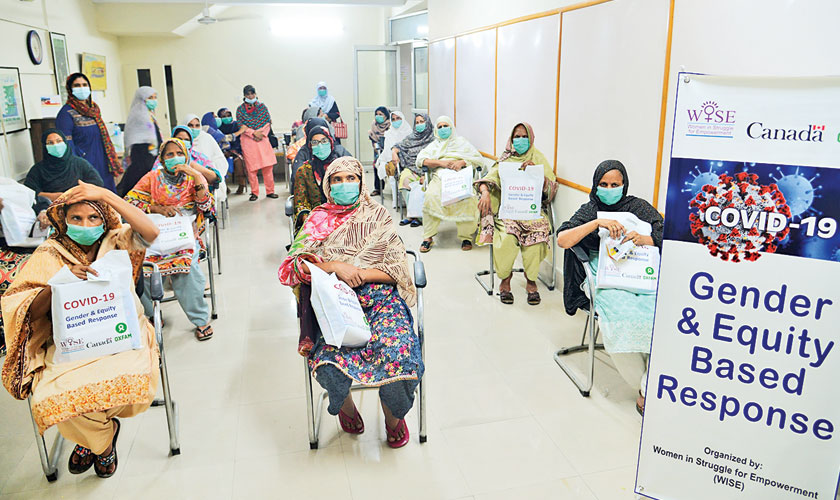
Unfortunately, the rights of domestic workers in Pakistan have been neglected and they are mostly exploited by their employers. The minimum price benchmark is not applicable to them as they are not considered formal labour. As if this is not enough, they are humiliated, subjected to discrimination, beating and in worst cases sexual harassment and abuse at the hands of their employers.
“There are certain rights of domestic workers that need to be ensured at any cost. For example, they are entitled to get fair and minimum wage set by the government. Moreover, they shall not work under bonded labour system or forced or partly forced labour, must not be forced to do extra work without their will, shall be allowed weekly day off, sick leave and paid annual leaves plus six-week maternity leave in case of pregnancy and get protection from physical and sexual abuse,” tells Bushra. “The domestic workers must get the right to get registered and issued social security card. They must also be entitled to avail social protection and welfare schemes offered by the government. No domestic worker shall be required to work for more than eight hours a day. It is also advised that domestic workers shall not be discriminated against during recruitment, continuance of employment, deciding wages, benefits and other rights on grounds of religion, race, caste, creed, sex, ethnic background, and place of birth/residence, domicile, migration or any other reason,” she explains.
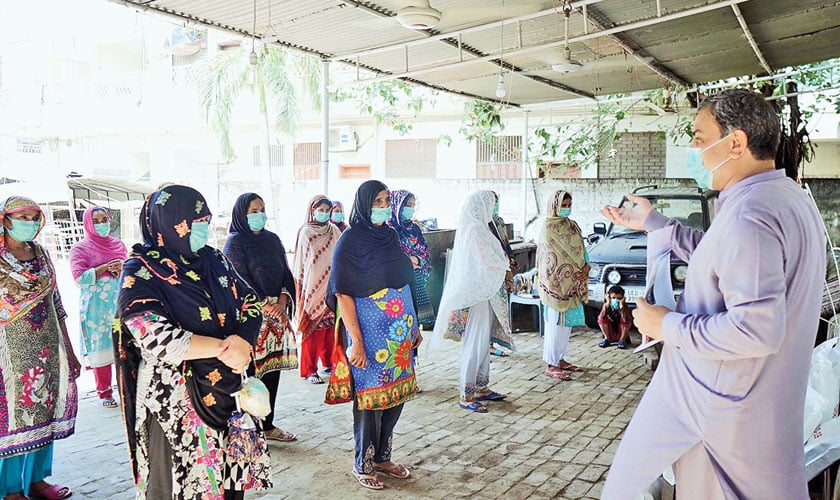
The salient features of the Punjab law for domestic workers follow: No child under the age of 15 years shall be allowed to work in a household in any capacity. The law says no domestic worker under the age of 18 years shall be engaged in a domestic work except involving light work in a household. Light work here means a domestic work which is part-time in nature and is not likely to harm health, safety and education of a domestic worker. Every employment or appointment of a domestic worker shall be subject to issuance of a letter of employment in the prescribed form showing the terms and conditions of his employment including nature of work and amount of wages. Every domestic worker shall be paid such wages within such period of time as may be provided in the letter of employment, but such wages must in no case be less than the wages specified by the Government under the Act. To provide social protection, safety and welfare measures to domestic workers, the Government shall establish a fund to be called ‘Domestic Workers Welfare Fund’. The Government may notify labour Inspectors of the respective areas of jurisdiction for the purposes of ensuring compliance with the provisions of the Act. No household shall be subjected to inspection except on receipt of a complaint and on direction of a Dispute Resolution Committee.
An official in Punjab labour department is of the view that the implementation of the said law is a challenge because powers of the inspectors are limited and punishments not strict. “So, the required changes need to be made. Besides, there is a need to bring change at the societal level where people must boycott those mistreating their domestic workers and complain against them collectively. A child of school-going age must not stay back at the employer’s home during school time. In case such a child is spotted, their parents and employers shall both be held accountable,” he tells. “Furthermore, the existing social security funds are not easy to be diverted to domestic workers as the already registered workers have first right over these. Generation of funds exclusively for domestic workers is the area the government must work on,” he concludes.
The author is a staffer and can be contacted at
shahzada.irfan@gmail.com