The rather challenging urban infrastructure compels the population of Karachi to associate the monsoon season with waterlogged roads, intense traffic jams, rising humidity, and the struggle to balance uninterrupted electricity supply with the safety of millions amid lashing rains.
POWER MANAGEMENT
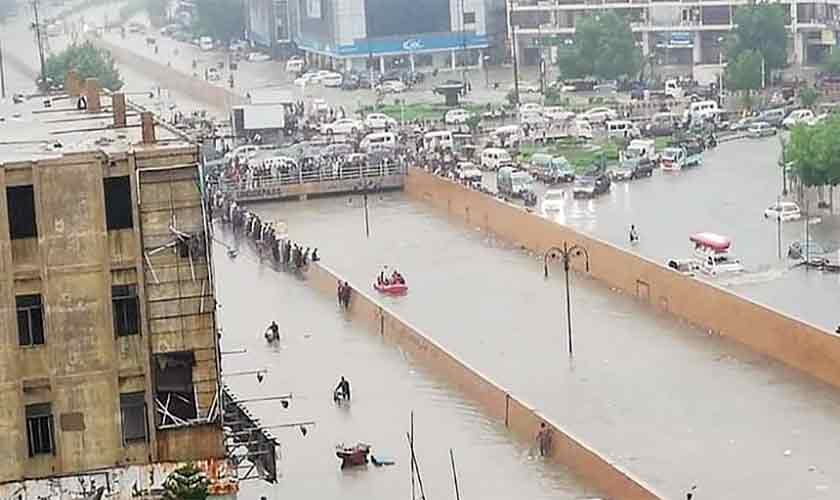
The rather challenging urban infrastructure compels the population of Karachi to associate the monsoon season with waterlogged roads, intense traffic jams, rising humidity, and the struggle to balance uninterrupted electricity supply with the safety of millions amid lashing rains.
The simple assumption of ‘loadshedding’ does not hold in this case, as Karachi is 70 per cent loadshedding-free courtesy of responsible citizens who ensure timely payment of their dues. The complex reasoning for these shutdowns is driven by automatic safety mechanisms or reactive fault isolation systems, designed to protect life and infrastructure and to restore power swiftly where it is safe to do so. In a city as dense and diverse as Karachi, the ability to differentiate between an outage and a weather-triggered disruption is essential not only for public understanding but also for constructive discourse around energy systems.
Across the globe, climate change is intensifying the frequency and severity of weather-related power disruptions. A comprehensive analysis by Climate Central shows that in the US alone, nearly 80 per cent of major power outages from 2000 to 2023 were triggered by weather events such as severe storms, tropical cyclones, and winter extremes. Even more telling is that the number of such weather-driven outages doubled in the most recent decade compared to the one before, illustrating how increasingly volatile weather continues to overwhelm even the world’s most advanced energy systems.
These findings underscore that weather-induced outages are not signs of system failure but rather of grid safety mechanisms responding to climate stress -- a global challenge that utilities everywhere must navigate.
Karachi’s power utility, K-Electric, operates under similar circumstances. As the city’s exclusive power distributor, serving over 3.8 million customers across neighbourhoods with vastly different infrastructure, topography and civic conditions is not an easy feat. During heavy monsoon spells, systems may experience temporary shutdowns on some feeders out of more than 2,100 that serve customers in the coverage area, most of which are restored within hours.
Statistics highlight the strength of the broader system and reflect the key fact that most parts of the city continue to receive power during heavy rain, with fast restoration where it is safe to do so. The utility has often stated that safety is its top priority. During the recent spell, when workplaces were operating remotely and classes were being held online, frontline workers were seen in the field, at times knee-deep in water, waiting to get safety clearance before carrying out repairs.
The mechanism behind these disruptions lies in safety protocols. During rainfall, moisture seeps into electrical systems, causing automatic tripping at substations or transformers. This is not due to capacity constraints but is a protective measure to prevent electrocution and infrastructure damage. With sprawling urban growth has come a massive issue of urban flooding, where PMTs, substations and at times even consumer meters are submerged in water, posing dangers to public life.
Outages during the rain are not evidence of neglect; they are usually the outcome of automated safety systems designed to trip, isolate and then restore power
In areas where illegal hook connections (kundas) or waterlogged encroachments dominate, the risk escalates. Many times, these kunda wires, because they are not as sturdy as legal connections, may fall and put lives at risk. Narrow streets in high-crime areas are often surrounded by entangled cable, telephone, and internet wires that serve the purpose illegally. KE, in such cases, may proactively shut off supply -- not as a punitive measure, but to safeguard lives.
Broader climatic and urban challenges compound these realities. Pakistan is among the top 10 countries most vulnerable to climate change, with monsoon variability increasing year after year. In 2025 alone, nearly 1,000 people have died due to flooding and glacial lake outbursts in the north. Infrastructure stress under such conditions is not unusual. Add to that the prevalence of illegal electricity use and it becomes clear why targeted safety shutdowns, especially in high-loss areas, are sometimes unavoidable.
Over the past few years, KE has undertaken one of the largest private-sector grid resilience programmes in Pakistan. It has installed Aerial Bundled Cables (ABCs) in hundreds of neighbourhoods. These are cables that are insulated, theft-resistant and rain-resilient. Substations have been raised in flood-prone areas, grounding systems have been upgraded, and advanced supervisory control tools have been deployed to enable real-time monitoring of network health. The company also undertakes community awareness campaigns to promote safe electricity use.
While public frustration with outages is understandable, it is crucial to view them through the right lens. Outages during the rain are not evidence of neglect; they are usually the outcome of automated safety systems designed to trip, isolate and then restore power. It is also pertinent to note that while major roads are often cleared of water immediately after rainfall, inner streets remain inundated for many days, thus hindering the repair of any breakdowns.
As Pakistan grapples with its energy transition, rising urbanisation and increasingly erratic weather patterns, power distributors will be tested on their technical performance as well as their ability to communicate clearly, act responsibly, and innovate for resilience. With further reforms, investment support and public cooperation, the vision of an uninterrupted, climate-resilient energy supply for residents of Karachi may not be as distant as it seems.
This can only be achieved through efficient cooperation and collective action among all stakeholders, civic agencies, city administrations and utilities.
The writer is a development specialist.She can be reached at: azra.maqsood@gmail.com