Ahmed, a construction worker in Dubai, sends $300 home to Karachi every month. By the time his family receives it three days later, nearly $25 has vanished -- not to taxes or theft, but to the invisible machinery of global finance.
REMITTANCES
Ahmed, a construction worker in Dubai, sends $300 home to Karachi every month. By the time his family receives it three days later, nearly $25 has vanished -- not to taxes or theft, but to the invisible machinery of global finance.
In 2024-25, according to the Reserve Bank of India, citizens earning a living abroad sent home a record $135.46 billion, the most money any country has ever received from its diaspora workforce in a financial year. Neighbour Pakistan also broke its own record, albeit on a relatively smaller scale, raking in $38.3 billion, with Bangladesh also going over the $30 billion mark.
Unfortunately, a fair chunk of this money never reaches its intended destination. Billions are lost each year across South Asia to what might be called an ‘invisible tax’, that is not levied by governments but extracted by banks and intermediaries. Participants in the traditional payments system routinely drain anything between 5 and 10 per cent from each transaction in the form of transfer fees, exchange rate spreads, and settlement delays.
Put in human terms: a $200 paycheck sent home can lose about $10 before it ever arrives. The UN has set a target of reducing average remittance costs around the world to below 3.0 per cent. Meeting that benchmark would return roughly $20 billion to households globally each year.
The impact of the billions lost mentioned above extends beyond the individuals who sent the money. Remittances are often portrayed as household lifelines, providing the source of rent, food and even tuition for many families.
However, said families also use part of what they receive to fund small businesses, real estate, and savings. As such, in countries with shallow credit markets and limited state welfare, these inflows typically serve as grassroots capital injections. It means that every percentage point shaved off remittance flows is equivalent to billions withheld from domestic growth engines.
According to India’s Reserve Bank, even with costs declining, families still lose nearly 5.0 per cent of remittances to transaction charges. Scale that across a region, and the ‘invisible tax’ becomes a visible drag on investment and job creation. Take the example of Pakistan, where even a 2.0 per cent reduction in costs on the $38.3 billion sent back home by the country’s diaspora would free up nearly $800 million. This is money that could fund something as fundamental as a year of higher education for hundreds of thousands of students.
The inefficiency described above is the result of a global payment system built around a chain of correspondent banks. Each intermediary not only charges a fee but also introduces delay and applies its own exchange rate markup. To make matters worse, compliance requirements, especially anti-money laundering rules introduced after 9/11, have inadvertently added more friction to the process.
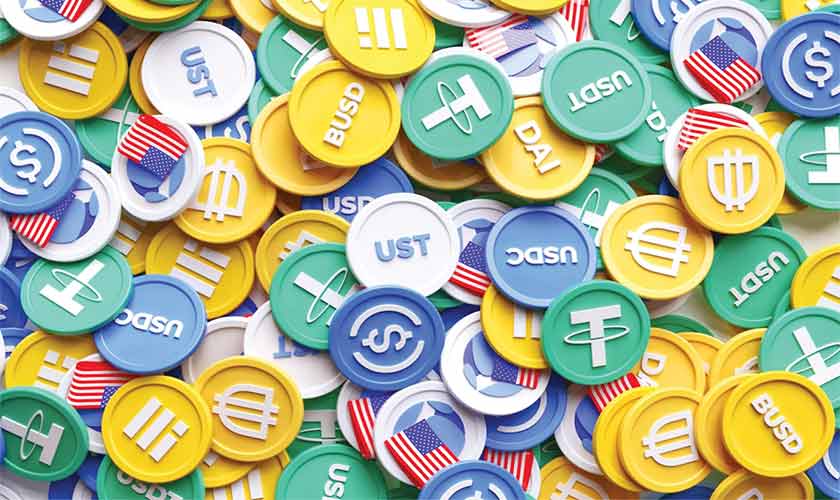
The outcome of all this is paradoxical. Corporate remittances, trade settlements or high-value transfers often move quickly and cheaply, as banks compete for lucrative clients. However, for the very workers who rely on small-value transfers, such as construction labourers in the Gulf, nurses in Europe, or drivers in North America, the system is slow, costly, and opaque. This is where crypto, particularly stablecoins, comes in. For diaspora workers, stablecoins such as Tether (USDT) or USD Coin (USDC) can be a near-instant way to transfer value across borders, without the need for a daisy chain of intermediate financial institutions.
For instance, sending $200 in stablecoins can cost less than a dollar in network costs, and the money will be available almost right away. Stablecoins also protect families from changes in the value of their local currency. In some countries, holding paychecks in digital dollars can determine whether families can still buy things.
Stablecoins are quietly becoming the new rails of cross-border settlement. Left unregulated, they will expand through informal channels. However, integrated smartly, they could return billions to families, power financial inclusion and ease chronic foreign exchange pressure
Already, there are signs that stablecoins are emerging as the de facto ‘digital dollar’ for remittances. Informal networks are using them to bridge Gulf-to-South Asia flows, swapping tokens into taka or rupees at the last mile. Furthermore, global pilots, from US-Colombia to EU-Africa corridors, have shown stablecoin transfers can cut costs by half compared to money transfer operators.
However, there is a notable geopolitical undercurrent. If wages for migrants start moving on-chain in stablecoins that are pegged to the dollar, it could speed up the dollarisation of family income in countries already struggling with their currencies. That risk makes regulators weigh efficiency against control. A practical policy design exists: keep remittance providers licensed, use risk-based KYC, set sensible transaction caps, require onshore FX conversion for cash-outs and encourage interoperability with central-bank or bank-led digital systems. Done this way, authorities retain visibility while households retain more of their earnings.
The promise of crypto remittances is not just about cheaper transfers. They can act as an entry point into broader financial services. This is not speculation. WhatsApp-based firms like Félix already let people in Latin America send money via USDC inside a familiar chat app, so families not only receive money faster, they also get access to basic digital banking services.
And this matters because global remittance flows climbed 4.6 per cent, from $865 billion in 2023 to $905 billion in 2024, according to the Migration Data Portal. That’s not all. Flows to low-and middle-income countries are also projected to hit at least $690 billion in 2025, and with such growth, even marginal cost savings mean billions more in family budgets. The World Bank-funded Remittances website shows that slashing prices by at least 5.0 per cent can save up to $16 billion a year.
The primary obstacle to this progress is not technology, but politics. Stablecoin remittances may put existing middlemen, foreign exchange regulations, and, on a deeper level, monetary sovereignty at risk.
However, while regulators may be worried about illegal money, they should also be conscious of a world where over 1.4 billion adults don't use banks at all. Still, at least 900 million of them have access to mobile phones, which could be a ready platform for delivering financial services through stablecoin-enabled wallets. This leapfrogging potential means stablecoin rails can scale more quickly than bank-led financial inclusion.
There are also costs to holding on to the status quo. For example, as long as South Asia's remittance system is stuck on 1970s-era rails, households and the economy as a whole will lose more and more money. As such, hybrid solutions, in which licensed money transfer companies use blockchain to settle transactions while keeping fiat on-ramps, would be a good compromise.
With things being as they currently are, South Asia's dependence on remittances will only deepen. Migration is rising, with Gulf labour markets still absorbing millions and advanced economies becoming increasingly reliant on South Asian professionals. India has been the biggest recipient of diaspora remittances for more than a decade now, and its neighbours to the east and west are also growing their flows. This makes the question of efficiency a national economic issue, not just a personal one.
The debate is therefore not whether crypto can lower costs. That evidence is already clear. The real question is whether governments are willing to modernise policy to let it happen.
Stablecoins are quietly becoming the new rails of cross-border settlement. Left unregulated, they will expand through informal channels. However, integrated smartly, they could return billions to families, power financial inclusion and ease chronic foreign exchange pressure.
The ‘invisible tax’ on migrant workers has been tolerated for decades. South Asia's governments now face a choice: cling to outdated systems or embrace a future where technology allows remittances to deliver their full value. The political calculus will decide whether stablecoins remain on the margins or become the backbone of the region's most vital financial flow.
The writer is the South Asia marketing lead at MEXC Ventures.