The waters came without warning. Entire villages in Pakistan’s northwest were swallowed overnight -- homes buried under landslides, wedding tents washed away mid-celebration, and families left clinging to rooftops as rivers tore through their lives. Hundreds have been killed and thousands displaced, in yet another season of floods that feels less like an exception and more like a new national calendar.
CARBON MARKETS
The waters came without warning. Entire villages in Pakistan’s northwest were swallowed overnight -- homes buried under landslides, wedding tents washed away mid-celebration, and families left clinging to rooftops as rivers tore through their lives. Hundreds have been killed and thousands displaced, in yet another season of floods that feels less like an exception and more like a new national calendar.
The world’s promises of climate aid have proven too slow, too little. What remains on the table is one of the few lifelines available -- carbon markets -- a chance to turn tragedy into survival, if only we act fast enough and with integrity.
In the quiet rooms of international climate negotiations, where every decimal of temperature rise is debated with the weight of life and death, a new financial mechanism has taken centre stage: carbon markets. For developing countries like Pakistan, battered by floods, droughts and rising debt, this mechanism offers not just opportunity but survival. But here’s the hard question: Can Pakistan really turn carbon into currency, or are we late to the game again?
In April 2025, the Ministry of Climate Change, as the Designated National Authority for Carbon Markets, officially granted Pakistan’s first Host Country Approval (HCA) to a Korean-backed clean water project in Punjab. Since then, four more projects have been given the go-ahead to develop detailed design documents, marking the initiation of Pakistan’s participation in the global carbon markets under Article 6.
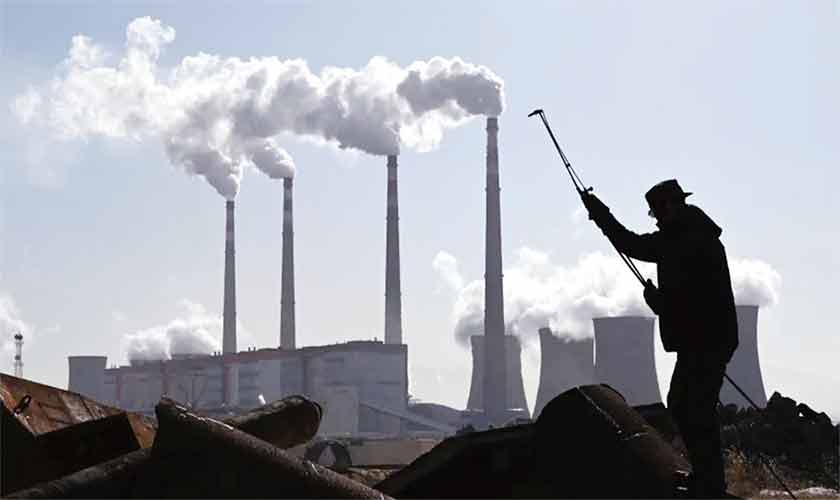
Let’s start at the beginning. Carbon, the elemental building block of life, has become the architect of our destruction. Global emissions have ruptured the planet’s natural equilibrium, pushing carbon dioxide concentrations past 420 ppm, a level not seen in over three million years. In 2024, the planet recorded its hottest year in human history, clocking in at 1.55 C above pre-industrial levels.
Pakistan, responsible for less than one per cent of global emissions, has become climate change’s favourite punching bag. From the recurrent mega floods to persistent heatwaves and water scarcity, we’ve paid the price economically and existentially. And while we wait for the world’s wealthy polluters to fulfill their long-due financial promises, it’s clear: help isn’t coming fast enough.
So what now? Carbon markets. Carbon markets, though far from perfect, offer a rare glimpse of hope. They function on a basic logic: reduce emissions here, sell the credit there. Developed countries and corporations with pollution problems can buy these credits to ‘offset’ their emissions, while developing countries can fund climate-positive projects.
This isn't new. The idea was born in Kyoto, limped through Copenhagen and was reshaped in the Paris Agreement. Now, under Article 6, these markets are finally operational after nearly a decade of intense negotiations. Pakistan, to its credit, didn’t wait this time. With Article 6 now live post-COP29 in Baku, the Ministry fast-tracked its Policy Guidelines for Trading in Carbon Markets -- a rare feat of interprovincial consensus, facilitated by the Special Investment Facilitation Council (SIFC).
Carbon markets are a currency of justice -- a way to make the polluter pay, not in words, but in dollars. But only if we treat this market with the seriousness it deserves
But policy alone doesn’t create a market. Integrity does. Trust does. Projects do.
If the government is the architect of the carbon market, then the private sector must be its engine. And in Pakistan, no group is better placed to lead this charge than the Overseas Investors Chamber of Commerce and Industry (OICCI). With members representing the largest multinational corporations in Pakistan, OICCI has the technical, financial, and operational muscle to scale high-quality mitigation projects.
The 3rd OICCI Climate Conference 2025, held in Karachi, reinforced this reality. The conference was not only a platform for dialogue but also for direction. Private sector leaders called for robust MRV systems to ensure that carbon credits are credible, additional and internationally tradable, as well as public-private partnerships to unlock scalable projects in energy transition, industrial decarbonisation and nature-based solutions.
One of the strongest outcomes was the industry’s commitment to co-developing carbon market readiness with the government, ensuring Pakistan does not fall behind regional peers. Multinationals operating in Pakistan already adhere to international ESG standards and reporting practices. With the right enabling environment, they are capable of producing ‘investment-grade’ carbon credits that meet the scrutiny of global buyers from Seoul to Silicon Valley.
The message was clear: the private sector is not waiting for aid. It is ready for action. What it needs is a transparent, functional market, underpinned by government credibility.
Of course, this optimism must be tempered. Carbon markets are not a silver bullet. They’ve faced scandals -- worthless offsets, human rights violations, shady brokers. Without transparency and regulation, they can quickly turn into tools of greenwashing rather than genuine climate finance.
Across Asia, peers such as Vietnam, Indonesia and the Philippines are moving quickly -- piloting Article 6 transactions, establishing national registries and securing bilateral agreements with buyers in Europe and East Asia. These countries are actively branding themselves as credible suppliers of high-quality credits. Pakistan still has a window to position itself competitively. If we act with urgency and integrity, we can become not just participants but leaders in the region’s carbon economy. If we delay, however, the train will leave the station -- with Pakistan once again left behind.
The real test now is scale. Few projects are not enough. We need more. We need mangrove reforestation in Balochistan. Clean cooking stoves in Sindh. Methane capture in dairy farms in Punjab. And solar irrigation in Gilgit-Baltistan. Every ton of carbon reduced should be converted into financial resources and reinvested in the communities that generated the credit.
Carbon markets are not just a climate tool. They are a currency of justice -- a way to make the polluter pay, not in words, but in dollars. But only if we treat this market with the seriousness it deserves. The private sector must step up. The government must deliver approvals on time. And the Global North must finally pay -- not through pity, but through purchase. Because for Pakistan, this isn’t about offsetting guilt. It’s about offsetting disaster.
The writer is a carbon pricing specialist.