Entrepreneurs need to face environmental challenges through business and industrial initiatives. Although everyone talks about environmental challenges, somehow, Pakistan is not keeping pace with them. So, when the situation becomes unbearable, everyone wakes up and tries all kinds of ad hoc measures, making the usual speeches at seminars and conferences about urgency and awareness, that the issue should and will be handled immediately and properly.
ENTREPRENEURSHIP
Entrepreneurs need to face environmental challenges through business and industrial initiatives. Although everyone talks about environmental challenges, somehow, Pakistan is not keeping pace with them. So, when the situation becomes unbearable, everyone wakes up and tries all kinds of ad hoc measures, making the usual speeches at seminars and conferences about urgency and awareness, that the issue should and will be handled immediately and properly.
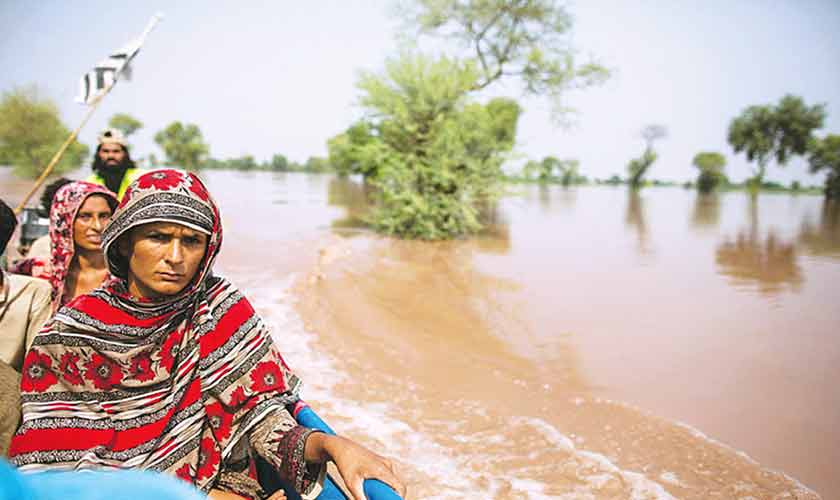
Entrepreneurs, by and large, are still not prepared to tackle these challenges themselves, despite Pakistan being considered one of the top two most vulnerable countries to climate change and environmental catastrophe, according to the Global Climate Risk Index. Over the past decade, Pakistan has faced extreme weather due to scorching heat, smog, melting glaciers and flash floods -- all impacting millions of lives.
Countries around the globe are focusing on transforming the planet into a greener place. More than 140 countries have set their Net Zero targets. The EU has launched the Green Deal aimed at making the EU the first carbon-neutral continent by 2050. The Green Deal will have an impact on all EU suppliers, thus creating a green spillover into countries exporting to Europe.
As the world undergoes a paradigm shift, countries must be fully engaged to innovate, adapt and evolve to ensure a sustainable future. Therefore, for Pakistani companies, sustainability is no longer a choice; it is crucial. Renewable energy, eco-friendly technologies, and circular economies are just the beginning. The Pakistani corporate world faces its own unique challenges, which is a serious concern. Take the case of exporters who have to comply with all conditionalities, whether related to ILO International Labour Standards and the environment, or under GSP Plus, or even the dictates of brands and buyers. These conditionalities are directed at exporters, while it becomes an onerous task for them to sensitise the government and bureaucracy that Pakistan could lose global market share if a nonchalant attitude prevails in the official ecosystem.
Policies, regulations and ensuring compliance play a vital role in setting the framework for sustainable practices. Incentives for renewable energy projects, subsidies for green technologies, standardisation and green labelling, regenerative supply chains, climate financing and stringent environmental standards can drive the transition toward a sustainable economy. The question is whether the private sector and policymakers are on the same page.
The concern for entrepreneurs is essentially to undertake efforts that enable compliance while also addressing various economic and environmental challenges. It is not easy being green, as the corporate sector must shed its old styles, mindsets, and outlooks. Thus, there are misconceptions, lack of knowledge, investment fatigue and the frustrating mantra: ‘go green and hurt your business’. However, this takes things too far off the mark.
Studies have shown that going green is a catalyst for innovation, new market opportunities and wealth creation. Hence, corporations, either on their own or with assistance from environmental and compliance experts, must initiate a holistic ‘environmental due diligence’ exercise in their plants. They should start integrating the climate change dimension into their processes and policies to be best prepared for likely compliance audits and inspections.
Studies have shown that going green is a catalyst for innovation, new market opportunities and wealth creation. Corporations, either on their own or with assistance from environmental and compliance experts, must initiate a holistic ‘environmental due diligence’ exercise
It is essential to recognise that the environmental due diligence process encompasses risk assessment, setting measurable objectives, implementing preventive measures based on the precautionary principle, undertaking sincere mitigation actions and maintaining continuous monitoring, preferably conducted by third-party auditors.
For Pakistan's private sector to move towards a Net Zero transition and start contributing to a low-carbon economy, three essential actions are required. First, craft a commitment toward Net Zero targets and provide transparent reporting. Second, gain capacity building and technical support for operational transition. Lastly, access financing to implement long-term projects for transitioning to renewable energy, carbon capture and utilisation and integration into the value chain.
The overarching difficulty is the allocation of financial resources to undertake projects, processes and compliance measures related to this goal. For the majority of SMEs, high costs and insufficient budgets are significant barriers to becoming Net Zero compliant.
Workers and employees must also be on board and accept the fact that they too are stakeholders in the sustainability of their enterprise. The Employers’ Federation of Pakistan (EFP) is a strong proponent of social dialogue and continues to advise and mentor enterprises to ensure that workers are aligned with management when new and innovative systems, measures, or directives are introduced. The EFP often advises companies that it would be worthwhile and effective for management to convince workers that environmental challenges can be addressed through ‘shared solutions’, ‘transparency’ and ‘fluid social dialogue’.
This is a pragmatic approach, as it focuses on employees being part of the evolving enterprise ecosystem. Therefore, employees are psychologically at peace, which is the key. Many employers miss this aspect, and hence, there's frustration and discomfort among workers, which usually leads to lower efficiency and productivity.
Points of caution: Real-time change in any unit would be more practical and profitable if entrepreneurs made a well-intentioned and prudent investment and conduct protocol exercises with sincerity.
Going green is crucial to the long-term success of companies, and many are increasingly committing to eco-friendliness. Pakistani companies, such as Interloop, Crescent, Artistic and Soorty, have not merely embraced the green movement but have proudly championed programmes to foster a culture of environmental stewardship.
They are leading by example and demonstrating how sustainability can be integrated into companies for economic success. Many other enlightened Pakistani corporations have undertaken measures to address Net Emission Zero, Sustainable Development Goals 2030, corporate social responsibility regarding the environment, circular economy, recycling, reuse, waste disposal, etc and they ensure these are done regularly and consistently.
The efforts and achievements of these corporations are regularly showcased by the (UN) Global Compact Network Pakistan. They must be especially promoted by various textile associations such as APTMA, APTPMA, PHMA, PRGMEA, so that the positive impact is acknowledged as essential and will motivate other companies to emulate the pioneers.
The writer is a former president of the Employers Federation of Pakistan.