“What do I mean by a social contract? Put simply, I mean the implicit -- or at times explicit -- understanding of our collective responsibilities towards one another, which finds expression in the norms, institutions, and policies that fulfill the promise of the Declaration of Philadelphia: that ‘all human beings, irrespective of race, creed or sex, have the right to pursue both their material wellbeing and their spiritual development in conditions of freedom and dignity, of economic security and equal opportunity’”. -- Gilbert F Houngbo, ILO director-general in his report to the ILO International Labour Conference, June 2024
LABOUR & MANAGEMENT
“What do I mean by a social contract? Put simply, I mean the implicit -- or at times explicit -- understanding of our collective responsibilities towards one another, which finds expression in the norms, institutions, and policies that fulfill the promise of the Declaration of Philadelphia: that ‘all human beings, irrespective of race, creed or sex, have the right to pursue both their material wellbeing and their spiritual development in conditions of freedom and dignity, of economic security and equal opportunity’”. -- Gilbert F Houngbo, ILO director-general in his report to the ILO International Labour Conference, June 2024
The Employers’ Federation of Pakistan (EFP) has long advocated the need for a new social contract and has been engaging leaders of various workers’ federations in Pakistan, as well as global tripartite forums, to raise awareness. The world has changed dramatically over the past few decades, driven by the globalisation of business, the expansion of multinational corporations, the climate crisis, privatisation and rapid technological advancement. Simultaneously, trade blocs, brands, and consumers have become increasingly concerned with workers' fundamental rights, environmental sustainability, and social justice.
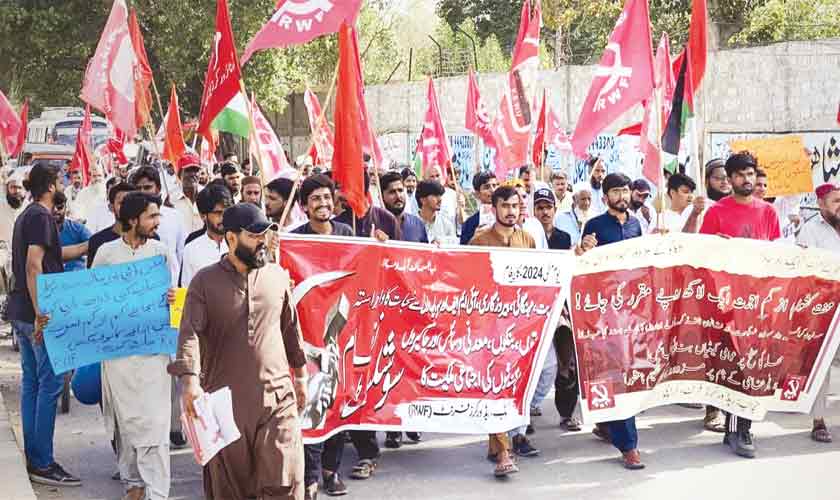
The continued decline of unionism in Pakistan has further weakened the power of workers and their organisations. The significant reduction in the number of unions, particularly in the private sector, is largely due to employers’ reluctance to allow unionisation within their units. Most workers, concerned primarily with job security, tend to avoid involvement in union activities. Ironically, foreign entities, such as the EU's GSP Plus status mechanism or international brands and buyers, impose strict conditionalities, including full compliance with ILO labour and environmental standards. These include the right to freedom of association and collective bargaining. Compounding the challenge are issues of inequality, discrimination, and social instability.
Pakistan’s image in the areas of human resource management, gender equality, unionisation, environmental policies, inclusivity and social protection has often been negative. There is thus an urgent need for fundamental reforms in industrial relations, employment laws, and the rights of both workers and employers. The EFP, a signatory to the ILO Declaration on Fundamental Principles and Rights at Work, is also actively promoting the concept of a just transition. Its legal panel offers practical advice and assistance in litigation matters. In partnership with the UN Global Compact Network Pakistan, the EFP is also promoting, advising on and recognising corporate initiatives aligned with the UN Sustainable Development Goals 2030.
Taking a cue from the ILO DG’s report, the EFP has initiated conversations with selected leaders of workers’ federations and begun the process of formulating a new social contract. Recently, the ILO Country Office in Islamabad appointed an Australian consultant to draft a new labour code, aiming to consolidate 21 labour laws into a single piece of legislation. However, the proposal has faced significant backlash from both employers and workers. This shows the urgent need for dialogue and consensus on a new social contract.
In 2000, a marathon seven-hour meeting was held in Karachi, attended by 26 enlightened employers, 26 moderate labour leaders and four experts/advisors. In July of that year, an agreement was reached to establish a bilateral forum as a focal point for discussing, deliberating and resolving industrial issues. This writer is one of the founders and, incidentally, coined the name Workers Employers Bilateral Council of Pakistan (WEBCOP). WEBCOP now has chapters in all four provinces, as well as Islamabad. It is hoped that the new social contract will be finalised through this platform.
A pragmatic and acclaimed social contract wouldbe the harbinger of industrial peace, improved efficiency, a content workforce and economic prosperity for workers and employers
In the expected social contract framework, the points for discussion would focus on defining what should constitute the new normal. The agenda would revolve around strict adherence to ILO Labour and Environmental Standards. The objective is to foster harmony and peace within the industrial ecosystem.
Both labour and management are dissatisfied with the current labour laws. Workers complain that bureaucratic red tape frequently hinders their efforts to organise unions. A nonchalant attitude persists within the bureaucracy when it comes to addressing employer violations firmly. There is frustration and tension on both sides whenever efforts are made to establish a union in a workplace.
Employers have long advocated for the right to manage, specifically, the autonomy to hire productive workers and dismiss inefficient ones. They are also uncomfortable with the provision that 25 per cemt of union office bearers may come from outside the organisation. While this provision may have had merit in 1972, it is now considered outdated and unnecessary in the current context.
Other contentious issues include ensuring that all workers receive the officially notified minimum wage. The finance ministers of all four provinces have announced a minimum wage of Rs40,000 per month. However, it is estimated that no more than 60 per cent of workers in the formal sector -- and over 90 per cent in the informal sector -- actually receive this wage.
There is also a shift in the demographics of today’s industrial workforce. The era of predominantly illiterate, unskilled, and insecure workers is over. Today’s younger generation holds different values and is eager to embrace technology. They tend to question traditional hierarchical structures and seek to carve out their own space. They are more likely to reject long-term employment or rigid career paths and are increasingly demanding benefits such as health insurance, more holidays, and flexible working hours.
Employers, on the other hand, are wary of external influences on their workforce. Exporters, in particular, grow anxious and frustrated when labour federations file complaints against them with obscure foreign labour organisations. These entities, often with little to do, quickly reach out to international buyers and escalate the matter. Consequently, buyers, located abroad, demand immediate responses and often issue veiled threats of discontinuing business. Such cancellations lead to layoffs and retrenchments, which ultimately harm the very workers these actions are meant to protect. These episodes tarnish Pakistan’s international image, especially at a time when its exports are growing at a painfully slow pace.
Additional challenges include contract labour, registration with EOBI and Social Security, transportation issues, prolonged overtime without proper compensation, absenteeism, labour inspections and poor working conditions. The social contract framework must address most of these concerns to ensure that both workers and employers operate in a stable, supportive environment -- one that does not leave them demoralised, disillusioned or weakened. As it stands, talent is migrating and capital is fleeing. These issues must also be addressed within the social contract.
One primary reason for the increased cost of production is the scourge of low worker productivity, coupled with widespread inefficiency. The optimum usage of human resources, machines and equipment is vital in today’s highly competitive global marketplace. By understanding each other’s interests, both sides can propose options that address their common or compatible concerns and refrain from escalating divergent positions. Both parties need to be sincere in a symbiotic relationship and must create an environment of trust.
The formation of in-plant unions should not induce fear within management, while at the same time, the workers must not have the impression that they can get away with anything once they have formed a union. Social contract discussions should be frank and transparent, focus on long-term relationships, insist on a clearly defined communication process and whenever necessary, bring about improvements in the document. Frequent and meaningful social dialogue is absolutely essential and would serve as a catalyst for simplifying industrial relations.
A pragmatic and acclaimed social contract would be the harbinger of industrial peace, improved efficiency, a content workforce and economic prosperity for workers and employers.
The writer is a former president of the Employers Federation of Pakistan.