COVID-19: Pakistan reaches agreement with Pfizer for 13m vaccine doses
Pakistan is also in the final stages of procuring 10 million doses of Russian Sputnik V
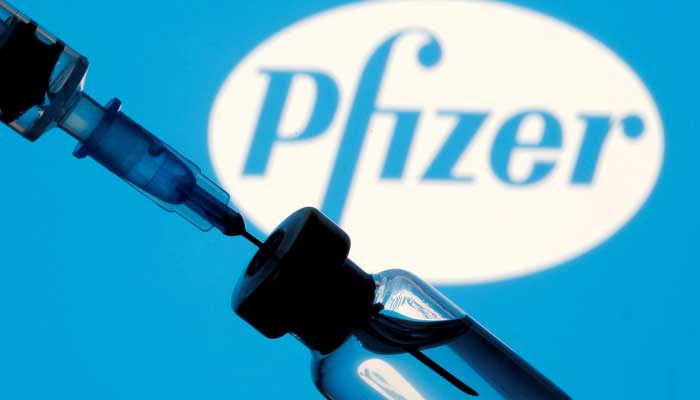
ISLAMABAD: Pakistan has signed an agreement with Pfizer-BioNTech for supplying 13 million doses of COVID-19 mRNA vaccine, Special Assistant to Prime Minister on Health Dr Faisal Sultan said.
While the exact timeline is not available, it is expected that the first shipment of the Pfizer vaccine would arrive in July while the remaining would be provided by the end of 2021.
Pakistan received 100,000 doses of the mRNA last month, under the COVAX facility, which is being administered to people who are immunocompromised and not suitable for other vaccines.
Nearly 13 million doses of COVID-19 vaccines have been administered in the country so far, with about 3.5 million people fully vaccinated, according to the data issued by the National Command Operation Center (NCOC).
Pakistan has primarily used Chinese vaccines - Sinopharm, CanSinoBio and Sinovac - in its inoculation drive and earlier this month began allowing those under 40 to receive AstraZeneca, of which it has a limited supply meant for people traveling to countries that require it.
Sputnik V
Similarly, Pakistan is also in the final stages of procuring 10 million doses of Russian Sputnik V. Its shipment is likely to reach Pakistan by the end of the current month or the first week of July.
Change in guidelines for Chinese vaccines
The NCOC has revised the guidelines for the two-dose Chinese vaccines, increasing the gap between the doses to six weeks.
According to details, two-dose SinoVac and Sinopharm vaccines were initially given with a four-week gap which has now been increased to six weeks.
Commenting on the development, SAPM Sultan told The News that plenty of Sinovac doses available in the country, while more were coming.
When asked whether the change is made to overcome the shortage, the SAPM said, “It would provide some flexibility in timing. Will help in some situations.”
Meanwhile, a senior official of the health ministry confided to the publication that shortage of vaccines was the main reason behind enhancing the gap between two doses and claimed: "that instead of decreasing efficacy, a delayed second dose could provide immunity."
“The delayed second dose gives better immune response in general. China has successfully experienced that,” the official claimed.
The Sindh government, in a statement of clarification, later said that those citizens who had already received one dose of Sinopharm, will still get their second dose after the earlier set 21-day gap. Similarly, those having received one dose of Sinovac, will get their second dose after four weeks, as was the earlier practice.
The provincial health department said that the new rule, of a six-week gap, applies to those who will get inoculated for the first time today onwards.
WHO’s advice on two-dose Chinese vaccines
The World Health Organisation (WHO) recommends administering two doses of Sinopharm and Sinovac vaccines 3-4 weeks apart.
"If the administration of the second dose is delayed beyond 4 weeks, it should be given at the earliest possible opportunity."


-
 Eye drops made from pig body fluid could revolutionize cancer treatment, new study says
 -
 Paul Conyngham uses ChatGPT, AlphaFold to develop a life-saving cancer vaccine for his dog
 -
 'Cicada' COVID variant detected in multiple countries as experts study mutation risks
 -
 Metformin’s hidden brain pathway uncovered after 60 years
 -
 New study shows how an extra 11 minutes of sleep each night reduces heart attack risk
 -
 Insulin pills near reality, promising injection-free diabetes care
 -
 A smarter approach to eating: Why isn't calorie counting enough?
 -
 Cutting sweet cravings doesn't reduce cravings or improve health: Scientists debunk myth
-
 Argentina exits World Health Organization following US lead: What it means for public health and diplomacy?
 -
Google ends crowdsourced AI health advice feature: Find out why
-
Smartphone use on toilet linked to increased health risk
-
Millions of kids take melatonin for good sleep, but here's why doctors warn