WASHINGTON: The American presidential election falls this year on November 8. The quadrennial exercise always takes place on the Tuesday following the first Monday in November, as spelled out in the US Constitution.
Here is a primer on the US election system:
How the voting system works:
The vote, by universal suffrage, is conducted in a single round in all 50 states and the District of Columbia (the city of Washington, which is not part of any state).
Voters choose among the candidates for president and vice president. The popular vote in each state determines the selection of a set of members of the electoral college, who pledge to support a given candidate.
The electoral college:
There are 538 members of the electoral college, with the number from each state based on its population size.
A state has one elector for each of its members of the House of Representatives, and one for each of the state´s two senators.
California -- the most populous state -- therefore has 55 electors, Texas has 38, and New York and Florida have 29 each. At the other end of the spectrum, lightly populated Alaska, Delaware, Vermont and Wyoming have only three electors each, as does the District of Columbia.
Members of the electoral college officially elect the president and vice president on December 19 in what is a mere formality.
What does it take to win?
The successful candidate must amass 270 electoral votes, an absolute majority of the 538 electors.
In all but two states, the candidate who carries the majority of the popular vote wins the support of all the state´s electors. Nebraska and Maine use a split system, in which two electors are chosen by popular state-wide vote and the remainder are chosen according to the popular vote in each congressional district.
The winner-takes-all system in the states makes it extremely hard for a third-party candidate to prevail, although they can still have critical impacts on certain states and therefore on the national result.
Swing states:
Some states historically support the Democratic candidate election after election, while others are just as resolutely Republican. Candidates thus concentrate their efforts on about a dozen states prone to shift back and forth between the parties, often determining the final result.
The most important of these are the "battleground" or "swing" states with the largest number of electors, like Florida (29), Pennsylvania (20) and Ohio (18).
Elsewhere on the ballot:
Americans on November 8 will also be voting for every one of the 435 members of the House of Representatives (who serve two-year terms) and for 34 of the 100 senators (who serve for six years). They also will be choosing governors in 12 states, and will be casting votes in a multitude of referenda and local elections.


-
 US-Iran peace talks fail: Tehran rejects Washington's ‘final and best offer’
 -
 Can AI investment survive rising US-Iran tensions?
 -
 US-Iran talks underway, Trump says Strait of Hormuz being cleared
 -
 Husband of Eric Swalwell accuser feels betrayed
 -
 Jenna Ortega expresses rare admiration for Barack Obama
 -
 Nancy Guthrie kidnapping: Serial killer expert reveals possible ‘retribution’ motive
 -
 UK halts Chagos Islands handover plan after US opposition
 -
 Melania Trump’s remarks reignite Epstein questions as survivors speak out
-
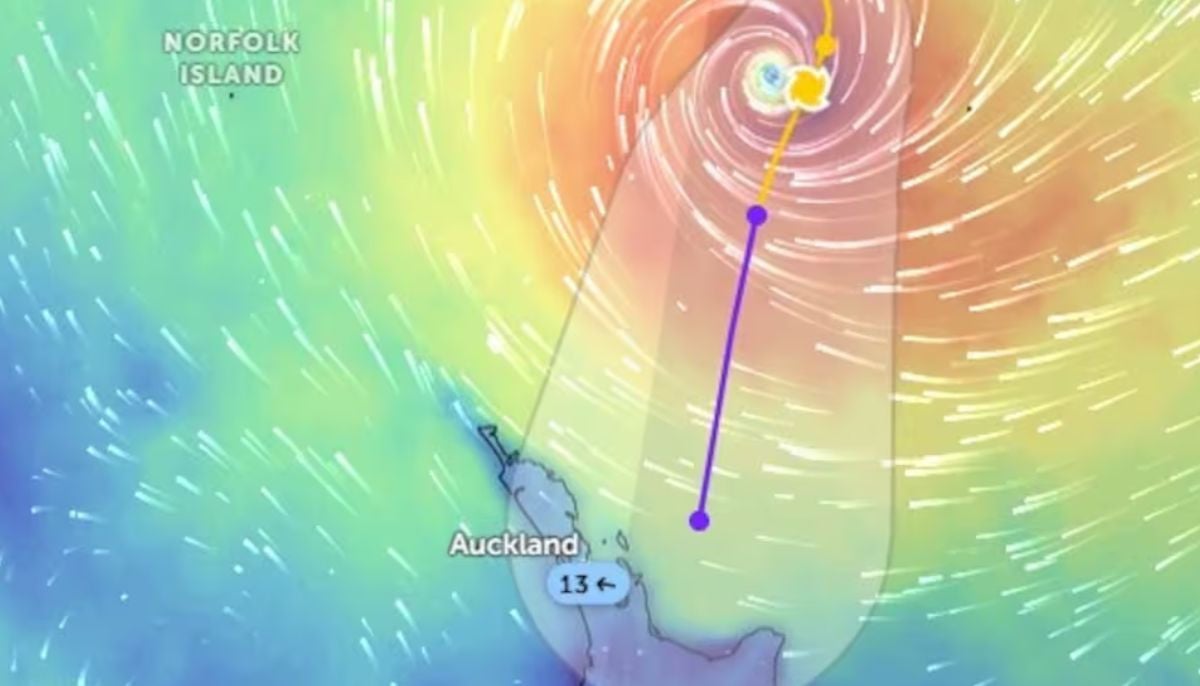
 Cyclone Vaianu: Strong winds and flood threat spark mass evacuations
 -
Charlie Kirk’s alleged assassin reveals shock ‘opportunity’ in ongoing case
-
Eric Swalwell campaign rocked by assault allegations as top Democrats urge him to drop out
-
NASA chief Jared Isaacman backs billionaire space ventures as Artemis II lands