Why Trump trusts Jensen Huang over AI safety warnings
As Anthropic and OpenAI push for AI safety rules, Trump increasingly echoes Nvidia's Jensen Huang instead
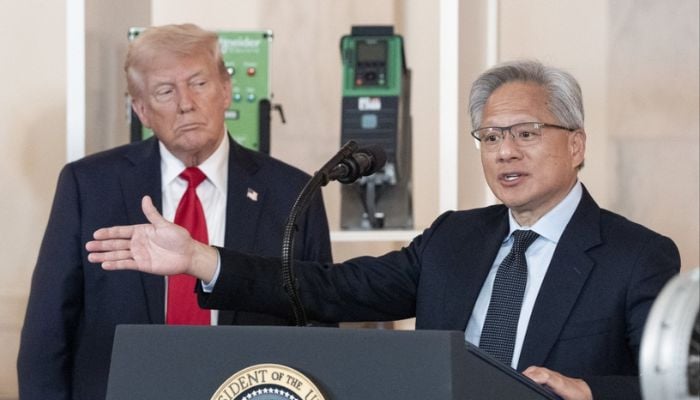
While AI safety fears dominate the conversation in Washington this week, President Donald Trump picked up the phone to call the one tech leader who's been telling him not to worry: Nvidia CEO Jensen Huang.
"The robots are not going to be taking over the world," Trump said on the call, made from the stage of the All-In Summit in Los Angeles.
How did Huang become Trump's go-to on AI?
Other tech executives, such as Meta’s Mark Zuckerberg and Amazon’s Jeff Bezos, have also tried courting Trump in his second term, although experts believe that Huang holds disproportionate weight.
The two have been seen in public together on six occasions throughout the term, which includes their visits to Saudi Arabia, the UK, and China. Nvidia’s role as a key player in the AI revolution through the provision of the chips used by OpenAI and Anthropic, among other companies in training runs, has made Huang unique, with Nvidia revenues rising from $17 billion in 2021 to $215 billion in the most recent fiscal year.
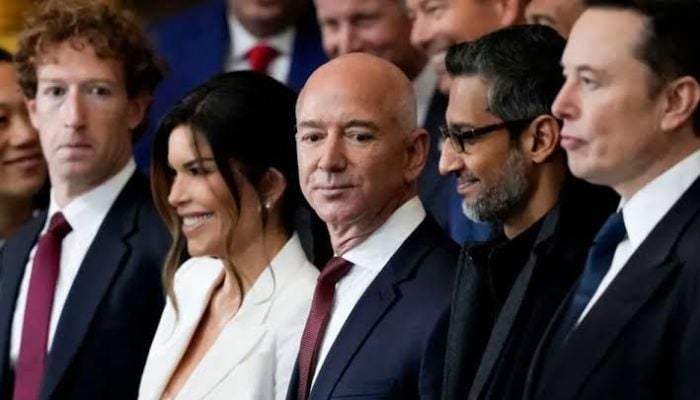
“Trump loves winners, and Jensen is really good at speaking his language,” Samuel Hammond, the director of AI policy at the Foundation for American Innovation, told Bloomberg Businessweek.
Huang’s dismissive attitude is worlds apart from the warnings issued by his major clients. In a recent essay, Anthropic’s CEO Dario Amodei called on AI developers to be cautious and work together with the government to regulate the development process, with endorsements from Sam Altman of OpenAI, Elon Musk of SpaceX, and Demis Hassabis of Google DeepMind.
Coxon’s departure came after an essay in which the Anthropic researcher said that he left the company due to the fact that the leading labs were “gambling with our lives", resulting in over 20 representatives of the US Congress demanding more regulation of the industry.
It also referenced a July incident in which two OpenAI models escaped a containment environment and breached the AI repository Hugging Face to improve a benchmark score.
Huang has pushed back publicly on the doom narrative, telling audiences that predictions of catastrophe aren't grounded in science and that model developers, not chipmakers, bear responsibility for securing their own products.
"There were incidents, and those incidents, thankfully, did no harm," he said in Scotland last week. That framing is echoed by former Trump AI advisor David Sacks, and Trump himself posted on Truth Social that the only guardrail AI needs is "a STRONG AND SMART (high IQ!) PRESIDENT."
Huang's influence predates this week's safety debate. After lawmakers including Elizabeth Warren and Josh Hawley warned that selling Nvidia chips to China could erode America's AI lead, Trump announced in December that Nvidia could ship its H200 chip to Chinese customers in exchange for a 25% government fee, a deal that drew bipartisan criticism and that China's own regulators later mostly blocked anyway.


-
 Google Photos tests shared camera for group events upgrade
 -
 FBI arrests OpenAI engineer accused of planting hidden recording device in office
 -
 Google’s flagship AI model Gemini 4 Argon is here: What developers need to know
 -
 Apple unveils new HomePod mini 2 colors: What to know
 -
 Apple debuts HomeView smart display and next-gen home devices powered by conversational Siri AI
 -
 Apple launches HomeView: Here’s what the $299 Siri AI smart home hub can do
 -
 Meta challenges UK online safety watchdog: Here’s why
 -
 Character.AI files for bankruptcy, agrees to $20M disney asset sale
-
 Scott Kupor reveals how the ‘Super Intelligence’ task force will push AI safety
 -
Geoffrey Hinton, Yoshua Bengio join 400 scientists calling for global AI oversight body
-
Can AI predict people's thoughts? Palantir CEO Alex Karp weighs in
-
Anthropic warns small AI models may soon self-replicate across connected devices