Our solar system may have lost 2 ice giants forever: Check facts here
Trillions of comets and possibly Planet Nine may have been flung away during an ancient period of chaos
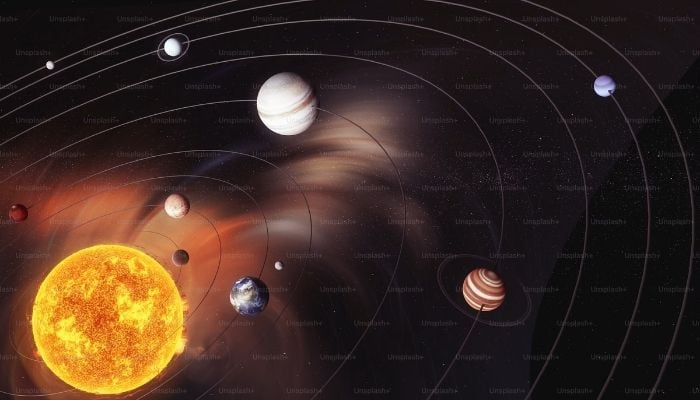
There's a strong chance our solar system once had at least one more planet than it does today and that the odds of the moons we rely on for stargazing surviving that loss were less than one in seven.
The Solar System settled into its current, relatively calm arrangement only after roughly 4.5 billion years of gravitational chaos.
The leading explanation, known as the Nice model, proposes that Jupiter and Saturn spent their early history jostling for position and, in doing so, likely flung at least one Neptune-sized ice giant clean out of the solar system entirely.
That upheaval nearly cost us more than a planet. Recent simulations tracking gravitational interactions between the giant planets, their moons, and passing debris found that Jupiter's and Uranus's moon systems had less than a 15% chance of surviving the instability intact.
Researchers suspect collisions during this period may even explain the battered, patchwork appearance of Uranus's moon Miranda.
The trillions of icy objects within the Kuiper Belt, Scattered Disc, and far-off Oort Cloud are believed to be remains of the same era, flung out by the giant planets yet bound forever by the gravitational pull of the sun.
The hypothetical Planet Nine could be a large body among the many that were hurled out to this distant space rather than being ejected into open space altogether.
Not everything which was expelled from our solar system was lost forever. Trillions of comets that formed at the same time as the Earth have been estimated to be floating through space outside the solar system, travelling through other star systems just like 'Oumuamua travelled through our solar system.


-
 Could a newly engineered microbe help humanity survive on Mars?
 -
 Astronomers find most distant fast radio burst ever recorded
 -
 Draconid meteor shower tonight: Best time and places to see it
 -
 ‘A dream for 50 years’: Why world’s first nuclear clock could change timekeeping
 -
 NASA Curiosity captures strange ‘wind-carved’ Mars landscape in dawn image
 -
 NASA's Crew-12 Dragon begins return trip from space station
 -
 Mysterious ‘phoenix planet’ found around the remains of a dying star
 -
 First possible evidence of Planet Nine found in infrared data