
Could a newly engineered microbe help humanity survive on Mars?
A new genetically modified microbe may one day help humanity settle on Mars
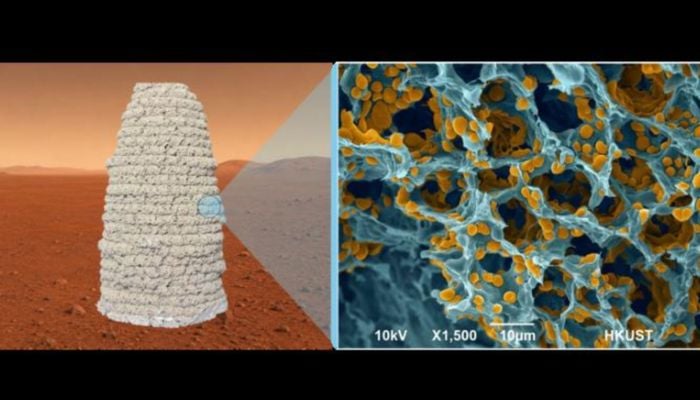
According to a biotechnology startup, a new genetically modified microbe may one day serve humanity and help settle Mars.
Primarily, human crews there cannot achieve self-sustainability from Earth but can instead extract life support from local Mars resources for air, food, building supplies and more, though the most significant possible result from this approach is the concept of transforming Mars to support life as we know it.
Researchers are working at Pioneer Labs in Emeryville to develop a microbe that may be a useful and primary step toward terraforming Mars.
A core problem with the idea of terraforming Mars is that the Red Planet’s surface environment is hostile. The raw materials that are useful for Earth life are found in abundance on Mars but its soil is contaminated with toxins such as perchlorates as well as salts that would make growth difficult for most organisms.
Earlier strategies for growing plants on Mars included flushing these poisons out while bringing supplemental fertilizers from Earth. But Pioneer Labs asserts that these strategies face significant resource and efficiency barriers at large scales.
A new study from scientists further revealed how they took Earth microbes that could manufacture bioplastics and steadily introduced them to a growing number of Mars-like conditions over time.
The microbe needs to grow inside a stirred and heated bioreactor that shields from extreme temperature. In this connection, DeBenedictis said: “The first time we tested growth of terrestrial microbes in Mars conditions, none of them grew! We had to keep going and test a lot more organisms before we realized we had just gotten unlucky the first time.”
The researchers further suggested certain limitations to ensure their microbe that cannot persist in the environment on Mars. These measures reduce the risk that their microbe might taint the Red Planet as an invasion organism especially if Mars did develop life of its own that is still capable of surviving in underground aquifers or within fluid inclusions.
Furthermore, McKee said: “I am excited about how these avenues of research could impact our dealing with climate change on Earth or extreme environment habitats.”
“We will be watching with anticipation when these microbes are finally launched to the Martian surface,” he continued.”


-
 Physicist discovers new solution to Einstein's equations for 'Black Saturn'
-
 Thailand makes prepares to stop exporting rare earth mining chemicals to Myanmar
-
 Inside COP31 climate deal: COP31 President speaks out
-
 NASA reveals mysterious 'ghost forest' on Mars: Everything to know about it
-
 COP31 talks reach deadlock amid growing fossil fuel dispute
-
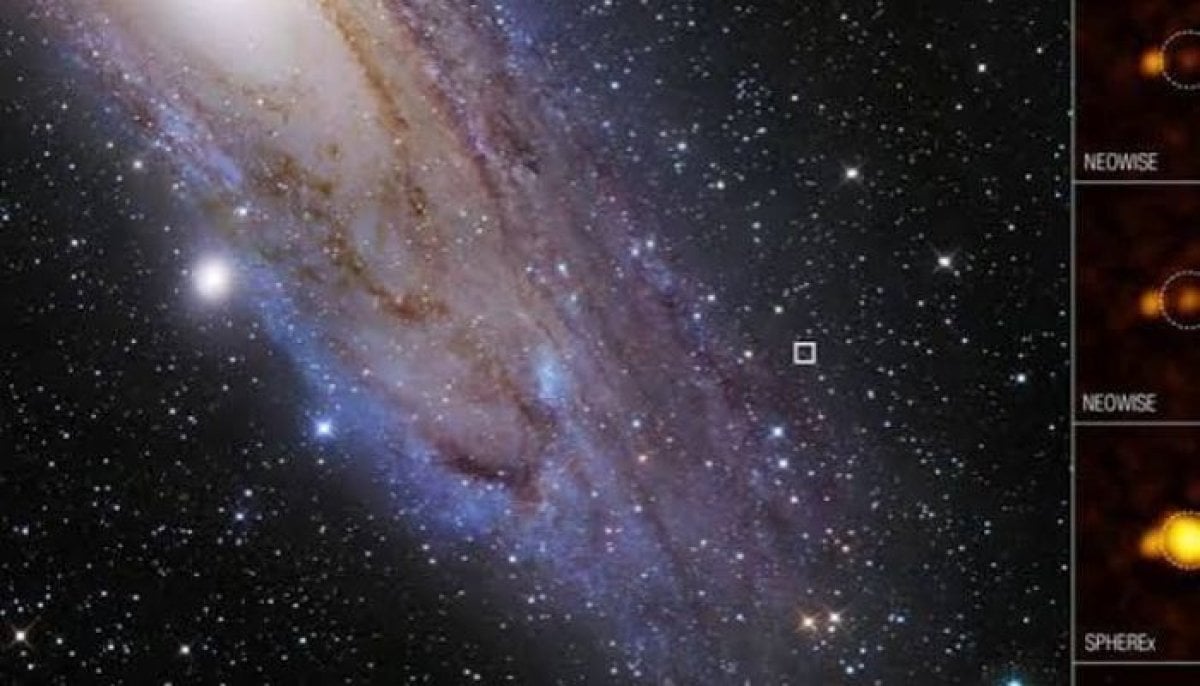 Astronomers observe massive puffy star merging with smaller companion
-
 NASA confirms Voyager 1 is now a ‘light-day’ away from Earth
-
 Google partners with Bezos’ Blue Origin to launch AI computing satellites in 2029
-
 ‘Craziest is definitely still yet to come’: HEO unveils advanced space intelligence platform in major new launch
-
Anthropic vs SpaceX: How two potential IPOs compare
-
EU climate chief says 'COP31 must drive clean energy shift'
-
NASA smashed into an Asteroid-Hera’s first photos reveal a strange new world


