‘A dream for 50 years’: Why world’s first nuclear clock could change timekeeping
The recent breakthrough will prove significant in ushering into a new era of Physics
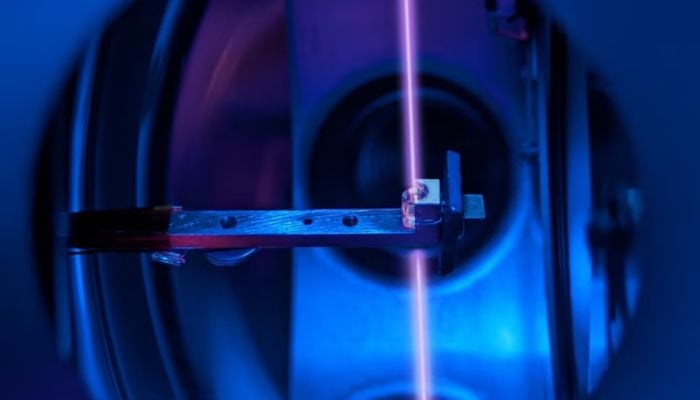
Scientists have finally achieved a dream pursued for almost a half of century after developing the nuclear clock, the first of its kind.
The recent breakthrough will prove significant in ushering into a new era of Physics, helping the scientists to better understand dark matter and other long-standing questions of the universe.
Two independent research teams in Vienna and Beijing are behind developing the world’s first two operating nuclear clocks as published in the journal Nature.
The fact that two separate teams achieved this using different experimental approaches proves the design is solid and versatile.
Speaking about its functionality, both devices rely on thorium-229 trapped inside solid-state calcium fluoride crystals.
A biggest leap in timekeeping
"The creation of a nuclear clock was something that physicists dreamt of for almost 50 years. In my team, we have been working towards this goal since 2008," said physicist Thorsten Schumm of TU Wien in Austria, who helped lead the team behind the Vienna clock.
The creation of the nuclear clock is going to bring forth a new era of Physics as traditional atomic clocks track subatomic particles like electrons but nuclear clocks track protons and neutrons jumping between energy levels inside the nucleus. Hence, the clock will be able to monitor how light interacts with an atomic nucleus.
Because an atomic nucleus is much smaller than its surrounding electron shell, tracking transitions inside it can potentially achieve unprecedented accuracy.
Additionally, it could be used to unravel mysteries related to dark matter and other fundamental cosmic questions as the Vienna team already successfully tested their clock in a precision dark matter search experiment.
‘Far from its target performance’
According to Schumm, the technology is still far from its ultimate performance target but we can combine components to build better iterations. Once perfected, nuclear clocks may outperform conventional atomic clocks while being less bulky and delicate.


-
 NASA Curiosity captures strange ‘wind-carved’ Mars landscape in dawn image
 -
 NASA's Crew-12 Dragon begins return trip from space station
 -
 Mysterious ‘phoenix planet’ found around the remains of a dying star
 -
 First possible evidence of Planet Nine found in infrared data
 -
 Elon Musk announces SpaceXAI rebrand to SpaceXSI following presidential order on 'Super Intelligence'
 -
 ISS Command changes hands in emotional ceremony
 -
 Moon water acts nothing like it does on Earth, study finds
 -
 Hawaii’s Hōlei sea arch collapses after centuries on Big Island: What happened