NASA expands Moon base research with three new investigations
Three new science missions have been added to prepare for humanity’s first lunar outpost
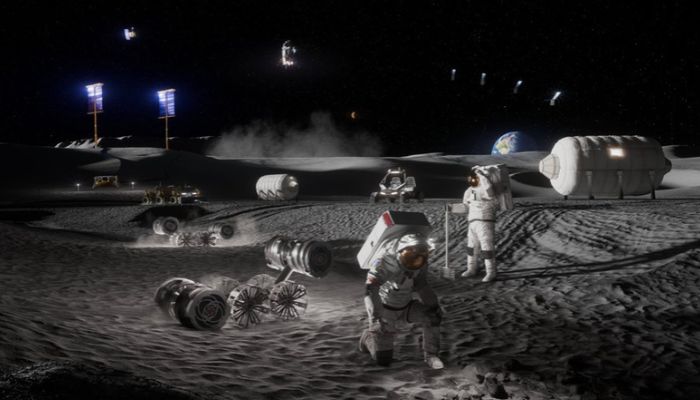
NASA has reportedly selected three new science missions and instrument suites to help pave the way for building humanity’s first lunar base. Primarily, the suite of science instruments and technologies was selected through NASA’s Payloads and Research Investigations on the Surface of the Moon initiative and will help fly to the lunar surface using the lunar payload initiative as a significant part of the agency’s Moon Base program.
In this connection, Nicky Fox, associate administrator Science Mission at NASA Headquarters in Washington said: “ NASA Science is building the ultimate interplanetary survival guide to ensure that science goes first to the lunar surface to provide our future astronaut crews with the vital information, resources, and safety precautions needed ahead of time to survive the night on the Moon.”
Lunar Environment Monitoring Station-South Pole
The LEMS-SP sensor array will act as a permanent ecological and risk surveillance outpost, designed to help build a picture of the lunar environment by observing micrometeoroid influx and quantifying volatile concentrations or materials that can easily shift into gas that drift into the Moon’s exosphere.
Geophysical investigation for mapping lunar interior
The GIMLI payload will be deployed at the Marius Hills Pit on the lunar surface to search for subsurface lava tubes to advance our comprehension of fundamental lunar volcanism and offer astronauts ready-made protection from extreme temperatures and harmful radiation. While confirming these empty regions at present could modify long-term habitat planning, ready-made shelters would provide thermal protection and radiation shielding.
Depth Imager with spectral and color optics
The DISCO payload will provide on-ground measurements of ice hidden in lunar micro-cold traps setting the stage for utilizing lunar resources and executing surface missions.
The payload will study how the lunar surface functions and affects the soil-sheer strength while also pinpointing where ice exists and how much of it is there.
NASA is expanding its cadence of lunar missions to establish a Moon Base, advance scientific investigations that contribute to American scientific prominence, and maintain a permanent lunar habitation and propel upcoming crewed voyages.
NASA’s CLPS initiative supports the Moon Base Program as the agency works with American companies to deliver experimental and operational hardware to the Moon’s surface and orbit.


-
 Elon Musk’s Mars colonization dream faces reality check from Nobel laureate
 -
 NASA competition model 2.0 cuts mission selection by 45%
 -
 A ‘neglected’ neutrino may hold the key to why the Universe exists
 -
 Can cancer drugs be made in space? Here’s what the new mission aims to find out
 -
 SpaceX Falcon 9 successfully launches Bandwagon-5 mission with 32 payloads
 -
 Europe launched 8 orbital rockets last year, can it rival Starlink?
 -
 Japan launches world’s first mission to bring sample back from phobos
 -
 Orionid meteor shower 2026: Peak date, viewing tips and what to expect