Singapore builds world’s ultra-precise clock outperforming US, China
This device achieves four times the precision of the former record holder, a calcium-ion clock built by China
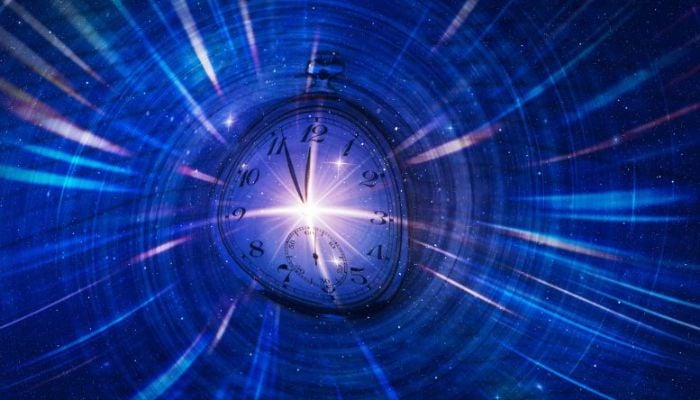
Singapore scientists have built the world’s most accurate clock in a recent breakthrough, leaving behind the US and China.
Built by the Centre for Quantum Technologies (CQT) at the National University of Singapore (NUS), a lutetium atomic clock measured its transition frequency to 19 decimal places with an uncertainty of 1x10-19, setting a new world record for any optical atomic clock.
The clock uses a single electrically charged ion of lutetium-176 as a reference, matching its transition to a laser with an 848-nanometer wavelength.
This device achieves four times the precision of the former record holder, a calcium-ion clock built by the Chinese Academy of Sciences in Wuhan, while easily surpassing the aluminium-ion clock introduced last year by the U.S. National Institute of Standards and Technology.
What distinguishes it is its environmental stability: Lutetium's clock transition is barely affected by temperature swings or magnetic fields, maintaining stability across extreme environments.
“I am confident that what we have now is the most accurate clock in the world,” says team leader Murray Barrett, a CQT Principal Investigator and Associate Professor in the Department of Physics at the National University of Singapore.
To compare the time, the researchers built two lutetium clocks and compared them over 200 hours using correlation spectroscopy, agreeing within an uncertainty of 5.7x10⁻¹⁹. The optical clocks can detect gravitational time dilation over height differences as small as 5 millimetres.
The international time standards body is considering optical clocks for a redefinition of the second around or after 2030. The NUS team's next step is to miniaturize the lab-scale clock into a transportable system for field applications and fundamental physics investigations.


-
 Elon Musk’s Mars colonization dream faces reality check from Nobel laureate
 -
 NASA competition model 2.0 cuts mission selection by 45%
 -
 A ‘neglected’ neutrino may hold the key to why the Universe exists
 -
 Can cancer drugs be made in space? Here’s what the new mission aims to find out
 -
 SpaceX Falcon 9 successfully launches Bandwagon-5 mission with 32 payloads
 -
 Europe launched 8 orbital rockets last year, can it rival Starlink?
 -
 Japan launches world’s first mission to bring sample back from phobos
 -
 Orionid meteor shower 2026: Peak date, viewing tips and what to expect