Nvidia's AI server prices set to jump more than 15%
Vera Rubin and Grace Blackwell systems face hikes as DRAM costs soar industry-wide
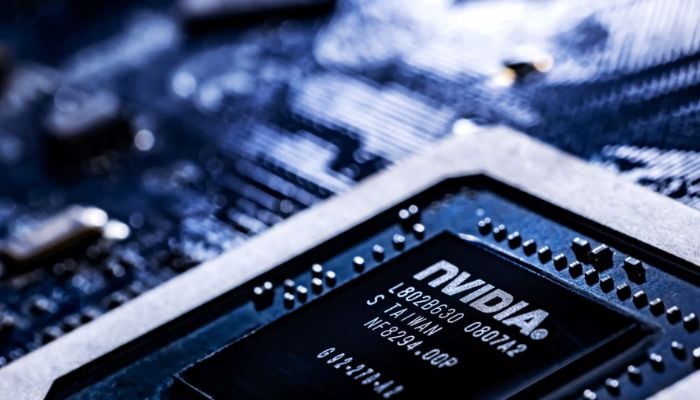
Some of Nvidia's largest customers have been told that servers containing its AI chips will cost more than 15% more often, as soaring memory chip prices ripple through the entire AI hardware supply chain, Bloomberg News reported Saturday, citing people familiar with the matter.
These price hikes are set to be applied to systems delivered from early next year and will affect systems with processors based on Nvidia’s leading processors, Vera Rubin and Grace Blackwell, as the report states.
The amount of the hike The processor generation and memory configuration will determine the hike amount. on the generation of the processor and memory configuration.
According to Reuters, the information couldn’t be confirmed immediately, as Nvidia didn’t give a response after an attempt was made to contact them during non-business hours.
Recently, those companies which manufacture servers for large data centre providers, including Microsoft, Google, and Oracle, began to notify their clients about the upcoming price hikes.
The size of the problem that stands on the verge of realisation is significant. For example, Blackwell-based NVL72 GB200 racks have had prices around $2.8 million-$3.4 million, while early enquiries for Vera Rubin-based NVL72 have reached $5 million-$7 million, which means that the 15% rise will add hundreds of thousands of dollars to the price of one single system.
The driver behind the hikes is a sharp rise in DRAM prices, the memory type that determines how effectively Nvidia's accelerator chips can actually run AI workloads. Samsung, SK Hynix and Micron together produce most of the world's DRAM, and despite ramping up output, none have kept pace with surging AI-driven demand.
That imbalance has handed memory makers unusual leverage over hardware pricing across the industry, a dynamic that's also pushed Apple and Qualcomm to raise their own prices in recent months due to chip shortages.
Nvidia posted a gross margin near 75% last quarter and has typically been able to absorb rising input costs rather than pass them fully onto customers, given its dominant position in AI silicon.


-
 FBI arrests OpenAI engineer accused of planting hidden recording device in office
 -
 Google’s flagship AI model Gemini 4 Argon is here: What developers need to know
 -
 Apple unveils new HomePod mini 2 colors: What to know
 -
 Apple debuts HomeView smart display and next-gen home devices powered by conversational Siri AI
 -
 Apple launches HomeView: Here’s what the $299 Siri AI smart home hub can do
 -
 Meta challenges UK online safety watchdog: Here’s why
 -
 Character.AI files for bankruptcy, agrees to $20M disney asset sale
 -
 Scott Kupor reveals how the ‘Super Intelligence’ task force will push AI safety
-
 Geoffrey Hinton, Yoshua Bengio join 400 scientists calling for global AI oversight body
 -
Can AI predict people's thoughts? Palantir CEO Alex Karp weighs in
-
Anthropic warns small AI models may soon self-replicate across connected devices
-
Philippine lower house approves bill restricting minors' social media access