US, China agree on open-source AI security at APEC
It is China that has provided much of the drive behind the adoption of open-source AI, with companies such as DeepSeek and GLM 5.2
Governments across the Asia-Pacific are tightening their grip on artificial intelligence even as they publicly champion open-source development.
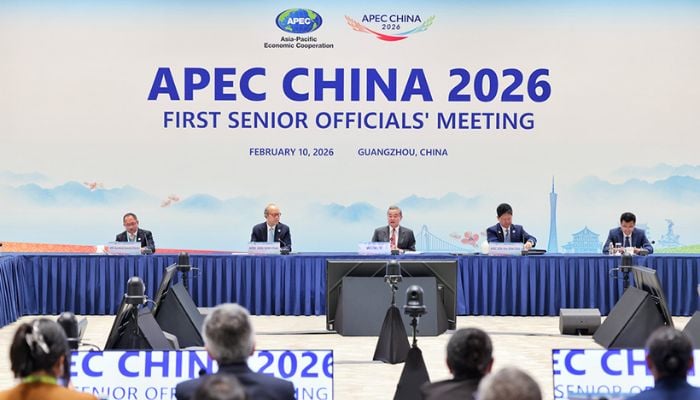
Twenty-one APEC economies, including the United States and China, signed a joint statement in Chengdu on 23 July 2026 backing open-source AI models built with "strong security assurance".
The statement, released as part of APEC Digital Weeks, calls for respecting "security, data protection and intellectual property rights" while encouraging support for open-source projects.
China's minister of industry and information technology Li Lecheng, chaired the ministerial meeting and called it the first APEC AI statement to secure cooperation on open source at the ministerial level.
The deal marks a move away from open source's origins as a laissez-faire model. Winston Ma, adjunct professor of law at New York University, noted that the convergence on open-source ecosystems and compute infrastructure suggests a move by the Asia-Pacific region to open-weight systems associated with state-sponsored energy, telecom and digital infrastructure.
It is China that has provided much of the drive behind the adoption of open-source AI, with companies such as DeepSeek and GLM 5.2 offering free models, while American companies such as Anthropic maintain closed and paid-for models.
According to Wei Sun, principal analyst for artificial intelligence at research firm Counterpoint, this move by both Washington and Beijing to embrace trusted open-source AI is a significant development.
"Strong security assurance" terminology provides a way out for governments that are hesitant about embracing open models but are keen to test, verify, and deploy the technology.
In her view, the discussion has evolved from open versus closed to which ecosystem regulators and businesses will have trust in.
Chairwoman of the digital and innovation subgroup within APEC's Business Advisory Council, Janet De Silva, made use of the same meeting to put pressure on the ministers from another perspective.
According to her, trusted encryption would be necessary to secure financial systems as quantum technology develops.



-
 Snapchat plans let you invite up to 200 friends
 -
 153 million driver's licences stolen in IDScan breach
 -
 OpenAI calls for binding national AI safety framework to counter autonomous agent risks
 -
 Apple iPhone 16, 17, Air got $100 more expensive
 -
 Why AI's own builders are suddenly begging you to slow down
 -
 Apple’s new foldable isn’t even out yet, but Android is copying it
 -
 DeepSeek launches V4.1-Flash model highlighting unmatched 400 plus token speeds
 -
 AI on battlefield? Germany to deploy 30 AI tools in military from 2027