Why Nvidia CEO Jensen Huang calls AI job loss fears ‘complete nonsense’
According to Huang, AI is not responsible for taking over the jobs, in fact the companies are hiring more software engineers
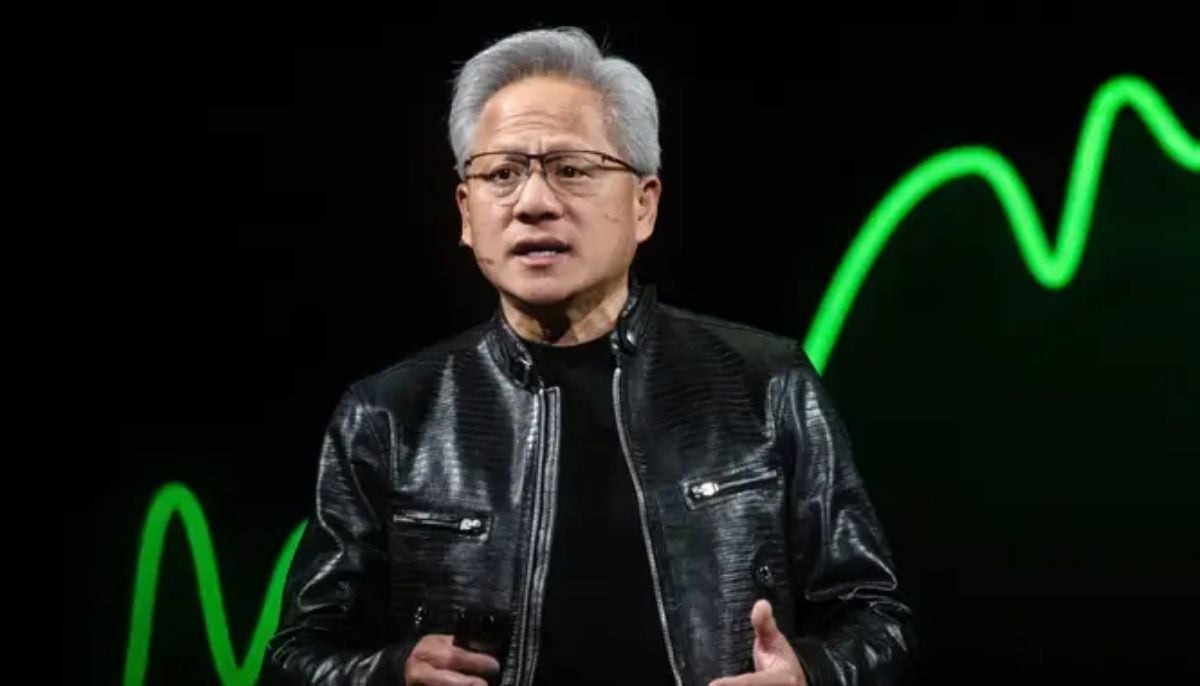
Nvidia CEO Jensen Huang has once again dismissed fears related to the job apocalypse caused by artificial intelligence.
Speaking at the Computex 2026 conference in Taipei, Taiwan, Huang called these AI job loss fears “complete nonsense.”
His remarks come after the tech landscape is grappling with massive layoffs in a pursuit of artificial intelligence. For instance, Meta laid off more than 8000 employees, prioritizing integration of AI over human employees in the latest push.
According to Huang, AI is not responsible for reducing the jobs, in fact the companies are hiring more software engineers to run the new agentic AI features.
"The number of software engineers is actually increasing... If you can hire a software engineer and generate $9 trillion worth of productive work, why wouldn't you want to hire more?” Huang told the audience in the conference.
“If that line were flat, then obviously people would hire fewer software engineers. But because the output is so incredible, people want to hire more.”
“This is going to show up in our economy somehow, soon. So here’s the thing: useful AI has arrived.”
When it comes to the AI-fuelled job apocalypse, the argument is highly divided among the tech moguls and even politicians. Some call it a facade to incite fears among people and some negate the possibility of it, such as OpenAI CEO Sam Altman.
Some politicians like Russian President Vladimir Putin called AI a biggest and most unprecedented tsunami that will wipe out all professions and shake global labour markets.
“Entire professions might go extinct due to the fact that humans will be replaced by artificial intelligence. Such processes are irreversible and inevitable,” Putin said at the Eurasian Economic Forum in Astana, Kazakhstan, on May 28.
But recently occurring layoffs contradicts the statements of OpenAI and Nvidia CEOs. For instance, Meta reduced its global workforce by 10 percent in a bid to adopt generative AI and automation.
Cloudflare laid off over 1100 employees as its restructuring was aimed at agentic AI. Cisco cut approximately 4,000 jobs to prioritize investments in AI and security.
In the midst of such uncertainty, now it remains to see which narrative will prevail: Will AI bring more jobs to labour markets or become the threat multiplier?


-
 TikTok CEO sees AI transforming science in just 3 years
 -
 Microsoft president reveals a surprising gap in AI regulation
 -
 WhatsApp to let you schedule texts, photos, videos: Check details here
 -
 Canadian YouTuber builds camera to track police vehicles: What to know
 -
 Google Gemini access is changing: What users need to know
 -
 WhatsApp update blocks logins on outdated phones: Here’s what to know
 -
 Vance says Microsoft replaced laid-off workers with foreign hires: What the visa data shows
 -
 Hollywood takes aim at Zuckerberg, Musk and Altman over AI fears