AI colonialism: Is tech quietly taking over your mind?
The colonization of human mind often comes in the form of 'feedback loop of homogenization'
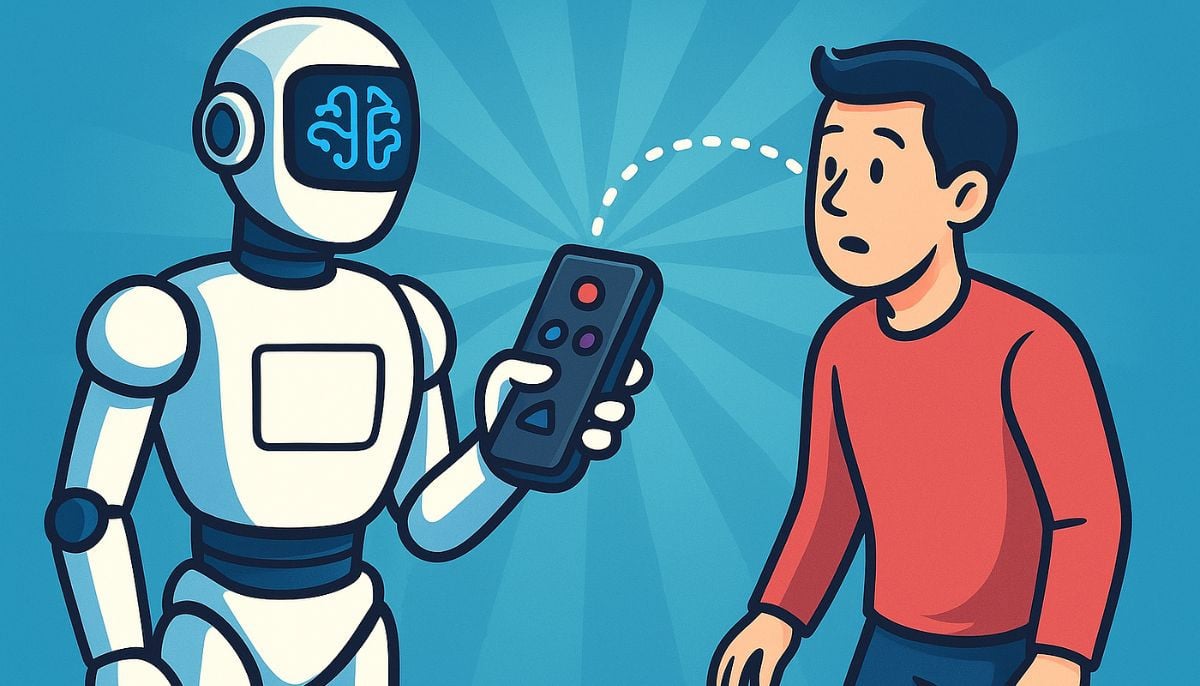
The world is no longer being redrawn with ink and gunpowder; it is being rewritten in lines of code and massive datasets. In the age of artificial intelligence, the history of colonialism is once again repeating itself, but in digital landscape.
Given humans’ increasing interaction with AI tools and large language models, it is now wrong to assume that AI is unknowingly colonizing our minds and thoughts, thereby altering human cognition.
Colonization of human mind
According to research published in Psychology Today, the frequent interaction with LLMs is creating a “feedback loop of homogenization” through algorithmic reasoning patterns.
The worse thing is that you cannot distinguish between what is “native thought” and what are you “imported” through these algorithms.
Given AI’s growing ability to learn humans’ language, AI models feed it back to you with subtle modifications, leading to shifts in your thinking patterns without conscious awareness.
“As the AI's outputs are reabsorbed into human discourse, they begin to shape users' own expression and reasoning, which in turn influences the data used to train future models,” Timothy Cook, an Educational AI Developer, said in his research.
Illusion of authorship
Humans often use AI systems to turn their rough thoughts into polished ones. Here comes the pervasive “illusion of authorship.”
When an AI structures users’ messy text into a final and more sophisticated product, the users feel a sense of accomplishment. In reality, they are just approving “statistical predictions”. Therefore, this is “approval” not “authorship.”
Over time, the constant usage of AI systems causes people to internalize the AI’s logic at the expense of their “own creative thinking” and cognitive abilities. Consequently, such persistent cognitive offloading leads to the atrophy of mind muscles and colonization of creative thoughts.
Loss of cognitive variance
Overdependence on AI models also damages cognitive variance, defined by erasure of “weird, raw, and genius” ideas. Unfortunately, the quality of work starts overshadowing the ingenuity and novelty of the work.
People start accepting whatever AI suggests, called a “good enough trap”. Over time, the brains stop trying to think of better ways to say things and start believing that the AI’s average style is the gold standard.
A recent report by Sourati and colleagues (2026) found that, “rather than actively steering AI output, users often defer to mode suggested continuations. They select options that seem "good enough" instead of generating their own.”






-
 Apple speeds up software updates amid AI-driven cybersecurity threats
 -
 WhatsApp will now let you chat without sharing your phone number
 -
 Trillionaire Elon Musk celebrates birthday with rocket-themed cake
 -
 Breaking: Is Minecraft down? Several users report outages
 -
 Europe's heatwave puts AI data centres under pressure
 -
 US plans to build world's first fault-tolerant quantum computer: Check details
 -
 Base iPhone 18 likely to feature 9GB RAM, leak suggests
 -
 South Korea plans massive $576bn AI-chip bet to challenge global rivals