Jordan discovery rewrites history of world’s first plague pandemic
Plague of Justinian (AD 541–750) killed millions of people in the Byzantine empire
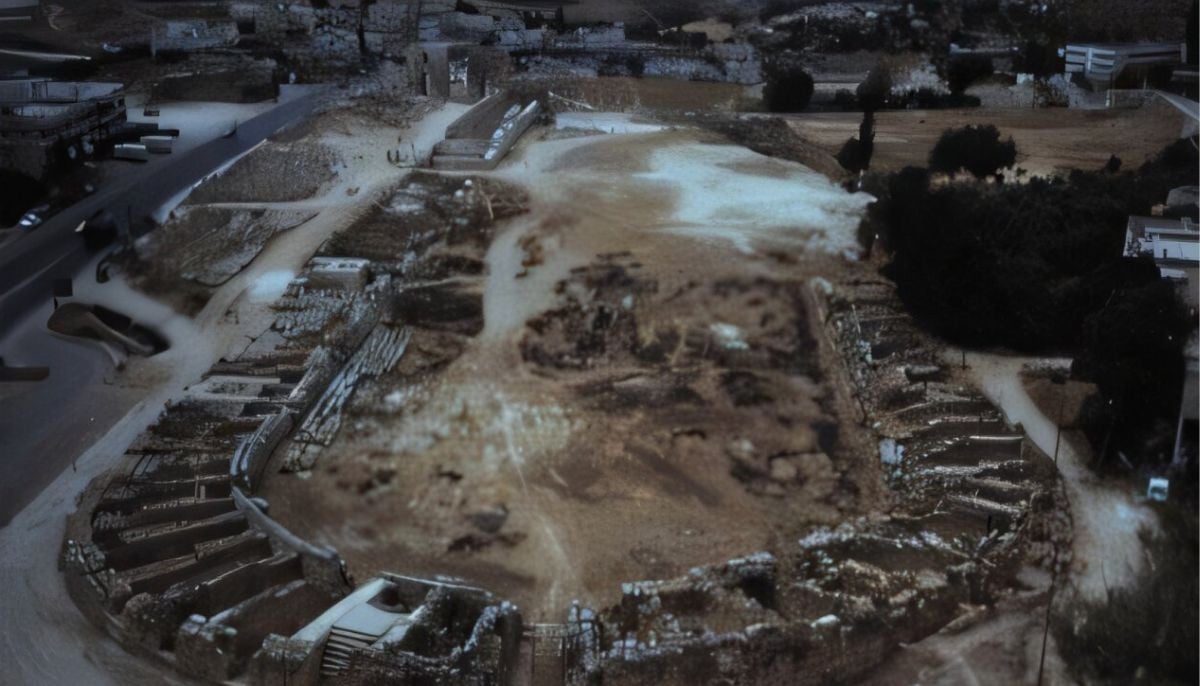
The US researchers have discovered the first Mediterranean mass grave of the world’s first proven pandemic, the plague of Justinian (AD 541–750), that killed millions of people in the Byzantine empire.
The team identified a mass grave at the Jerash hippodrome containing over 200 individuals.
According to findings published in the Journal of Archaeological Science, unlike traditional burial sites, the DNA analysis confirms that these people were buried simultaneously, signalling a sudden and catastrophic pandemic.
DNA extracted from the teeth of the victims confirmed the presence of Yersinia pestis, the same microbe that caused the Black Death.
But the recent research shifts the focus from the causing agent to the “human story” of the victim, demonstrating their lifestyle, reasons to live in Jerash, and their vulnerability to the disease.
“Earlier stories identified the plague organism. The Jerash site turns that genetic signal into a human story about who died, and how a city experienced crisis,” Rays Jiang, the study’s lead author, said.
The research will also construct pandemics not as biological events but also as social events as this perspective will help the researchers to understand how disease affected real people within their social and environmental context.
Jiang continued, “This helps us understand pandemics in history as lived human health events, not just outbreaks recorded in text.”
According to the research, pandemics flourished in densely populated cities due to rampant travel and environmental change.
The study also refutes “plague denialism” and offers a scientific counter-argument to historians who argued the exaggerated nature of Justinian plague due to lack of evidence related to mass graves.
According to Jiang, “But the first plague is actually much easier to untangle than Covid. We have Yersinia pestis as the microbe; we have a mass grave, and bodies, hard evidence that it happened.”
“Whether society or institutions collapsed is a separate matter. You can have a disease rampage through and don’t have to have a revolution, a revolt, a regime change to prove that it did,” she added.


-
 Scientists develop technology to send smells through phones
 -
 Earth’s close encounter with giant asteroid Apophis is less than 3 years away
 -
 Chinese astronomers discover real-life three-body system unlike Liu Cixin’s fiction
 -
 Hunter’s Moon 2026: When and how to watch October’s full moon
 -
 Elon Musk’s Mars colonization dream faces reality check from Nobel laureate
 -
 NASA competition model 2.0 cuts mission selection by 45%
 -
 A ‘neglected’ neutrino may hold the key to why the Universe exists
 -
 Can cancer drugs be made in space? Here’s what the new mission aims to find out