Albatross mystery: Critically endangered bird spotted 4,800km from home
Scientists fear the birds' movements may have been triggered by environmental factors
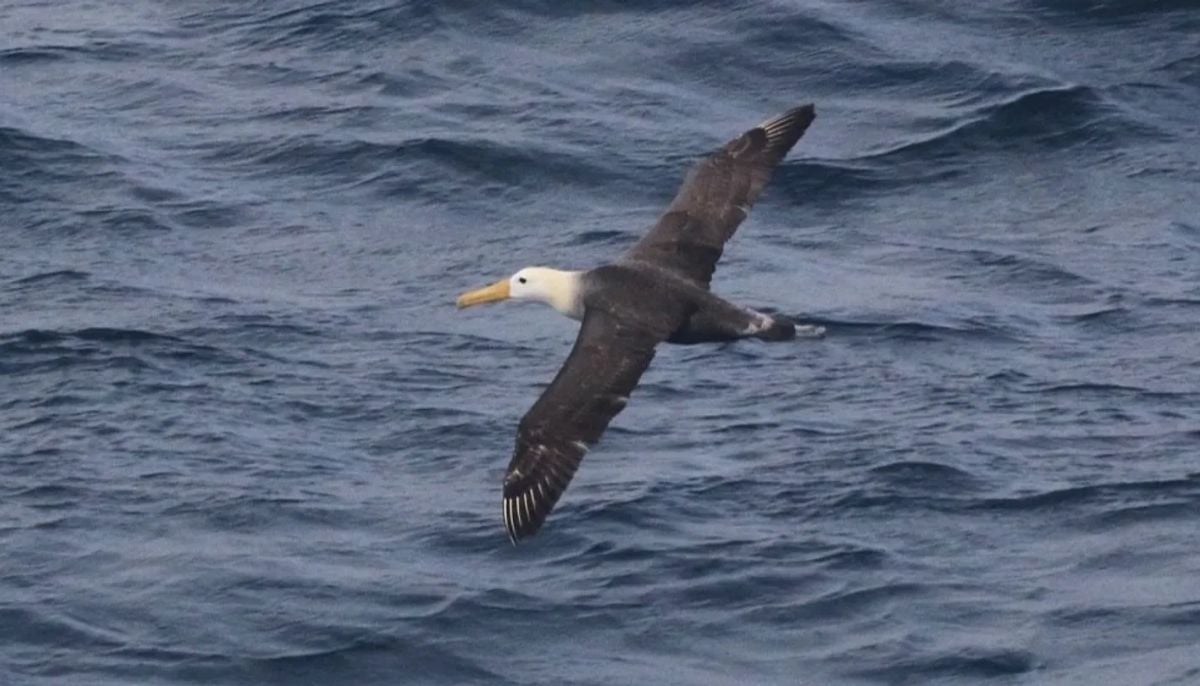
Scientists are currently tracking a Tristan Albatross- a critically endangered species-which has made a groundbreaking expedition from its home on Gough Island in the South Atlantic. Recently a research vessel off the central California’s coast spotted a waved Albatross, marking only the second recorded sighting of this species north of Central America.
The yellow-billed bird with black button eyes- which can have a 2.4-metre wingspan and spends much of its life airborne over the ocean- is at the center of a mystery.
Researchers are wondering about this “vagrant” bird travelling far outside its typical range. It was spotted 37 kilometers off the coast of Point Piedras Blancas, roughly midway between San Francisco and Los Angeles.
Is climate change driving the Albatross further from home?
Scientists have revealed that seabirds such as albatrosses, travel vast distances in search of food. On rare occasions, an individual routine may lead them to end up far away from home-sometimes even in the wrong hemispheres or exceptionally in the wrong ocean.
While a factor such as food scarcity could prompt a bird to wander, a single sighting might simply be a “fluke” misadventure.
According to the American Bird Conservancy, the species’ range is restricted to the tropics, as it nests on lava fields and strewn rocks and sparse vegetation.
An analysis suggests that if multiple birds are seen in California, it could indicate they are being pushed northward by environmental factors.
For example, five species of Booby are now more common in California in the wake of rising warm temperatures and marine heatwaves.
Albatross migration: Mounting Conservation concerns
The species is already under threat from invasive mice on Gough Island that eat their chicks alive. Risk factors increase when the population is forced to travel thousands of extra kilometers in search of food. The ultimate consequence could be total colony collapse, driven by exhaustion or increased encounters with commercial fishing boats.


-
 Earth is splitting apart beneath the Pacific Northwest: Here’s why
 -
 Google's AI Satellite Prototype Launches on SpaceX October 1
 -
 Google plans first AI chip test in space under project Suncatcher
 -
 Mars Rover reveals hot groundwater once flowed at Jezero
 -
 NASA’s PRIMA telescope has one big mission: 'Decode cosmic evolution'
 -
 Northern lights could light up skies across 22 US states tonight: How to watch
 -
 First-ever radio signal from exoplanet reveals its magnetic field
 -
 Starship flight 14: Why SpaceX’s first-ever orbital test matters to NASA’s Artemis