Six planets set to align in rare astronomical event: How & when to watch
On February 28, 2026, six planetary alignment will dazzle the sky after sunset
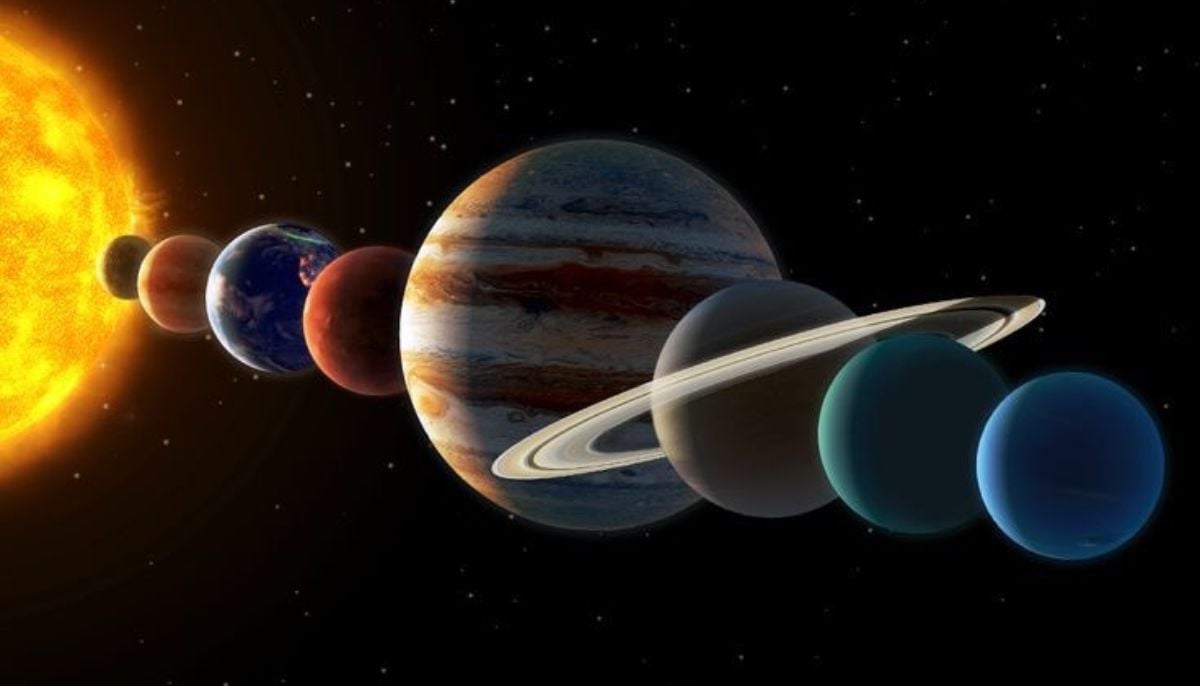
For sky watchers, another rare astronomical event is on the horizon. On February 28, 2026, six planetary alignment will dazzle the sky after sunset.
The spectacular planetary parade consists of Mercury, Venus, Jupiter, Neptune, Saturn, and Uranus that will align along the ecliptic. The alignment will be visible in the southwestern sky from most regions.
Pattern of celestial parade
In this astronomical event, Mercury being the closest and smallest planet, shines just after sunset. Venus shines brightest and easiest to spot, followed by Jupiter and Saturn.
Jupiter can easily be spotted without any special equipment because of its steady glow. Dimmer and farther Uranus and Neptune will need binoculars to spot clearly.
When and where to see alignment?
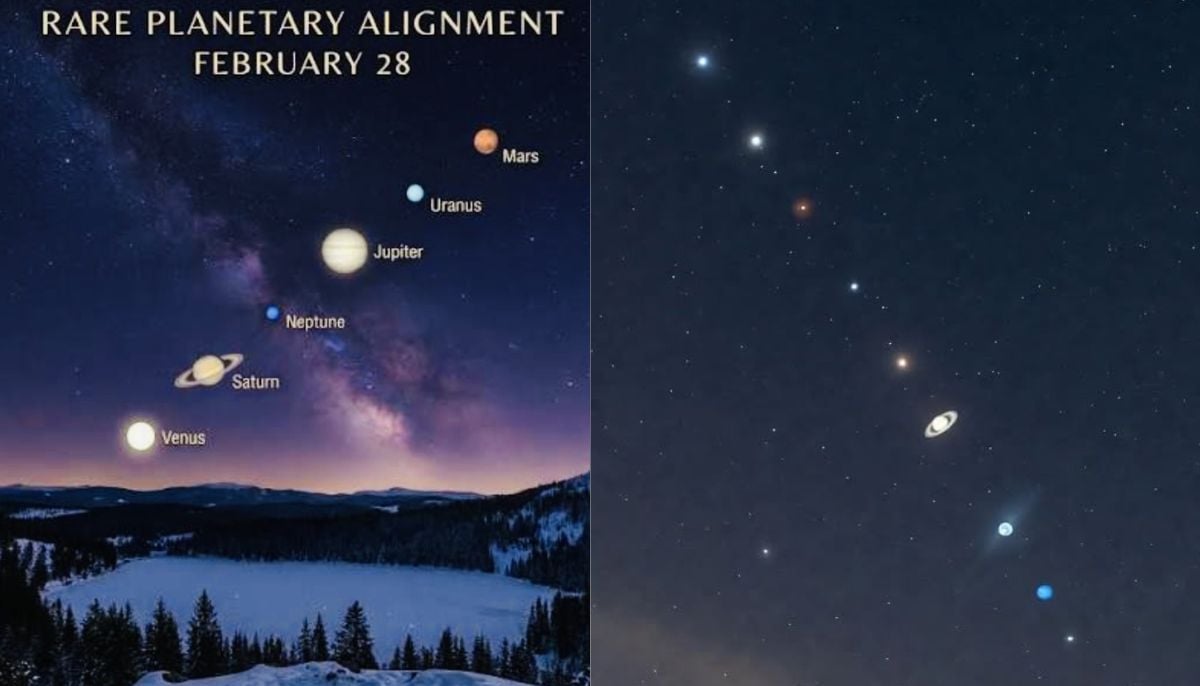
The parade will be visible in the western sky 30-60 minutes after sunset around February 28, 2026. For clear visibility, look towards the southwestern horizon. The event will happen around 6:30 pm– 7:30 pm EST when the sky turns completely dark.
How to see them?
One can see Mercury, Venus, Saturn, and Jupiter with the naked eye. However, the visibility of outer planets, such as Neptune and Uranus will require binoculars, or may be a telescope.
Reason behind the alignment
The planets in our solar system orbit the sun on roughly the same flat plane, known as the ecliptic. These planets move at a different speed based on their distance from the sun.
Hence, six-planet alignment occurs when the clocks of these different orbits sync up so that, from our specific vantage point on Earth, the planets appear clustered in the same small region of the sky.


-
 Elon Musk’s Mars colonization dream faces reality check from Nobel laureate
 -
 NASA competition model 2.0 cuts mission selection by 45%
 -
 A ‘neglected’ neutrino may hold the key to why the Universe exists
 -
 Can cancer drugs be made in space? Here’s what the new mission aims to find out
 -
 SpaceX Falcon 9 successfully launches Bandwagon-5 mission with 32 payloads
 -
 Europe launched 8 orbital rockets last year, can it rival Starlink?
 -
 Japan launches world’s first mission to bring sample back from phobos
 -
 Orionid meteor shower 2026: Peak date, viewing tips and what to expect