NASA shows how sun could swallow Earth
Helix Nebula images are taken by the James Webb Space Telescope
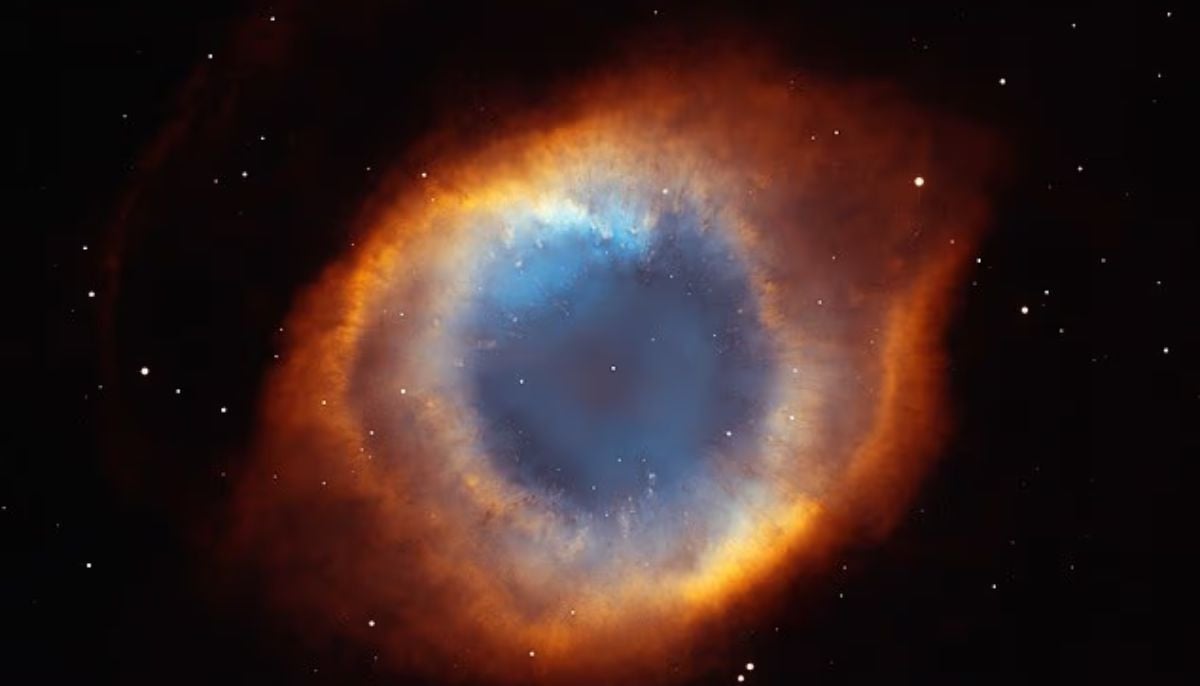
Astronomy helps scientists understand how stars are born, live, and eventually die. One key question people often ask is what will happen to Earth when our Sun reaches the end of its life.
New NASA images of a dying star now offer a striking preview of how the Sun swallowing Earth could one day look, billions of years from now.
NASA has shown this phenomenon in released new detailed images of the Helix Nebula, also known as the Eye of God Nebula. This dying star system lies 650 light-years away from us. It's considered a mirror image of how the Sun will look in the far-off future.
In fact, according to scientific research, our Sun is expected to exhaust its fuel supply within five billion years and eventually turn into a giant and probably engulf Mercury, Venus, and perhaps Earth before turning into a dense white dwarf.
_updates.jpg)
The Helix Nebula images were taken by the James Webb Space Telescope. The images depict the scene of ragged winds of hot gas colliding with early, cool dust clouds. The spectacular scene helps scientists understand how the dying star changes its environment. It has been categorised that through this scene, scientists understand that this is how a dying star like the Sun recycles matter that may form new planets and new stars.
_updates.jpg)
At the core of the Helix Nebula is a hot white dwarf star, which represents what was left of a star after it lost all of its material. And while this represents the death of this particular solar system, it also represents new beginnings as other systems begin to develop through a combination of gas and dust particles in space.
NASA said its closer look helps researchers understand the death and rebirth of the stars. While the possibility of the Sun consuming the Earth certainly sounds alarming, experts said the event is too far in the future to worry about at the moment.






-
 US-Russian space crew returns to Earth after eight-month mission on the International Space station
 -
 Viking 1 mars landing: 50 years since first photos
 -
 Four hidden dead stars found in Earth's backyard
 -
 What happened during SpaceX’s 13th Starship test? First upgraded Starlinks successfully deployed
 -
 Astronomers may have found the first moon beyond our solar system
 -
 Space datacenters could catastrophically pollute Earth, groups warn
 -
 Astronomers just solved a 10-billion-year-old Milky Way mystery
 -
 Why China is crashing a spacecraft into asteroid 2015 XF261