NASA Artemis II rocket heads to the launch pad for a historic crewed mission to the Moon
NASA crews prepare for historic Artemis II rollout to the launch pad
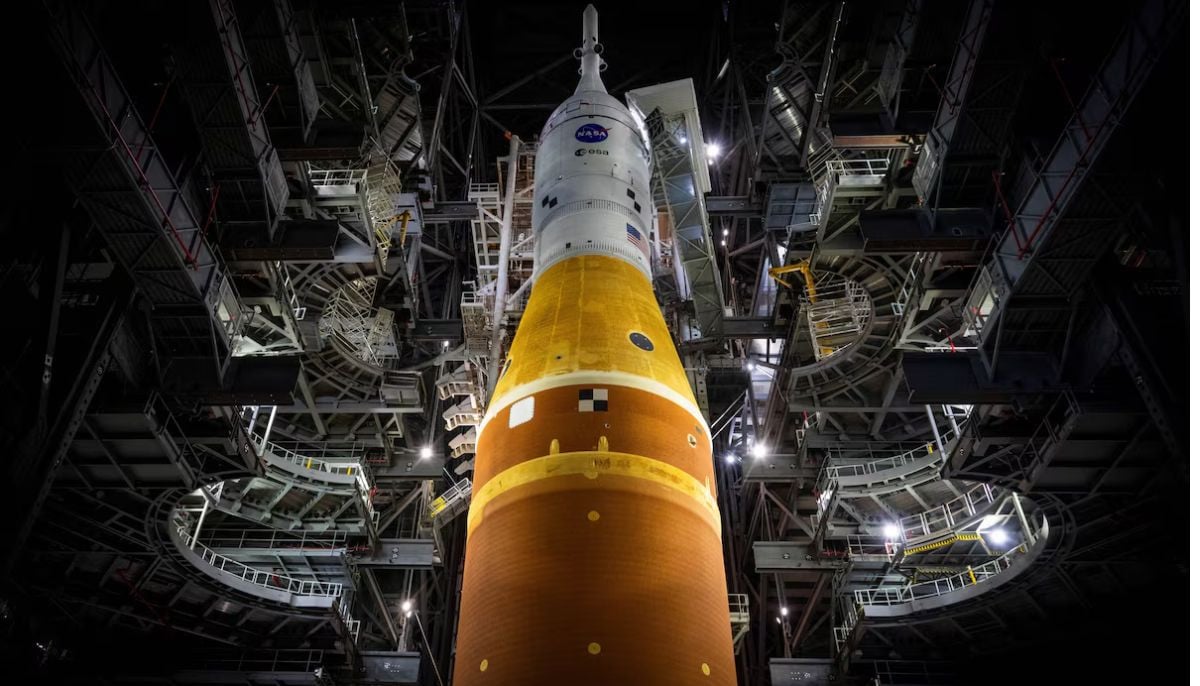
NASA is set to move its tallest and most powerful rocket from the Vehicle Assembly Building to the launch pad on Saturday, marking a significant milestone in its mission to the Moon.
A key element of the mission is the Space Launch System, a heavy-lift rocket designed to send astronauts and large payloads beyond low Earth orbit.
According to a research fellow at the University of Manchester, the upcoming mission marks a vital step for human spaceflight. He said, “This is a massive milestone for NASA and the Artemis programme because this is going to be the first time that a crew member will see the far side of the room.”
Artemis I vs. Artemis II: What you need to know
Artemis 1, which flew in 2022, was an uncrewed test mission that sent Orion around the Moon to prove the rocket and spacecraft could operate safely in deep space and return to Earth. Artemis II is the upcoming mission which is successfully approaching launch, and will be the first to carry astronauts. The crew will not land on the Moon, but will travel on a looping path around it to test navigation and communications systems with humans onboard.
Artemis IV and subsequent missions are planned to help assemble the Lunar Gateway, a small space station that would orbit the Moon and act as a foothold for surface missions and scientific research. NASA sees the Moon as a proving ground for future journeys to Mars. Historically, technologies developed for space missions have led to significant advances in engineering and safety systems on Earth.
Currently, the Artemis II rocket is scheduled to roll out to the launch pad on Saturday. NASA’s primary focus is now shifting from assembly to final checks, marking the beginning of the next chapter in human exploration.


-
 New study explains 364-day Qumran calendar puzzle
 -
 Why does time feel faster as you age? Science explains
 -
 Scientists name newly discovered snake after Guns N' Roses' Slash
 -
 SpaceX secures three new NASA crew flights: What to know
 -
 Sovereign AI fund in talks to back Political Sciences: What to know
 -
 What recent discovered Moon Crater Means for Future Astronauts
 -
 Scientists discover new wild cat species in Bolivia for the first time in a century
 -
 SpaceX turns to failed startups for AI training: Here’s why