Blue Moon 2026: Everything you need to know
Blue Moon merely remains a poetic expression of a rare but predictable phenomenon
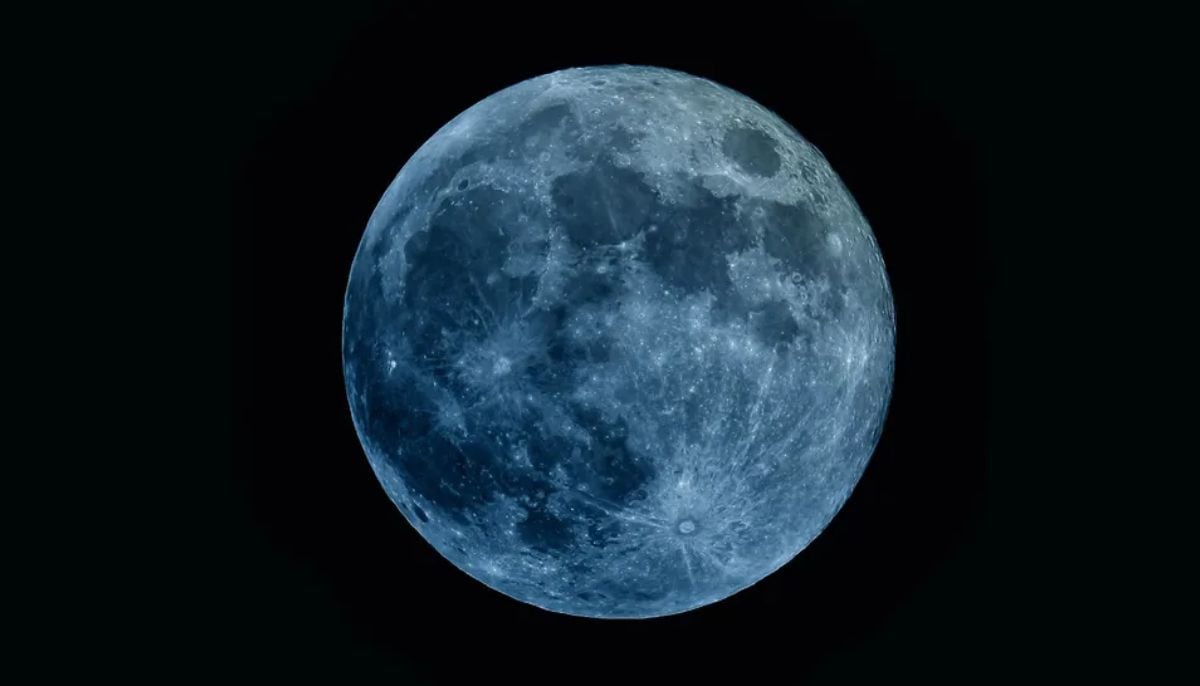
Stargazers should be ready worldwide because very soon they will have another chance to observe one of the rarest calendar events of the moon called the Blue Moon, which is going to appear in the sky on 31 May 2026.
The Moon will not be blue in colour during this occurrence. According to NASA, the name in real is simply given for the unusual synchronisation of the full moon.
A blue moon may be defined in two different ways. The first is a seasonal blue moon, which is the third full moon in a particular season when there are four full moons during that season.
The second, and more functional today, is a month in which there happens to be two full moons; thus, a monthly blue moon. This upcoming Blue Moon in May 2026 refers to the second definition mentioned here, which is more functional today: a month with two full moons.
Why do blue moons happen?
The moon's cycle in the sky repeats in about 29.5 days. Calculated in a cycle of 12, it repeats in 354 days. This is shorter than the calendar year. Every two to three years, there is an extra full moon due to this cyclical difference. This moon, which doesn't fit in with the traditional naming system, is called a Blue Moon.
According to NASA, February can never have a blue moon because it’s too short. On rare occasions, February can miss having a full moon completely. In this situation it is called a Black Moon. In general, having a blue moon occurs when a month has four full moons.
The last Blue Moon was on August 19, 2024. Following the Blue Moon of May 2026, there will be several years of waiting again, as nature has designed it.
Can the moon really turn blue?
Yes, but only under exceptional atmospheric conditions. According to NASA, Volcanic eruptions of large proportions, such as the eruptions of Krakatoa in 1883 and Mt. Pinatubo in 1991, spewed huge quantities of fine particulates that filled the atmosphere with particles that preferentially scattered red light, giving Earth's moon a blue or blue-green appearance.
In most instances, though, a Blue Moon merely remains a poetic expression of a rare but predictable phenomenon.






-
 Four hidden dead stars found in Earth's backyard
 -
 What happened during SpaceX’s 13th Starship test? First upgraded Starlinks successfully deployed
 -
 Astronomers may have found the first moon beyond our solar system
 -
 Space datacenters could catastrophically pollute Earth, groups warn
 -
 Astronomers just solved a 10-billion-year-old Milky Way mystery
 -
 Why China is crashing a spacecraft into asteroid 2015 XF261
 -
 Australia's Great Barrier Reef at extreme risk of ‘ecosystem collapse’, scientists warn
 -
 James Webb Space Telescope reveals how black holes feed themselves