Annular solar eclipse 2026: Here's everything to know about the ‘ring of fire’
The world will witness an annular solar eclipse in February, while a total solar eclipse will be visible in parts of Europe in August 2026
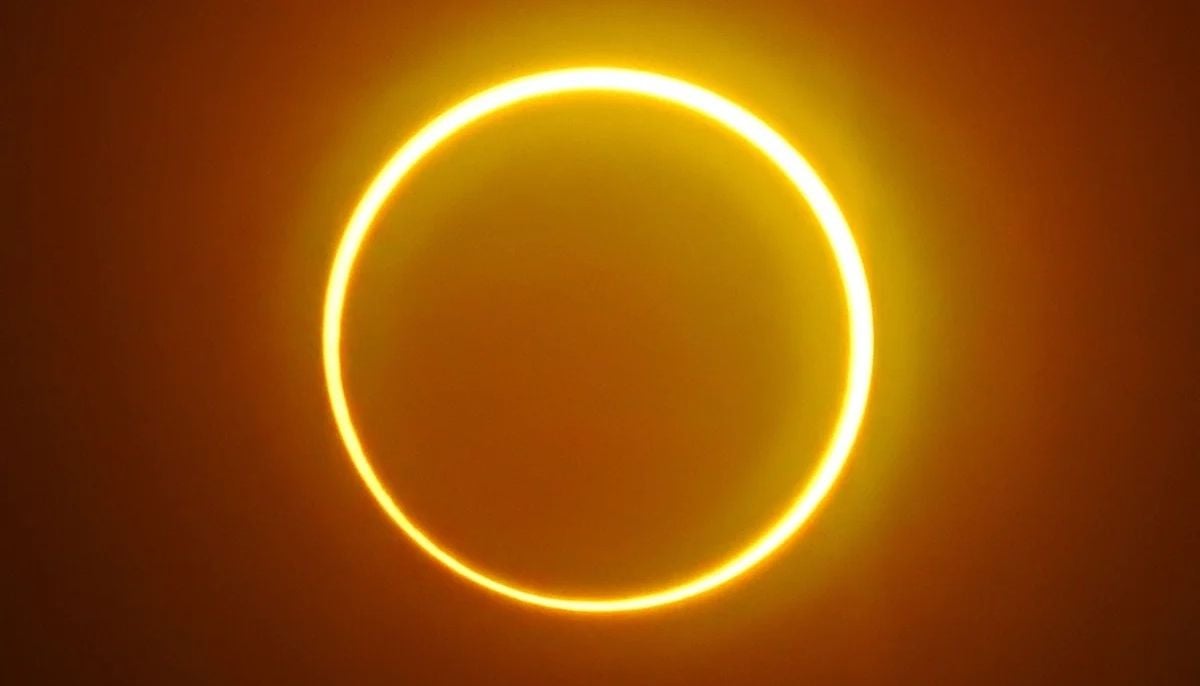
Stargazers can view the annular solar eclipse which will be visible from a remote part of Antarctica, forming a “ring of fire” for up to 2 minutes, 20 seconds as 96% of the sun’s center is eclipsed by the moon. The event is particularly historic as it coincides with a total solar eclipse visible in parts of Europe.
Observers across the rest of Antarctica- including those on passenger ships during late-season tours-which will see a partial solar eclipse as will people in parts of southern Africa and the southern tip of South America.
The path for the Feb.17, annular solar eclipse will be restricted to a remote region of Antarctica, so the event will be visible to almost no humans.
Regarding the event, eclipse meteorologist Jay Anderson wrote on his website: “It’s possible that only a few people will view this eclipse from within the annular zone.” “It’s a challenge to reach and there are only two inhabited locations within the annular shadow, neither of which is set up to welcome tourists,” he added.
Mid-February will move towards the end of the holiday cruise season in Antarctica, but a well-timed voyage to the Antarctic Peninsula could offer an intriguing view of a partial solar eclipse.
On Feb.17, the best viewing location on land is expected to be at a joint French-Italian research station that opened in 2005, it currently houses just 16 scientists.
The path of annularity for the Feb.17 annular solar eclipse- where the ring of fire will be clearly visible- is approximately 2,661 miles long and 383 miles wide.
The eclipse will rise over mainland Antarctica and set off the Davis Sea coast of the Southern Ocean. The 2026 solar eclipse offers a unique opportunity to observe the Sun’s photosphere in a “ring of fire” alignment.


-
 New study explains 364-day Qumran calendar puzzle
 -
 Why does time feel faster as you age? Science explains
 -
 Scientists name newly discovered snake after Guns N' Roses' Slash
 -
 SpaceX secures three new NASA crew flights: What to know
 -
 Sovereign AI fund in talks to back Political Sciences: What to know
 -
 What recent discovered Moon Crater Means for Future Astronauts
 -
 Scientists discover new wild cat species in Bolivia for the first time in a century
 -
 SpaceX turns to failed startups for AI training: Here’s why