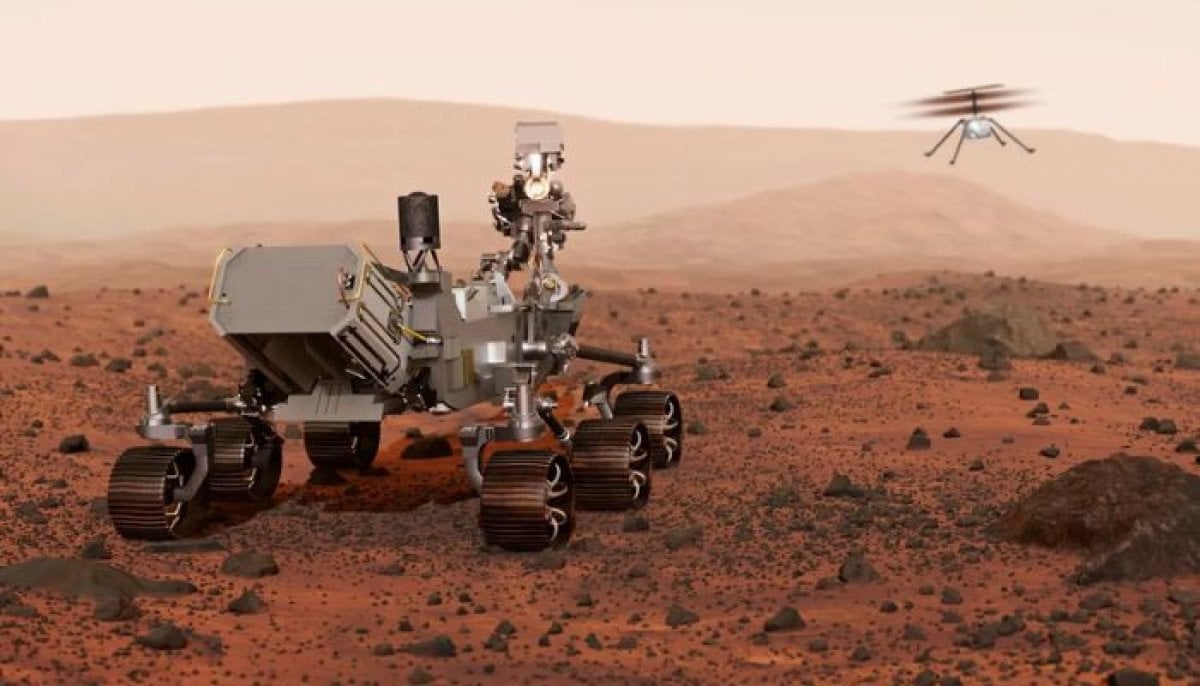
NASA, DOE to develop Nuclear Reactor on the Moon by 2030
The recent collaboration reaffirmed their commitment to the high-priority goal of operating a nuclear fission reactor on the Moon by 2030

NASA and the U.S. The Department of Energy (DOE) have officially announced their renewed commitment to support the research and development of a nuclear fission reactor on the Moon by 2030. The recent revelation focuses on deploying nuclear reactors on the Moon and in orbit, including the development of lunar surface reactors by 2030.
The collaboration aims to deploy a fission surface system capable of producing safe, efficient and plentiful electric power- operating for years without the need for refueling.
The deployment of a lunar surface reactor will enable sustained missions in the future by providing continuous and abundant power despite sunlight or temperature.
In this connection, U.S. Secretary of Energy Chris Wright said: “History shows that when American science and innovation lead the world to reach new frontiers once thought impossible.”
This collaborative effort works on developing, fueling, and authorizing a lunar surface reactor. This mission-the first of its kind in 50 years will support both space exploration and national security.


-
 ‘Yellowstone’ writer Taylor Sheridan reveals real reason for quitting ‘Sons of Anarchy’
 -
 Arsenal striker Viktor Gyokeres breaks silence on transfer links
 -
 'Mormon Wives' Taylor Frankie Paul finally seeks professional help after special 'recommendation'
 -
 Why foreign investors are buying Canadian government bonds in record numbers
-
 Can NASA save Swift Observatory telescope? Inside space agency's bold rescue mission
 -
 Scientists found 'super-puff' planets 1,110 light-years away
 -
 Scientists find ancient microbial life in places it shouldn't exist
 -
 Why Marijuana is suddenly sending thousands of dogs to hospitals in US?
 -
 36 years on, Hubble shows how stars actually change over time
 -
 Hidden magma beneath Mars? Scientists' 'unexpected' discovery raises new questions about alien life
 -
 Rare 3,200-year-old coral blue hole discovered in South China Sea
 -
 What happens at black hole’s event horizon? Scientists find the first-ever clue
-
 Scientists discover evidence of fires used by humans 1.8 million years ago
 -
Did NASA just uncover evidence of ancient life on Mars? Key discoveries explained
-
Four powerful earthquakes strike three continents within hours: Scientific link or coincidence?
-
Mysterious interstellar comet passing our solar system may be 12 billion years old, scientists say