Honeybees could help humans communicate with aliens, scientists say
Humans and honeybees diverged over 600 million years ago
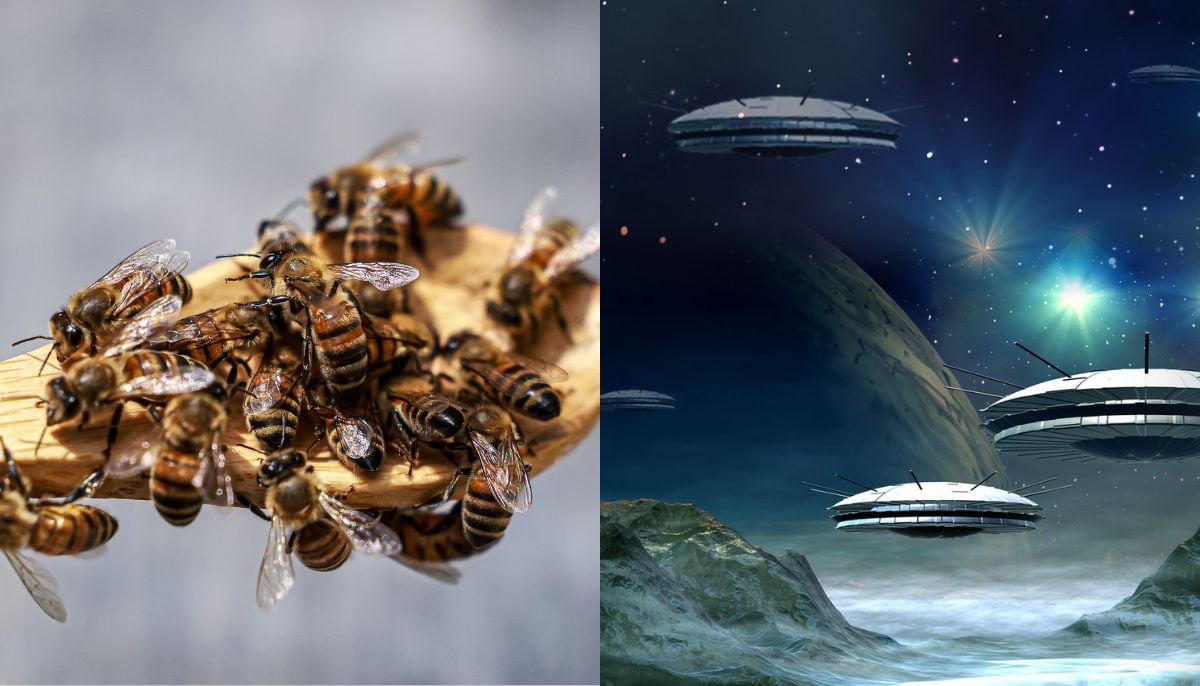
Communication with non-intelligent entities has nearly been impossible for humans. However, a group of Australian scientists has optimistically signalled towards this possibility for humans to communicate with aliens.
According to researchers, the development of a “universal” language will allow humanity to send and receive messages from extra-terrestrial life.
As per research study, despite having tiny brains, honeybees can solve subtraction and addition problems. They can also classify numbers as even or odd.
Humans and honeybees diverged over 600 million years ago, making them one of the most distant species from humans to share complex traits.
Given the ability of bees to do maths, it is proven that mathematics is not dependent on human language or specific kind of brain.
According to researchers, “If two species considered alien to each other – humans and honeybees – can perform mathematics, along with many other animals, then perhaps mathematics could form the basis of a universal language.”
According to thought experiment, published in the journal Leonardo, being an objective part of the universe, math can serve as the basis of communication beyond Earth, especially with aliens.
Despite having biological and sensory differences among species, math can become a universal language, helping the various biological entities to interact.
“If there are extra-terrestrial species, and they have sufficiently sophisticated brains, then our work suggests they may have the capacity to do mathematics,” researchers say.


-
 New study sounds alarm as Doomsday Glacier melts more aggressively than thought
 -
 Hubble data hints at planet born after its star died
 -
 NASA to brief public on Artemis III mission progress
 -
 ‘Time capsule beneath the sea’: World’s oldest shipwreck holds secrets from Great Pyramid era
 -
 NASA spots mysterious V-shaped scar stretching 700 light-years across space
 -
 Space Jellyfish over Florida: What is that glowing cloud?
 -
 SpaceX Falcon 9 launches Dragon with 6,300 pounds of supplies to ISS
 -
 How far can a rover go? NASA’s Perseverance breaks Mars driving record