Space launch disaster: Innospace’s rocket explodes on first commercial flight
The rocket called HANBIT-Nano vehicle lifted off at 10:13 p.m., five days later than originally scheduled
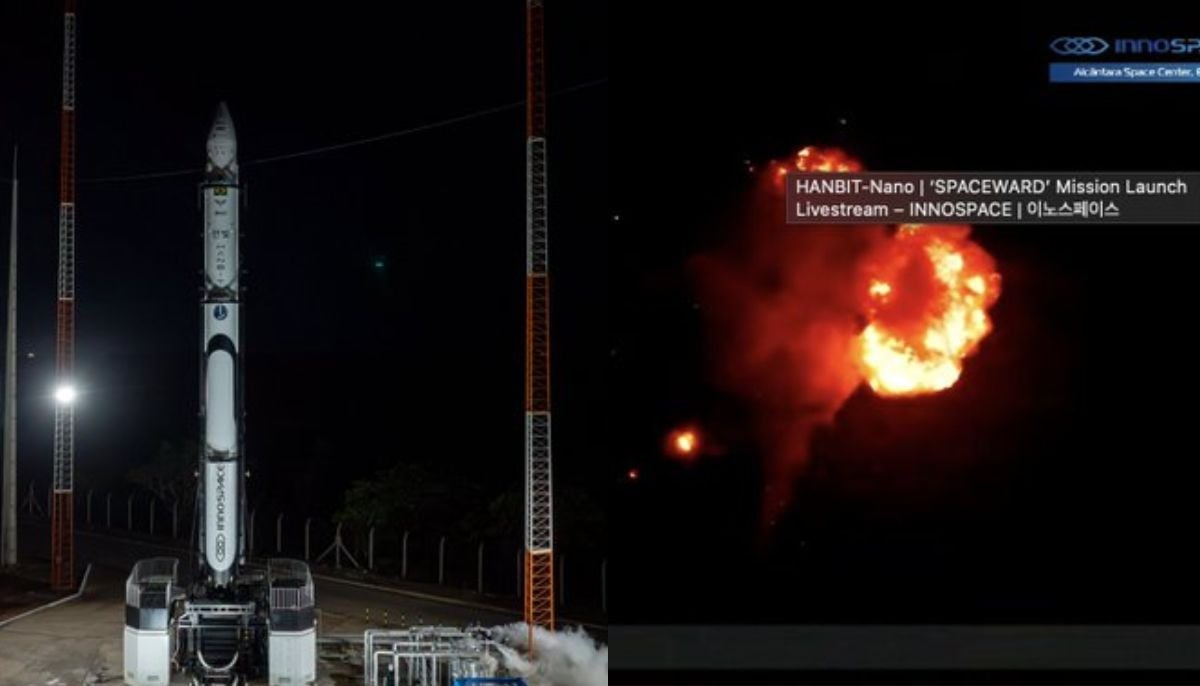
South Korea satellite launch startup Innospace launched the first commercial rocket from Brazil’s Alcantara Space Center. Unfortunately, shortly after the flight the rocket exploded and ended up into a massive disaster.
The rocket called HANBIT-Nano vehicle lifted off at 10:13 p.m., five days later than originally scheduled for commercial launch.
According to a video widely circulating on X, it can be seen that just two minutes after the launch, the rocket crashed due to an anomaly encountered during the flight.
Brazil air force reported that the rocket initially took its vertical trajectory-based flight successfully , but an issue caused the rocket to explode in the air.
According to the air force statement, the officials and firefighters are busy analyzing wreckage and the collision area.
Following the news of the failed launch, the company’s shares tumbled about 24 percent, demonstrating the biggest decline since August.
The earlier launch was also hindered due to a reported issue in a cooling unit component of the first-stage oxidizer feed system during final-stage inspections and harsh weather conditions.
During the launch, Innospace was expected to send eight registered cargoes and five small satellites along with Brazil’s operational support.
In March 2023, Innospace was successful in launching its test vehicle HANBIT-TLV from Brazil to assess the 150 kN hybrid rocket engine’s performance.


-
 Chinese astronomers discover real-life three-body system unlike Liu Cixin’s fiction
 -
 Hunter’s Moon 2026: When and how to watch October’s full moon
 -
 Elon Musk’s Mars colonization dream faces reality check from Nobel laureate
 -
 NASA competition model 2.0 cuts mission selection by 45%
 -
 A ‘neglected’ neutrino may hold the key to why the Universe exists
 -
 Can cancer drugs be made in space? Here’s what the new mission aims to find out
 -
 SpaceX Falcon 9 successfully launches Bandwagon-5 mission with 32 payloads
 -
 Europe launched 8 orbital rockets last year, can it rival Starlink?